Best Espresso Grinders for Home in 2026: Tiered Picks for Every Budget
 Tommie Chaney·
Affiliate disclosure: Sweeter Grind is a participant in the Amazon Services LLC Associates Program. We may earn commissions on qualifying purchases at no extra cost to you.
The grinder is the bottleneck. Every home espresso setup has a ceiling on cup quality, and that ceiling is set by the grinder, not the machine. A $485 Bambino Plus paired with a $300 DF54 produces shots that are routinely better than a $1,500 super-automatic. The same machine paired with a $200 grinder from the wrong tier produces shots that taste muddy no matter what you do.
There's a rule that nobody writes on the box: your grinder should cost roughly 1 to 1.5 times what your machine cost. Not match. Outclass. The Bambino Plus is a $485 machine; the right grinder pairing is $500–$725. A $3,500 Lelit Bianca calls for a $3,500–$5,250 grinder. Most home setups underweight the grinder by half. That's why the cup tastes like a $200 machine instead of the $700 machine the buyer paid for.
This guide tiers the picks by budget — entry, mid, enthusiast — and tells you exactly which machine each grinder pairs with. Skip the rule and you'll be back here in three months looking at the next tier up.
For the broader espresso context: The Complete Home Espresso Guide 2026 covers the full setup. For the dial-in workflow that uses any of these grinders: How to Pull the Perfect Espresso Shot. For the conical-vs-flat burr question: Burr Grinder vs Blade Grinder.
Our Top Picks at a Glance
| Pick | Product | Best For | Price |
|---|---|---|---|
| Best Overall | Eureka Mignon Specialita | Bambino Plus / Stilosa / Gaggia Classic users | ~$650 |
| Best Budget | DF54 / DF64 | Stilosa / Bambino Plus on tight budget | ~$300–$400 |
| Best Single-Dose Mid | Eureka Mignon Single Dose | Mignon quality, single-dose workflow | ~$890 |
| Most Recommended Mid | Niche Zero | Lelit Bianca / Profitec Pro 600 / Linea Mini | ~$950 |
| Enthusiast | Lagom P64 | Linea Mini / Bianca with light-roast obsession | ~$1,800 |
The 1–1.5x Rule
The single most important pairing decision in home espresso is grinder-to-machine match. The math:
-
Bambino Plus ($485) → Grinder budget ~$485–$725. Best pair: Eureka Mignon Specialita. A DF54 ($300) is an under-grinder — fine, but you'll feel the ceiling within months. A Niche Zero ($950) is an over-grinder — works great, but the machine's brew temperature stability bottlenecks before the grinder gets to flex.
-
De'Longhi Stilosa ($99) → Grinder budget ~$100–$150 if you stay. The truth: a Stilosa with a real grinder is wasted; the machine's pressure delivery is too inconsistent. If you have a Stilosa and $400 to spend, upgrade the machine first to a Bambino Plus, not the grinder.
-
Gaggia Classic Evo Pro ($499) → Grinder budget ~$500–$750. Best pair: Eureka Mignon Specialita. Some users go up to a Niche Zero, which works but is over-pairing.
-
Rancilio Silvia ($800) → Grinder budget ~$800–$1,200. Best pair: Niche Zero or Eureka Atom 75.
-
Lelit Bianca ($3,500) → Grinder budget ~$3,500–$5,250. Best pair: Lagom P64 or Niche Duo. A Mignon Specialita on a Bianca is a clear under-grinder.
-
La Marzocco Linea Mini ($6,000) → Grinder budget ~$6,000+. Best pair: Lagom P64 with SSP burrs, or commercial-grade Mazzer. A Mignon Specialita on a Linea Mini is comically under-paired.
The principle: the machine sets the temperature stability ceiling. The grinder sets the particle distribution ceiling. You need both ceilings to be roughly equal, with the grinder slightly higher to give you headroom for upgrades and to reach what the machine is capable of.
In-Depth Reviews
Eureka Mignon Specialita — Best Overall
The Eureka Mignon Specialita is the espresso grinder most home baristas should buy. 55mm flat steel burrs, near-silent direct-drive motor, and a stepless micrometric dial that turns in microscopic increments — exactly what espresso requires. Made in Italy by Conti Valerio, the Mignon line has been the prosumer entry standard for over a decade.
Why we picked it: Espresso dial-in is fundamentally an exercise in micro-adjustment. The Specialita's stepless dial moves in increments so small they're almost imperceptible — you can tune flow rate by 1 second of shot time per quarter-turn. Combined with low retention (under 1g) and burrs that stay consistent through 5+ years of daily use, the Specialita is the grinder that rewards every other piece of your setup.
Key specs:
- Burr type: 55mm flat steel
- Motor RPM: 1350 RPM (low-RPM, direct drive)
- Adjustment: Stepless (micrometric dial)
- Hopper capacity: 300g (300g loaded; can run single-dose with empty hopper)
- Retention: <1g
- Footprint: 4.7" W × 13" H × 6.7" D
- Weight: 13 lbs
Pros:
- Stepless adjustment ideal for espresso dial-in
- Near-silent motor — quieter than most kitchen appliances
- Italian build quality, 5+ year reputation for daily reliability
- Pairs well with any prosumer machine from Bambino Plus to Lelit Bianca
- Low retention and chute-clearing for clean dosing
Cons:
- $650 is a stretch from sub-$400 budget options
- Hopper-based (not true single-dose) — extra step for users wanting to swap beans frequently
- Aesthetic is utility-Italian; not a showpiece
Who it's for: Anyone with a Bambino Plus, Gaggia Classic Evo Pro, Rancilio Silvia, or comparable prosumer machine who wants the right pairing without overspending.
DF54 / DF64 — Best Budget
The DF54 (54mm flat burrs, ~$300) and DF64 (64mm flat burrs, ~$400) are the budget tier's surprise champions. Single-dose hopper, stepless adjustment, replaceable burrs, and a flat-burr profile that gives them genuine espresso credentials. They've become the default "I want espresso quality on a budget" answer in the home espresso community.
Why we picked it: Budget espresso grinders historically meant compromise — too coarse, too inconsistent, retention disasters. The DF series broke that pattern. They aren't refined like a Eureka or a Niche, but they grind espresso with respectable consistency, accept upgrade burrs (SSP, Italmill) for genuine mid-tier performance, and cost a third of competitors.
Key specs (DF64):
- Burr type: 64mm flat steel (DF64) / 54mm flat steel (DF54)
- Motor RPM: ~1500 RPM
- Adjustment: Stepless
- Hopper: Single-dose (small hopper, designed for single doses)
- Retention: 0.5–1g
- Footprint: 4.7" W × 14" H × 6.5" D
- Weight: 17 lbs (DF64)
Pros:
- Genuinely good espresso grind under $400
- Single-dose workflow eliminates bean-swap retention issues
- Burrs are user-replaceable — upgrade path to mid-tier performance
- Strong online community support and tuning guides
Cons:
- Build quality is utilitarian; motor refinement is clearly tier-below
- Static is real; RDT (a small spritz of water on beans before grinding) helps
- Stock burrs are good, not great — many users upgrade
- Aesthetic is industrial; doesn't fit a designer kitchen
Who it's for: Budget-conscious buyers with a Bambino Plus or Stilosa who want real espresso grind quality without the $650 Eureka jump. Also: tinkerers who enjoy upgrading burrs and tuning.
Eureka Mignon Single Dose — Best Single-Dose Mid-Tier
The Eureka Mignon Single Dose is the Mignon Specialita re-engineered for single-dose workflow. Same 55mm flat steel burrs, same micrometric stepless dial, same near-silent motor — but with a single-dose chamber instead of a hopper, plus a blow-out fan that clears residual grounds for true zero retention.
Why we picked it: If you switch beans frequently or grind small batches, hopper retention becomes a real cup-quality issue (old beans contaminating new). The single-dose Mignon eliminates this without giving up the Mignon line's refined feel and Italian build quality.
Key specs:
- Burr type: 55mm flat steel
- Motor RPM: 1350 RPM
- Adjustment: Stepless
- Hopper: Single-dose chute (no bean storage)
- Retention: ~0g (with blow-out fan)
- Footprint: 4.7" W × 13" H × 6.7" D
Pros:
- True single-dose workflow with Mignon refinement
- Blow-out fan ensures consistent dose-to-dose
- Same burr quality as the Specialita
- Quieter than DF-series budget single-dose options
Cons:
- $890 is a meaningful premium over the standard Specialita
- Some users find the Specialita's hopper convenient and don't see the value swap
Who it's for: Bambino Plus or Gaggia Classic Pro users who switch beans weekly and want the Mignon line's refinement in a single-dose body.
Niche Zero — Most Recommended Mid-Tier
The Niche Zero (~$950) is the most-recommended single-dose grinder in home espresso, and has been since launch. 63mm conical Mazzer-derived burrs, true zero retention, a stepless dial with extraordinarily precise adjustment, and a small footprint. The Niche is a status symbol in home espresso forums for a reason: it works.
Why we picked it: Conical burrs produce a slightly bimodal grind (more fines + more boulders than flat) that gives espresso fuller body and chocolatey roundness — the classic espresso character. For blend-and-medium-roast espresso drinkers, the Niche is arguably the best grinder under $1,500. The single-dose workflow is genuinely zero-retention; you load 18g and 18g comes out.
Key specs:
- Burr type: 63mm conical (Mazzer-derived)
- Motor RPM: 330 RPM (very low-RPM for cool grinding)
- Adjustment: Stepless dial with 50 numbered detents per revolution
- Hopper: Single-dose
- Retention: 0g (true zero)
- Footprint: 4.7" W × 13.4" H × 6.5" D
- Weight: 11 lbs
Pros:
- Zero retention, precise dial, and a refined feel
- Conical burrs produce classic full-bodied espresso
- Compact footprint fits in any kitchen
- Strong dial reproducibility — recall settings exactly
Cons:
- Direct-from-Niche shipping; long wait times (sometimes months)
- Conical burrs aren't ideal for light-roast clarity — flat-burr competitors win there
- $950 is a clear step up from the $650 Mignon Specialita
Who it's for: Lelit Bianca, Profitec Pro 600, Rancilio Silvia, or La Marzocco Linea Mini owners who want zero retention and classic espresso character. Also: Bambino Plus owners who plan to upgrade the machine eventually and want a grinder that grows with them.
Lagom P64 — Enthusiast
The Lagom P64 by Option-O (~$1,800) is the home-espresso enthusiast benchmark. 64mm flat burrs (with multiple burr profile options including SSP MP), single-dose workflow, magnetic dosing cup, and a clarity profile that rivals commercial grinders costing $3,000+. If you're chasing light-roast espresso or single-origin clarity, this is the home grinder.
Why we picked it: Flat 64mm burrs at this build quality produce a unimodal grind distribution — particles cluster tightly around the target size — which produces espresso with more clarity and modern-style fruit-forward character than conical alternatives. Paired with high-end burr options (SSP MP for clarity, SSP HU for traditional), the P64 is the most flexible home grinder for serious enthusiasts.
Key specs:
- Burr type: 64mm flat (multiple profiles available)
- Motor RPM: 380 RPM
- Adjustment: Stepless dial
- Hopper: Single-dose
- Retention: <0.5g
- Footprint: 5" W × 14" H × 7" D
- Weight: 22 lbs
Pros:
- Flat-burr clarity ideal for light-roast specialty espresso
- Burr swappability — choose profile per coffee style
- Build quality genuinely commercial-grade
- Magnetic catch cup and refined operation
Cons:
- $1,800+ is a clear over-pair for sub-$1,500 machines
- Direct-from-Option-O purchase only with potential wait times
- Conical-style traditional espresso character is less pronounced (intended)
Who it's for: Lelit Bianca, Profitec Pro 800, La Marzocco Linea Mini, or Decent DE1 owners who pull predominantly light-roast or single-origin espresso. Not the right pairing for a Bambino Plus.
Pairing Cheat Sheet
| Machine | Right Grinder Pair | Why |
|---|---|---|
| De'Longhi Stilosa | DF54 | Stilosa caps cup quality; don't over-grind |
| Breville Bambino Plus | Eureka Mignon Specialita | The 1.3x match for the most popular beginner machine |
| Gaggia Classic Evo Pro | Eureka Mignon Specialita | Same as above |
| Rancilio Silvia | Niche Zero or Eureka Atom 75 | Silvia rewards a step up |
| Profitec Pro 600 | Niche Zero | Conical character pairs beautifully |
| Lelit Bianca | Niche Zero or Lagom P64 | Bianca's flexibility benefits from clarity |
| La Marzocco Linea Mini | Lagom P64 with SSP burrs | The reference home pairing |
Buyer's Guide: What to Look For
Burr Type and Size
For espresso, look for:
- At least 50mm flat burrs OR 60mm conical burrs. Smaller than this, particle distribution gets worse fast.
- Steel burrs for most users. Ceramic burrs are sharper at the edge but harder to replace and slightly more brittle.
- Replaceable burrs if available. Burrs wear over thousands of grinds; replaceability extends the grinder's life by 5–10 years.
Motor RPM
Lower RPM is better for espresso. High-RPM motors heat the grounds during grinding, which prematurely starts off-gassing and affects flavor. The Niche Zero at 330 RPM is on the low end (and famously cool); cheap grinders at 1500+ RPM run noticeably hotter.
Hopper vs Single-Dose
- Hopper grinders (standard Eureka Specialita, Atom, Mazzer Super Jolly): bulk loading, continuous use. Faster for daily routines. Higher retention between bean swaps.
- Single-dose grinders (Niche Zero, DF64, Lagom P64): one dose at a time. Zero retention. Better for users with multiple beans or slower workflows.
For most home users who stick with one bean, hopper is fine. For users who switch beans weekly or roast at home, single-dose is significantly better.
Stepless vs Stepped Adjustment
For espresso: stepless mandatory. Espresso requires micro-adjustments (1/3 of a click on a stepped grinder is sometimes the difference between 22s and 28s shot time). Every grinder in this guide is stepless.
Some "espresso-capable" grinders have stepped adjustment with 60+ steps — technically stepless behavior at that resolution. Avoid grinders with 30 or fewer steps for espresso; those gaps will haunt your dial-in.
Footprint
Espresso grinders have to live next to your machine on a counter. Measure before buying.
| Grinder | Footprint (W × D × H) |
|---|---|
| Eureka Mignon Specialita | 4.7" × 6.7" × 13" |
| DF64 | 4.7" × 6.5" × 14" |
| Niche Zero | 4.7" × 6.5" × 13.4" |
| Lagom P64 | 5" × 7" × 14" |
All four fit comfortably on a 12" counter depth. The Lagom P64 is heavier (22 lbs) — make sure your counter can support 35+ lbs for the grinder + machine combined.
Why Not Just Use a Manual Grinder?
For occasional espresso (1–2 shots a day, not pulling milk drinks), high-end manual grinders like the 1Zpresso J-Max or Kingrinder K6 can produce respectable espresso at a fraction of the price. Strong burr quality, very fine adjustment, and zero retention.
The catch: manual grinding 18g of espresso-fine beans takes 45–90 seconds of cranking. For one shot in the morning, fine. For a back-to-back-to-back workflow with milk drinks, untenable. See Manual vs Electric Coffee Grinder for the full tradeoff.
For most espresso users, electric is the right call — but if budget is the binding constraint and you only pull occasional shots, a $200 1Zpresso J-Max is genuinely better than a $200 electric "espresso/coffee" grinder that can barely reach espresso fine.
Frequently Asked Questions
Is the DF54 enough for a Bambino Plus?
Yes, but with caveats. The DF54 produces decent espresso grind and the Bambino Plus is forgiving enough to make it work. Cup quality is real — much better than any "espresso/coffee" all-purpose grinder under $200. But you're under-pairing the grinder. If you can stretch to a Eureka Mignon Specialita, the cup quality jump is significant and immediately audible-on-the-tongue. If $300 is the hard budget cap, the DF54 is the right answer; if it's $650, get the Specialita.
Should I buy a hopper grinder or single-dose for home?
Single-dose if you switch beans frequently or want zero retention. Hopper if you stick with one bean and want a faster daily workflow. For most home users — one bean for 2 weeks, then a new bag — hopper grinders with low retention (Eureka Mignon line) are the sweet spot. Truly hard-core single-bean users still benefit from single-dose for the cleaner workflow.
What about used grinders? Is buying a used Mazzer Super Jolly worth it?
Often yes. Used Mazzer Super Jollys (commercial-grade conical, $400–$700 used vs $1,400 new) are a popular home espresso secret. Caveat: they're heavy (35+ lbs), loud, hopper-based, and have higher retention than home grinders. Burrs may need replacing if previously commercial-used (~$80 + service). For a tinkerer, an excellent value. For a counter-aware home user, the Niche Zero is friendlier.
Can I use the same grinder for filter and espresso?
Technically yes — most espresso grinders also grind for filter. But the workflow penalty is significant: changing grind setting from espresso (very fine) to filter (medium) takes 30+ stepless dial turns and back, and beans wedge in burrs at coarse settings. Most home enthusiasts use a dedicated grinder per method. If budget forces one grinder, prioritize the espresso grinder — espresso is more sensitive to grind quality than filter is.
How long do espresso burrs last?
Steel burrs in home use: 800–1,500 lbs of coffee, or roughly 5–10 years for a 1-shot/day user. Ceramic burrs last about 1.5–2x longer but are more expensive to replace. Most home users never replace burrs because the grinder fails for other reasons first (motor wear, electronics) or they upgrade. Commercial grinders see burr replacement every 6–18 months.
Does the grinder really matter that much for milk drinks?
Yes. Milk masks some espresso flaws but not all. A well-textured cappuccino pulled with a good grinder has a sweetness and chocolate depth that the same milk + a poorly-extracted espresso shot lacks. The most-blamed flaw of "I bought a milk-drink machine and it tastes like sad coffee with foam" is almost always grinder.
Which to Buy
Tightest budget, will commit to upgrading later: DF54 with a Bambino Plus. About $785 total. Drinkable espresso, room to upgrade.
Sweet spot for the most common buyer: Eureka Mignon Specialita with a Bambino Plus or Gaggia Classic Evo Pro. About $1,135–$1,150 total. Respect-yourself espresso, no immediate upgrade pressure.
Single-dose / multi-bean household: Niche Zero with whatever machine. The Niche works at every machine tier from Bambino Plus up. About $1,435 with a Bambino, ~$4,450 with a Bianca.
Light-roast obsessive / no budget cap: Lagom P64 with SSP burrs paired with a Lelit Bianca or Linea Mini. $5,000+. The reference home setup.
For everyone: don't underweight the grinder. The 1–1.5x rule is the single best piece of espresso advice you'll get.
Related reading
- The Complete Home Espresso Guide 2026
- Best Espresso Machines for Beginners 2026
- How to Pull the Perfect Espresso Shot
- Espresso Machine Types: Manual, Semi-Automatic, Super-Automatic
- Espresso Accessories You Actually Need
- Burr Grinder vs Blade Grinder
- Manual vs Electric Coffee Grinder
- The Ultimate Coffee Equipment Guide 2026
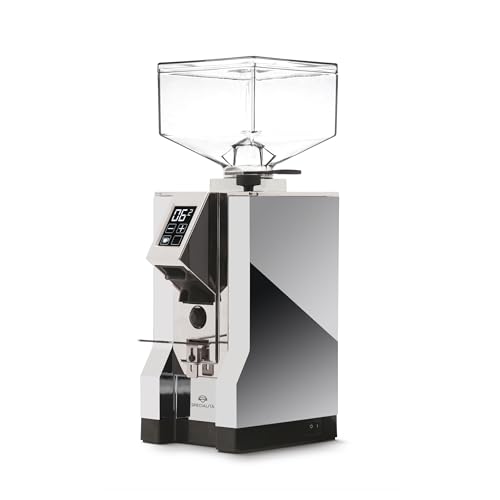
Eureka Mignon Specialita Espresso Grinder
The Eureka Mignon Specialita is the gold-standard entry-tier espresso grinder. 55mm flat steel burrs, stepless adjustment, near-silent motor, and low retention make it the right pairing for any prosumer machine from a Bambino Plus up to a Lelit Bianca.

DF54 / DF64 Single-Dose Espresso Grinder
The DF54 (54mm flat burrs, ~$300) and DF64 (64mm flat burrs, ~$400) are the budget tier's value champions. Single-dose hopper, stepless adjustment, replaceable burrs, and the same flat-burr profile as grinders 2–3x the price.
Eureka Mignon Single Dose Espresso Grinder
The single-dose variant of the Mignon line. 55mm flat steel burrs, true near-zero retention, blow-out fan to clear residual grounds, and the same Mignon micrometric adjustment.
Niche Zero Single-Dose Espresso Grinder
The Niche Zero (~$950) is the most-recommended single-dose grinder in home espresso. 63mm conical Mazzer burrs, true zero retention, stepless dial with incredibly precise adjustment, and a footprint that fits any kitchen.
Lagom P64 Espresso Grinder by Option-O
The Lagom P64 (~$1,800) is the enthusiast benchmark. 64mm flat burrs (with multiple burr options including SSP), single-dose workflow, magnetic catch cup, and grind clarity that rivals commercial grinders 2–3x the price.