Best Espresso Machines for Beginners in 2026
 Tommie Chaney·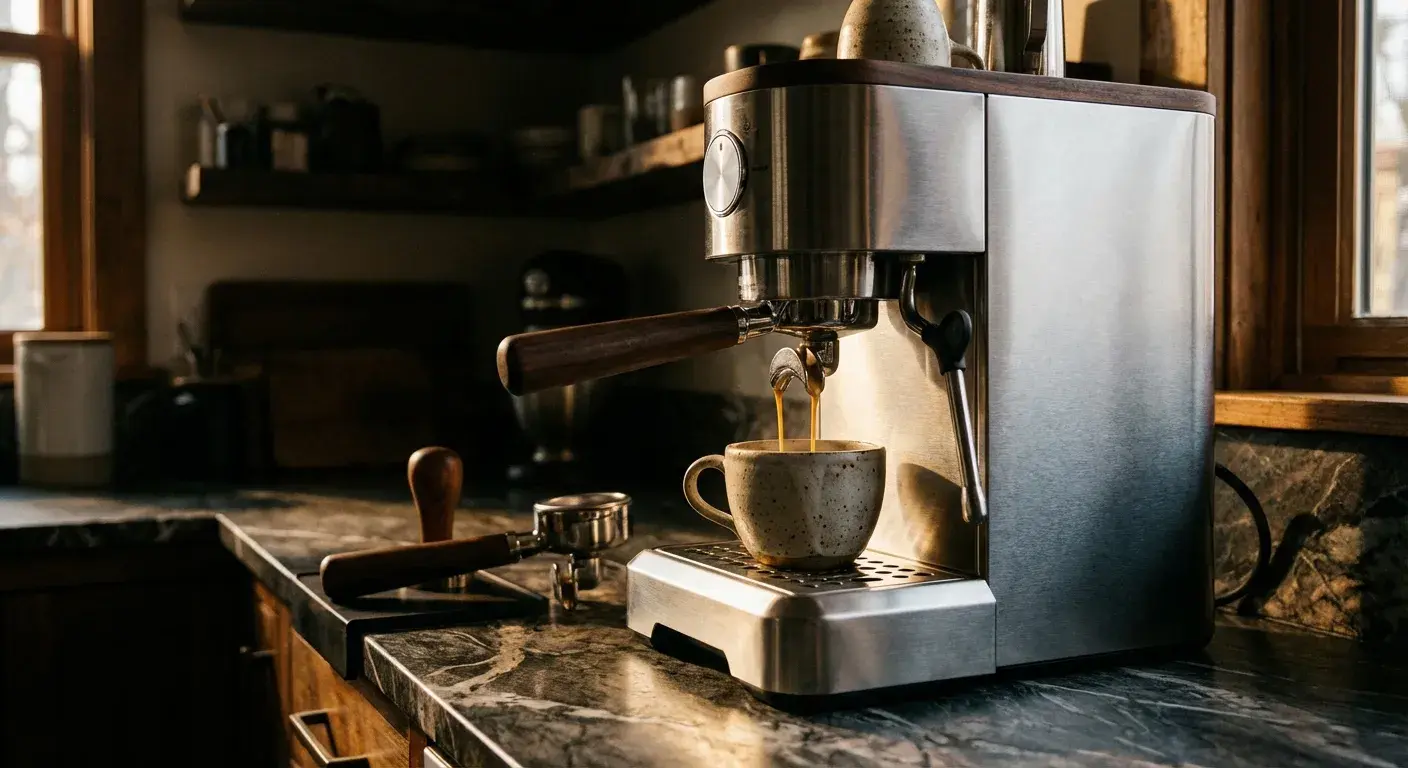
Home espresso used to mean one of two things: a cheap machine that made watery, bitter shots, or a $1,500 semi-professional setup that required six months of practice before it produced anything drinkable. In 2026, that gap has closed dramatically. A handful of machines now sit in a sweet spot — real espresso quality, genuine ease of use, and prices that do not require a second mortgage.
The key shift is technology that used to live only in commercial machines: PID temperature controllers, pre-infusion systems, thermojet heating, and 9-bar pressure pumps. These features are now standard on beginner machines under $500. If you have been curious about making espresso at home but assumed it was too technical or too expensive, this is the year to reconsider.
This article contains affiliate links. We may earn a commission if you make a purchase through our links, at no extra cost to you.
Four machines stand out for new home baristas, each for a different reason. Below: the short list, what makes each one work, and how to decide between them.
Our Top Picks at a Glance
| Pick | Product | Best For | Price |
|---|---|---|---|
| Best Overall | Breville Bambino Plus | Beginners who want café quality fast | ~$485 |
| Best Budget | De'Longhi Stilosa EC230BK | Entry-level espresso under $100 | ~$99 |
| Best with Built-In Grinder | Breville Barista Express | All-in-one setup, no extra gear | ~$700 |
| Best Semi-Auto Upgrade | Gaggia Classic Evo Pro | Enthusiasts who want to grow into it | ~$499 |
In-Depth Reviews
Breville Bambino Plus — Best Overall
The Breville Bambino Plus (BES500BSS) is the best beginner espresso machine you can buy in 2026. Full stop. It does nearly everything right — fast heat-up, precise temperature control, an automatic steam wand that produces café-quality microfoam — and it does it in a compact body that fits on any counter. Tom's Guide called it "the reigning entry-level champ," and after testing, it is easy to see why.
Why we picked it: The Bambino Plus heats up in three seconds flat thanks to Breville's ThermoJet heating element — a metal core coated in glass-ceramic that reaches brew temperature nearly instantly. That is not a rounding error. Most machines in this price range take 20 to 45 seconds. It also includes a built-in PID controller that maintains water temperature to within ±1°C throughout your shot, and a pre-infusion function that gently saturates the puck before full pressure kicks in. These are features you normally see on machines costing two to three times more.
The automatic steam wand is the detail that makes the Bambino Plus exceptional for beginners. Set it to your preferred milk temperature and texture, insert the wand, and it does the work. You do not need to learn the art of manual milk steaming to get a beautiful flat white or latte from day one.
Key specs:
- Boiler type: ThermoJet (single boiler)
- Pressure: 15-bar pump, 9 bars at the group
- Heat-up time: 3 seconds
- Steam wand: Automatic (4 temperature settings, 3 texture settings)
- Water tank: 64 oz (1.9 L)
- Portafilter: 54 mm
- Dimensions: 7.7" W × 12.2" H × 12.6" D
- Weight: 10.2 lbs
- Included accessories: Tamper, 4 filter baskets, two stainless milk pitchers, cleaning tools
Pros:
- 3-second heat-up time is unmatched at this price point
- PID temperature control and pre-infusion deliver consistent shots
- Automatic steam wand makes latte art accessible from day one
- Compact footprint — smaller than a French press on your counter
- Builds excellent espresso habits without hiding the fundamentals
- Includes a full accessory kit — ready to brew out of the box
Cons:
- ~$485 is a real investment for a beginner machine
- 54 mm portafilter means fewer third-party basket options than 58 mm machines
- Single boiler means a brief wait between pulling a shot and steaming milk
- Does not include a grinder — you will need one separately
Who it's best for: Anyone who wants to make genuine café-quality espresso at home, learn the craft properly, and not outgrow their machine within a year. The Bambino Plus will carry you through beginner, intermediate, and well into advanced territory.
De'Longhi Stilosa EC230BK — Best Budget
The De'Longhi Stilosa (EC230BK) is the most affordable genuine espresso machine on this list, and it earns its place. At around $99, it delivers actual 15-bar pump pressure — not the pressurized-steam workaround that cheap machines use — along with a traditional steam wand for frothing milk manually. Tom's Guide reviewers, including an ex-barista tester, found that it performed noticeably better than its price tag suggests.
Why we picked it: The Stilosa uses a 15-bar pump, the same as machines costing five times more. That pressure is what separates real espresso — with crema, body, and concentrated flavor — from strong drip coffee. You will not get the temperature precision or pre-infusion of the Bambino Plus, but you will get legitimate espresso for under $100. For anyone who is not sure yet whether home espresso is going to stick, the Stilosa is the ideal test.
The manual steam wand requires learning. You control the angle, depth, and duration by hand, which takes practice but also teaches you more about milk texture than an automatic wand ever will.
Key specs:
- Boiler type: Thermoblock (single)
- Pressure: 15-bar pump
- Heat-up time: ~35–45 seconds
- Steam wand: Manual Panarello
- Water tank: 33.8 oz (1 L)
- Portafilter: 51 mm
- Dimensions: 8" W × 12" H × 6" D
- Weight: 5.1 lbs
Pros:
- Under $100 — genuine pump-driven espresso at the lowest possible entry price
- Lightweight and compact — ideal for small kitchens
- Manual steam wand teaches real frothing technique
- Produces acceptable crema and body for the price
- Easy to clean and maintain
Cons:
- No PID — temperature is less stable shot to shot
- No pre-infusion function
- 51 mm portafilter limits accessory compatibility
- Milk frothing requires a learning curve
- Not a machine you will grow with long-term
Who it's best for: Curious beginners who want to try home espresso before committing to a $400+ machine, apartment dwellers with limited counter space, and coffee drinkers on a strict budget who still want the real thing over a pod machine.
Breville Barista Express — Best with Built-In Grinder
The Breville Barista Express (BES870XL) solves the problem that most beginner espresso buyers do not see coming: the grinder. You cannot make good espresso from pre-ground coffee, and a separate quality burr grinder adds $100–$200 to the total cost of any setup. The Barista Express includes a built-in conical burr grinder with 16 settings, so you grind directly into the portafilter — freshly ground, on demand, every time.
Why we picked it: The all-in-one concept genuinely works here. Breville integrated the grinder and machine thoughtfully — the grind path is short, minimizing stale grounds, and the dose control delivers consistent amounts into the basket. It uses the same ThermoJet heating, PID temperature control, and 15-bar pump as the Bambino Plus, but adds the grinder and a slightly larger 58 mm portafilter — the commercial standard. The 58 mm basket opens up far more third-party accessory compatibility for anyone who gets serious about upgrading later.
At ~$700, the Barista Express is priced higher, but when you factor in that you are buying an espresso machine and a quality burr grinder in one package, the value calculation changes significantly.
Key specs:
- Boiler type: ThermoJet (single boiler)
- Pressure: 15-bar pump, 9 bars at the group
- Heat-up time: ~8 seconds
- Grinder: Built-in conical burr, 16 grind settings
- Steam wand: Manual (commercial-style)
- Water tank: 67.6 oz (2 L)
- Portafilter: 58 mm (commercial standard)
- Bean hopper: 8 oz
- Dimensions: 13.2" W × 15.8" H × 12.5" D
- Weight: 22.9 lbs
Pros:
- All-in-one: no separate grinder purchase required
- 58 mm commercial portafilter — maximum third-party accessory compatibility
- Built-in burr grinder with 16 dose settings
- PID temperature control and pre-infusion for consistent shots
- Step-up purchase: you will not outgrow this machine
- Detailed shot clock display tracks extraction time
Cons:
- ~$700 is a significant upfront investment
- Manual steam wand requires technique to produce good microfoam
- Large footprint — needs counter space for a larger unit
- Built-in grinder is good but not as precise as a dedicated $200+ standalone grinder
- Heavier than standalone machines — less portable
Who it's best for: Beginners who want one purchase that covers everything and do not want to research a separate grinder, intermediate home baristas upgrading from a basic machine, and anyone planning to invest seriously in the espresso craft long-term.
Gaggia Classic Evo Pro — Best Semi-Auto for Enthusiasts
The Gaggia Classic Evo Pro (RI9380/46) is the machine for beginners who want to learn espresso the manual way and build real skills. Originally designed in 1977 and continuously refined since, the Classic has earned an almost mythological reputation in the home espresso community. The current Evo Pro model addresses the main criticism of earlier versions — a 15-bar pump that needed modification to dial back to the correct 9-bar extraction pressure — with an improved OPV (over-pressure valve) set to 9 bars from the factory.
Why we picked it: The Gaggia Classic Evo Pro is built like commercial equipment. A commercial-style 58 mm portafilter, solid brass boiler (now 25% larger than the previous version), and a 3-way solenoid valve that vents pressure after pulling a shot and produces dry pucks for easy cleanup. These are the same components found in machines costing two to three times more. Users regularly report their Classic machines lasting 10 to 15 years with basic maintenance.
It is not as beginner-friendly as the Bambino Plus in the sense that it rewards technique. There is no automatic steam wand, no pre-infusion, and no PID in the base configuration. But that manual engagement is the point — the Classic Evo Pro teaches you espresso by making you an active participant in every variable.
Key specs:
- Boiler type: Single brass boiler (25% larger than previous Classic)
- Pressure: 15-bar pump, OPV set to 9 bars from factory
- Heat-up time: ~25 seconds
- Steam wand: Manual (commercial pannarello wand)
- Water tank: 72 oz (2.1 L)
- Portafilter: 58 mm (commercial standard)
- 3-way solenoid: Yes (dry pucks after shot)
- Dimensions: 8.1" W × 14.2" H × 9.5" D
- Weight: 16.7 lbs
Pros:
- Commercial-grade build quality — designed to last 10–15 years
- 58 mm commercial portafilter with massive accessory ecosystem
- OPV set to correct 9 bars from the factory (no modification needed)
- 3-way solenoid means cleaner pucks and easier portafilter removal
- Supports aftermarket PID installation for temperature precision
- Large, active modding community — huge resource base for upgrades
- Produces café-quality espresso when technique is dialed in
Cons:
- No PID — temperature surfing required for best results without modification
- Manual steam wand requires significant practice
- Steeper learning curve than the Bambino Plus
- Accessories are minimal out of the box
- Heavier and larger than thermoblock machines
Who it's best for: Enthusiasts who want to master manual espresso from the ground up, anyone planning to upgrade components over time (PID, shower screen, bottomless portafilter), and buyers who prioritize build longevity and repairability over plug-and-play convenience.
What to Look for When Buying a Beginner Espresso Machine
Pressure
Real espresso requires 9 bars of pressure at the group head. Most beginner machines advertise 15-bar pumps — that is the pump's maximum pressure, and it is fine. What matters is whether the machine delivers 9 bars at the puck. Look for machines with a 9-bar OPV (over-pressure valve) or adjustable pressure. The Bambino Plus and Barista Express are set correctly from the factory.
Avoid machines that use steam pressure instead of a pump. These pressurized-steam machines — often sold for $30–$60 — cannot generate real espresso pressure and produce a watery, crema-free result.
Boiler Type
Thermoblock / ThermoJet: Heat water on demand as it flows through a heated element. Heat-up time is near-instant (3–8 seconds for the Bambino Plus and Barista Express). The trade-off is that temperature can fluctuate slightly between brewing and steaming.
Single boiler: A traditional boiler that heats a reservoir of water. More stable once at temperature, but requires a wait between pulling a shot and steaming milk. The Stilosa and Gaggia Classic use this approach.
Dual boiler: One boiler dedicated to brewing, one to steaming — simultaneous and precise. This is what commercial machines use. Machines with dual boilers start around $1,200–$1,500 and are beyond the scope of this beginner guide.
PID Controller
A PID (proportional-integral-derivative) controller is a thermostat that continuously monitors and adjusts water temperature to within a fraction of a degree. Without a PID, water temperature can swing 5–10°C during extraction, which affects flavor consistency significantly.
The Bambino Plus and Barista Express include PIDs. The Gaggia Classic Evo Pro does not, but is widely modded to add one. The Stilosa has neither, which is the primary reason its shots are less consistent — but also why it costs $99.
Grinder — The Variable People Skip
This deserves its own callout: your grinder matters more than your machine. Espresso ground on a blade grinder or pre-ground days ago will produce a mediocre shot regardless of how good the machine is. Espresso requires a consistent, fine grind that only a burr grinder delivers.
If your budget is tight, consider spending less on the machine (the Stilosa at $99) and more on the grinder. If your budget allows, the Barista Express solves both problems in one package. For standalone grinder options that will not break the bank, see our guide to coffee grinders under $50 — some budget burr grinders perform surprisingly well for espresso when dialed in correctly.
Budget Breakdown
| Total Budget | Recommended Setup |
|---|---|
| Under $200 | De'Longhi Stilosa + budget blade grinder (start here, upgrade grinder first) |
| $400–$600 | Breville Bambino Plus + mid-range burr grinder |
| $600–$800 | Breville Barista Express (machine + grinder included) |
| $700–$900 | Gaggia Classic Evo Pro + quality standalone burr grinder |
Accessories You Will Need
The machine is only part of the equation. Here is what else to budget for:
Burr grinder — Essential. If your machine does not include one (Stilosa, Bambino Plus, Gaggia), this is your first purchase. See our coffee grinders guide for options at every price point.
Tamper — Most beginner machines include a tamper, but the plastic ones bundled with budget machines are often poor fits. A proper 58 mm tamper (for machines that use the commercial standard) costs $15–$30 and makes a real difference in puck preparation.
Scale — Weighing your dose (grams of coffee in) and yield (grams of espresso out) is the fastest way to dial in a consistent shot. A small kitchen scale accurate to 0.1 g costs $10–$20 and transforms your consistency.
Milk pitcher — A stainless steel pitcher (12 oz for single drinks, 20 oz for multiple) is needed for steaming. The Bambino Plus includes two. Other machines may not.
Knock box — A small container for knocking out spent pucks. Makes cleanup much cleaner. Optional but convenient.
For timing your shots and calculating your brew ratios precisely, our Brew Ratio Calculator is built specifically for espresso — plug in your dose and target yield and it calculates the exact ratio. Our Caffeine Calculator is handy for understanding how much caffeine is in your doubles and ristrettos.
Frequently Asked Questions
How hard is it to make espresso at home?
Harder than drip coffee, easier than most people expect. The main learning curve is dialing in the grind size — you need to adjust your burr grinder until your shot extracts in roughly 25–30 seconds from when you start the pump. This takes a few sessions of trial and error. Once you find the right grind, you replicate it every time. The Bambino Plus makes this process significantly easier than machines without PID controls.
Do I need an expensive grinder for espresso?
Yes and no. Espresso is the most grinder-sensitive brewing method because the difference between a slightly coarser and slightly finer grind dramatically changes extraction time and flavor. A quality burr grinder — not a blade grinder — is non-negotiable. However, "quality" does not always mean expensive. Some grinders in the $50–$100 range perform acceptably for espresso at home. See our coffee grinders guide for specific recommendations.
What is the difference between espresso and regular coffee?
Espresso is brewed by forcing hot water through finely ground, tightly packed coffee under approximately 9 bars of pressure. The result is a 1–2 oz concentrated shot with a layer of crema — the reddish-brown foam produced by emulsified coffee oils. Regular drip or pour over coffee uses gravity, much more water, and a coarser grind. Espresso is not just stronger coffee; it is a fundamentally different extraction method with a different flavor profile.
Can I use pre-ground coffee for espresso?
You can, but the results will be significantly worse than freshly ground. Espresso requires a fine, consistent grind, and coffee goes stale quickly once ground — most of the volatile aromatic compounds are lost within 15–30 minutes of grinding. If you are purchasing pre-ground coffee specifically labeled for espresso and using it immediately after opening, it works in a pinch. But investing in even a modest burr grinder and grinding fresh makes an enormous difference.
How long do beginner espresso machines last?
It varies significantly by machine. The De'Longhi Stilosa, as a budget thermoblock machine, typically lasts 3–5 years with regular use. The Breville Bambino Plus averages 5–8 years. The Breville Barista Express is similar. The Gaggia Classic Evo Pro, with its commercial-grade brass boiler and simple mechanics, is routinely reported to last 10–15 years — making its higher upfront cost genuinely economical over time.
Which to Buy
For excellent espresso from your first week without a steep learning curve, the Breville Bambino Plus is the pick. Fast, precise, and forgiving enough that beginners get drinkable shots quickly.
To try home espresso under $100, start with the De'Longhi Stilosa. It delivers real espresso and teaches you the fundamentals before you commit to anything pricier.
One purchase that covers both machine and grinder: the Breville Barista Express. The most complete all-in-one setup on this list.
And for the person who learns by doing and wants a machine that rewards mastery and lasts a decade, the Gaggia Classic Evo Pro is what baristas grow into — and rarely feel the need to leave.
For espresso compared against every other major brewing method, see the Complete Guide to Coffee Brewing Methods.
, scale, [WDT tool](https://www.amazon.com/s?k=WDT%20tool&tag=sweetergrind-20), and [knockbox](https://www.amazon.com/s?k=knockbox&tag=sweetergrind-20)](/images/espresso-accessories-you-actually-need-hero.webp)