Why Decaf Tastes Different — and How to Brew It Better
 Tommie Chaney·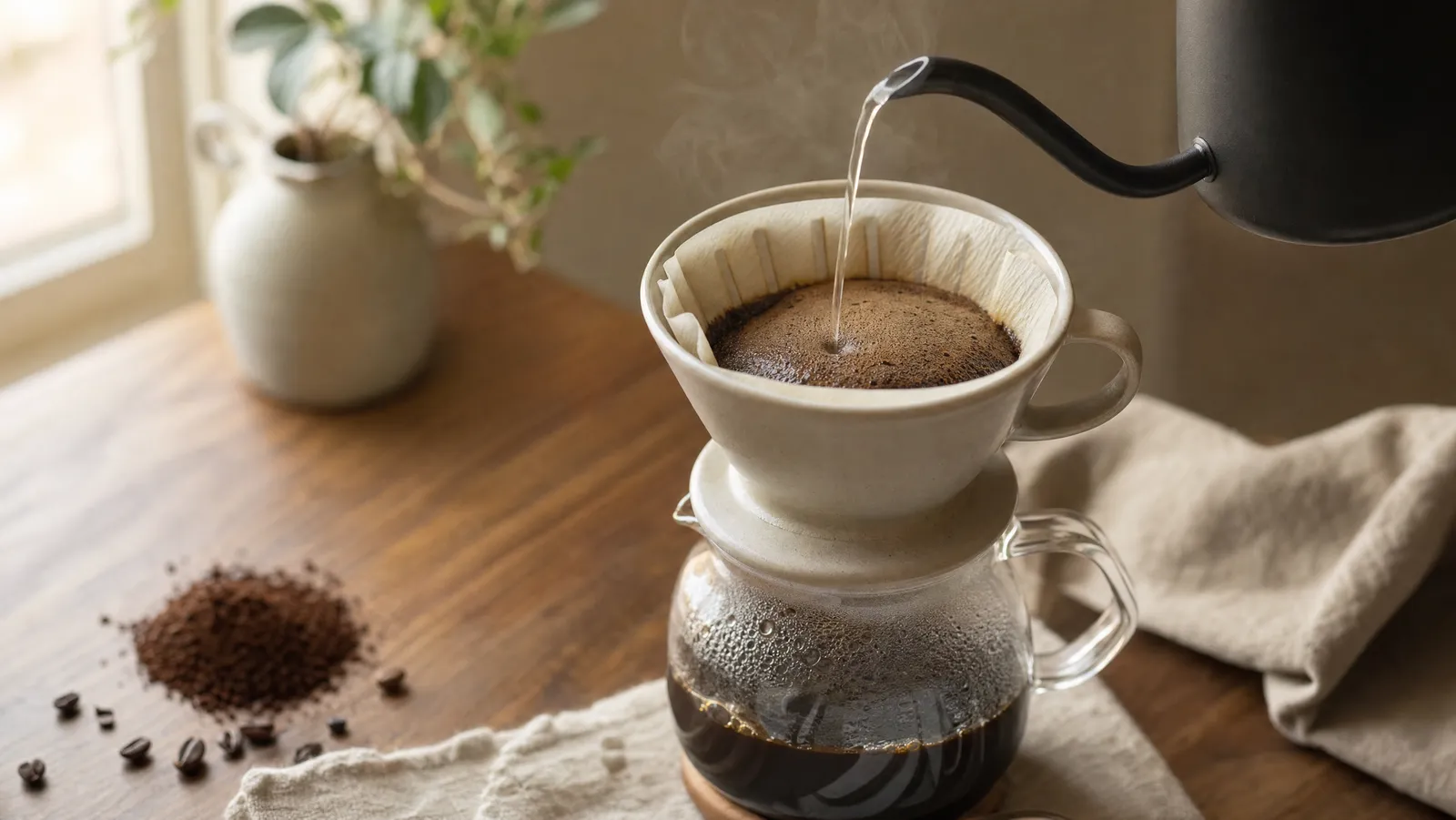
Affiliate disclosure: Sweeter Grind is a participant in the Amazon Services LLC Associates Program. We may earn commissions on qualifying purchases at no extra cost to you.
Decaf tastes different because the bean is physically different before it ever meets a roaster. Every decaffeination process swells green coffee with water or solvent, which weakens the seed's cell structure — so it roasts on a different curve and shatters differently in the grinder. That is a brewing problem, and most of the gap is closable at home.
In our experience it is really two problems stacked: a bean that behaves differently in your grinder, and a bag that has sat around longer than caffeinated coffee ever would. For the wider picture on choosing decaf coffee, start there — this article is about what to do once the bag is on your counter.
What Decaffeination Does to the Bean
Caffeine is removed from green, unroasted coffee. Whatever agent does the extracting — a solvent, water carrying a coffee extract, or pressurised carbon dioxide — the first move is always the same: soak or steam the beans until they swell and the caffeine becomes mobile. We walk through each method in how decaf coffee is made.
That soak is the whole story. Swelling a dense, glassy green seed with hot water, driving caffeine out through the cell walls, then drying it back down leaves a bean structurally looser than it began. Perfect Daily Grind, in its guidance for roasters, puts the consequence plainly: "decaffeinated coffee is lighter and less dense because the caffeine compounds have been removed."
None of that is a defect. It does mean the bean in your grinder is not the same object as a caffeinated bean from the same farm, and three things follow.
Three Things That Follow From That
1. It roasts on a different curve, and the colour cues lie. Swiss Water's roasting guidance notes that the expansion and contraction of decaffeination "will affect the structure of the coffee and the way it holds moisture," and that a decaffeinated coffee "will more readily give up its moisture early in the roast." Colour is the bigger trap: Swiss Water says its processed coffee "starts out a darker shade of green," keeps "a darker color through the entire roast," and that roasters therefore "have to move past the roasted whole bean color."
Perfect Daily Grind quotes Aaron Braun of Swiss Water making the same point from the other side — "Coffee might look visibly more developed than it actually is." The folklore overshoots, though. Perfect Daily Grind says first crack should occur at roughly the same time for decaf and regular beans; what changes is that "the roast is likely to progress faster after first crack when it's decaf in the drum," because of the degraded cells and lighter weight. The sound is a weaker cue too: in Swiss Water's guidance, one roaster describes smelling for first crack and watching a thermocouple, with listening demoted to a secondary check.
2. It grinds finer than the number on your dial. This is the most useful fact here. A looser, more brittle bean fractures more readily at the same burr gap, so one setting yields a finer average particle and more fines. Mark Al-Shemmeri, a coffee researcher whose doctoral work at the University of Birmingham examined decaffeination's effect on roasting and grinding performance, notes that decaffeinated coffees are anecdotally said to "grind finer" — an observation well known enough in the trade to be worth measuring.
Practically: your existing grind setting is wrong for decaf, and wrong in a specific direction. More fines mean more surface area, more flow resistance and a slower drawdown — which is how a brew ends up bitter and muddy at the same time. Coffee extraction 101 covers the vocabulary we use below.
3. Some aromatics leave with the caffeine. No process is perfectly selective; the soak takes flavour precursors along with the caffeine. That is why even excellent decaf reads a little quieter than its caffeinated twin. In our view it shows up as reduced aromatic intensity rather than changed character — the fruit is still there, just turned down.
One correction worth making: removing caffeine does not remove most of the bitterness. Thomas Hofmann, professor of food chemistry at the Technical University of Munich, estimates that only about 15% of coffee's perceived bitterness comes from caffeine, with roast-generated chlorogenic acid lactones and phenylindanes doing the heavy lifting. Bitter decaf is a roast or brew problem, not a decaf problem.
The Causes That Have Nothing to Do With Process
Before you blame chemistry, check the bag. In our experience the process explanation is the right one far less often than a stale bag is.
Shelf time. Decaf turns over more slowly almost everywhere it is sold — fewer buyers, same shelf. A bag that took eight weeks to sell was stale before you opened it, and no grind adjustment fixes that.
Dark roasting as camouflage. Plenty of decaf is roasted dark. That flattens origin character and, per Hofmann's findings above, generates the compounds that taste harsh. It is a reasonable commercial hedge against green coffee of uncertain quality and a bad deal for the cup.
Inherited reputation. Much of what people remember about decaf is a memory of supermarket coffee from twenty years ago. The specialty end of the category today is a different product.
The Four Levers That Fix Most of It
Four adjustments, in descending order of impact.
- Grind coarser than you think. Start two to three clicks coarser than your caffeinated setting on the same brewer. That is our recommended starting point, not a constant — grinders differ enormously, so overshoot deliberately and walk it back.
- Use hotter water. The Specialty Coffee Association's Golden Cup standard puts brewing temperature at 200°F ± 5° (93°C ± 3°) at the moment of contact. With decaf we work at the top of that band, 200–205°F, because a quieter aromatic profile wants more extraction energy, not less.
- Brew a slightly higher dose. Nudge the ratio to 1:15 where you normally run 1:16. Our brew ratio calculator does the arithmetic for any dose.
- Buy fresher and use it faster. Check the roast date, buy smaller bags, and treat your freshness window as tighter than usual.
On that last point, the honest version: the claim that decaf goes stale faster is widely repeated and thinly evidenced. Roasters who make it, such as West Berkshire Roastery, attribute it to decaf beans being more porous and off-gassing CO2 faster — yet the same guidance concedes decaf "stales at a similar rate to regular coffee" and that the oxygen effect is "small and manageable with proper storage." Our position: buy small and buy recent because decaf's shelf time is longer, not because the bean decays faster. See how to store coffee beans for freshness for the general principles.
Step-by-Step: How to Dial In Decaf
Step 1: Start with a fresh bag
Find the roast date, not the best-before date. Perfect Daily Grind's degassing guidance describes roughly three days to two or three weeks after roasting as a good window to brew, with Mark Michaelson of Onyx Coffee Lab putting espresso at five to seven days off roast. Buy 250g rather than a kilo until you know you like it; the best decaf coffee beans is where we would start.
Step 2: Weigh the dose and the water
Volume measurements hide the variable you are trying to control: you cannot tell whether a grind change helped if the dose moved too. Decaf punishes sloppiness more than regular coffee because the flavour margin is thinner.
Step 3: Move your grinder two to three clicks coarser
Take your normal setting for that brewer and go coarser by two to three clicks, or about one number on a stepped dial. Expect it to feel like too much. If the cup comes out weak and sour, come back one click. Our grind size guide has baseline settings per method.
Step 4: Push the water to the top of the range
Brew at 200–205°F (93–96°C) rather than letting the kettle coast down to 195°F. With a variable-temperature gooseneck kettle, set the top of the SCA band. Without one, boil and wait about 30 seconds rather than the full minute you might normally give it.
Step 5: Brew at 1:15 instead of 1:16
Add roughly a gram of coffee per 15 grams of water — on a 350ml pour over, about 23g instead of 22g. Small, but it lifts body and perceived sweetness enough to matter. Keep everything else fixed for this cup.
Step 6: Time the brew and compare it against your regular coffee
Run our brew timer and note the total. If your decaf takes noticeably longer than the same recipe with caffeinated coffee, fines are choking the bed and you have not gone coarse enough. If it runs faster and tastes thin, you overshot. Brew time is the most reliable signal that the grind is off.
Step 7: Change one variable, then taste again
Grind first, ratio second, temperature last. Change one thing per brew. Sour and thin means finer or hotter; harsh and drying means coarser or a shorter contact time.
Step 8: Write the recipe down and re-check it in a week
Record the dose, water weight, grind setting and time, then re-check about a week later. As the bag degasses the same setting brews differently, and decaf gives you less margin to absorb that drift.
Method by Method
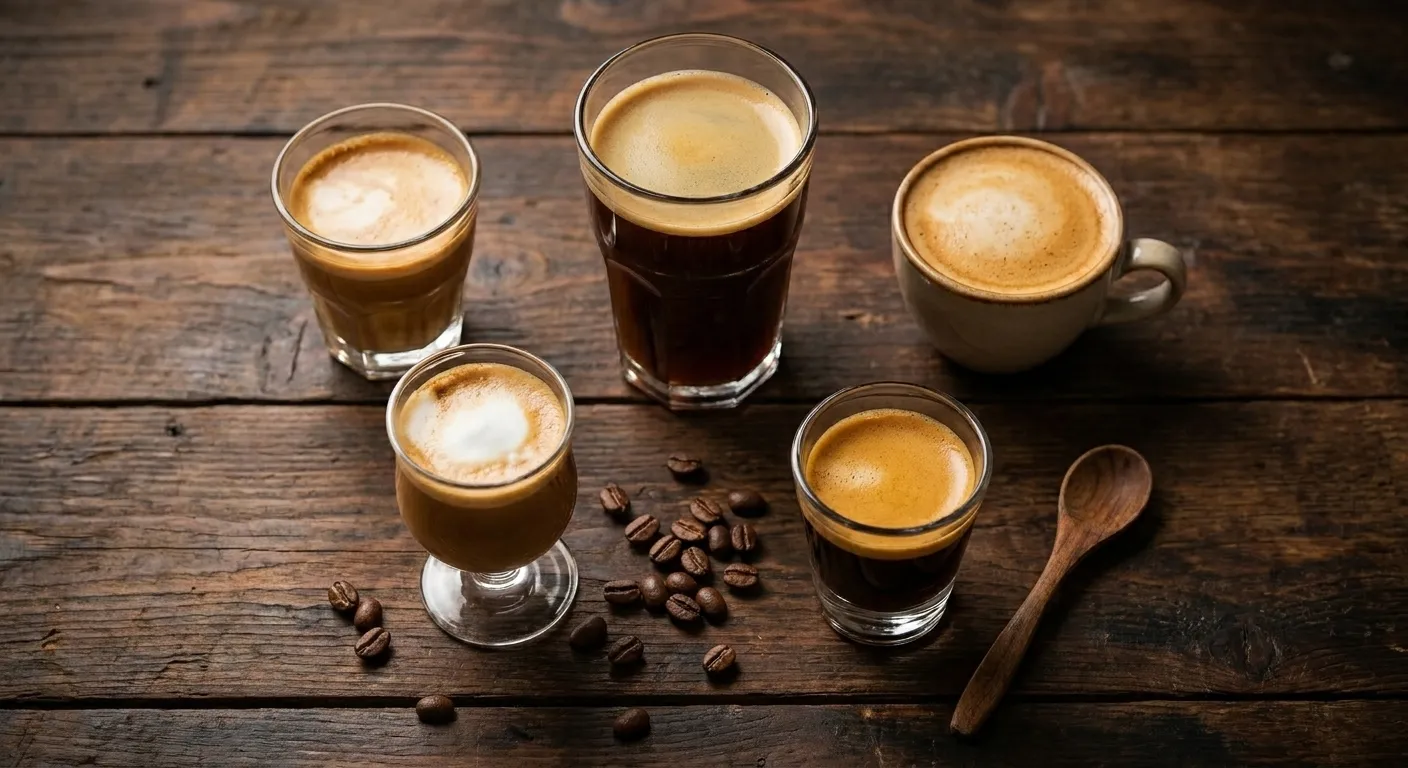
Espresso needs the biggest adjustment. The puck is the flow restriction, so extra fines hit hardest here. Expect to go noticeably coarser than your caffeinated setting. Crema is often thinner and paler on decaf, which we treat as normal rather than a fault — judge the shot on taste and yield, not on the head. Our guide to the best decaf espresso beans covers which roasts hold up under pressure.
Pour over: watch the drawdown. A stalling bed is the classic decaf symptom. If your V60 or Kalita runs 30–60 seconds longer than usual on the same recipe, that is fines, not technique. Go coarser before you change your pour pattern.
French press is the most forgiving method for decaf, and the one we would recommend to anyone who does not want to dial anything in. Full immersion means grind size sets extraction rate rather than flow rate, so a bed full of fines cannot choke anything. The cost is sediment — decant off the top and leave the last centimetre.
Cold brew is more forgiving still. A 12–18 hour contact time swamps small grind errors, and the low temperature suppresses the harsh compounds a dark decaf roast brings along.
Troubleshooting
| Symptom | Likely cause | Fix |
|---|---|---|
| Tastes flat and hollow | Under-extraction, or an old bag | Go one click finer, brew at 200–205°F, check the roast date |
| Tastes bitter and ashy | Over-extraction from fines, or a dark roast | Go two clicks coarser and shorten contact time; if it persists, blame the roast |
| Brews too fast and tastes weak | You overshot the coarse adjustment | Come back one click and raise the dose to 1:15 |
| Drawdown stalls or the bed floods | Fines choking the filter | Coarsen by two clicks and stop agitating the bed late in the brew |
| Espresso runs fast and blonde | Channelling, or a stale bag | Distribute more carefully and go finer; if crema is absent too, check the roast date |
| Smells like almost nothing dry | Aromatics lost to shelf time | No brewing fix — buy a smaller, fresher bag |
What You Can and Cannot Fix
You can fix grind, ratio, temperature and freshness, and those four account for the overwhelming majority of bad decaf. A well-chosen bag, ground deliberately coarser and brewed at the top of the SCA range, is a genuinely good cup of coffee.
What you cannot fix is the aromatic intensity the soak took with it, or a roast that went dark to hide something. Decaf at its best sits a step quieter than its caffeinated equivalent — often sweeter and rounder, but less loud. We think that is a fair trade, provided you buy from roasters who treat decaf as a real coffee. For choosing among processes and roasters, our complete decaf coffee guide is next.
Frequently Asked Questions
Should I grind decaf coffee finer or coarser?
Coarser. Decaffeinated beans are structurally looser and break down more readily, so the same setting produces a finer grind with more fines. We suggest starting two to three clicks coarser on the same brewer, then dialling back one click at a time until the cup balances.
Why does my decaf taste weak and watery?
Usually under-extraction or age. Raise the water temperature to 200–205°F, move the ratio from 1:16 to 1:15, and if it is still hollow, check the roast date — a bag that lost its aromatics before you bought it cannot be brewed back to life.
Does decaf coffee go stale faster than regular coffee?
The evidence is thinner than the claim. Roasters who say so point to decaf being more porous and losing CO2 faster after roasting, but the same guidance usually concedes decaf stales at a broadly similar rate. We buy decaf in small bags anyway, because slower turnover in shops means it is often older when it reaches you.
Is decaf harder to make espresso with?
Yes, mainly for mechanical reasons. Extra fines increase resistance in the puck, so your caffeinated grind setting will usually run slow or channel. Thinner, paler crema is normal on decaf and not a sign of a bad shot — judge it on taste and on the weight of liquid in the cup.
Does removing caffeine make coffee less bitter?
Barely. Research from Thomas Hofmann at the Technical University of Munich attributes only around 15% of coffee's perceived bitterness to caffeine, with roast-generated compounds responsible for most of the rest. If your decaf tastes bitter, look at how dark it is roasted and how finely you ground it.