Coffee Extraction 101: What Makes Coffee Taste Bitter or Sour
 Tommie Chaney·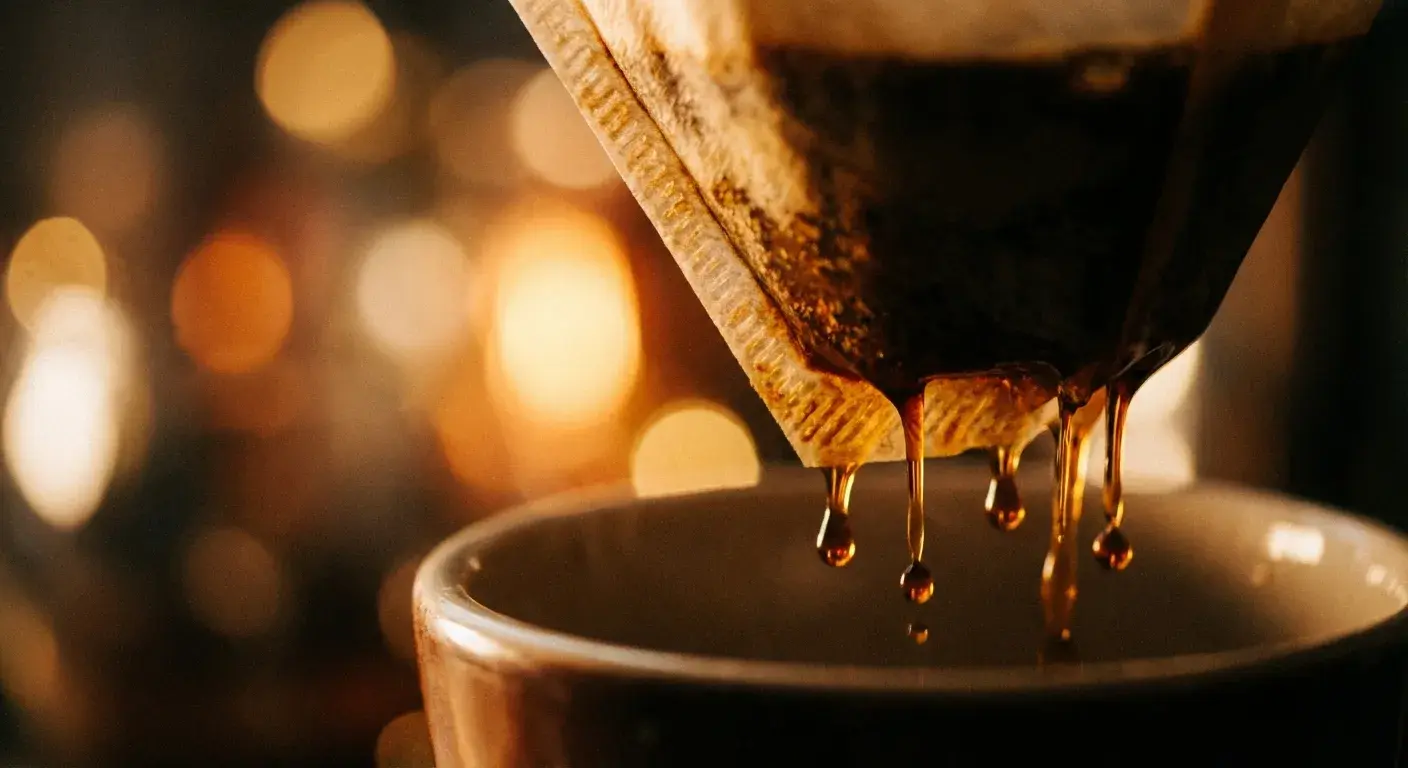
Your coffee tastes sour this morning. You switch to a finer grind and tomorrow it tastes bitter. You adjust the temperature and the next cup tastes hollow. You are not doing something wrong — you are bumping into the most important concept in all of brewing: extraction.
Once you understand extraction, you will understand exactly why every variable in brewing matters and what to change when your coffee tastes off. Dialing in a recipe stops feeling like guesswork and starts feeling like cooking — where you know which knob to turn.
This article contains affiliate links. We may earn a commission if you make a purchase through our links, at no extra cost to you.
Below is what extraction actually is, what goes wrong at each end of the spectrum, and which variable to change when you taste a problem. Extraction shows up in every brewing method — see our Complete Guide to Coffee Brewing Methods for how each method handles it.
What Is Coffee Extraction?
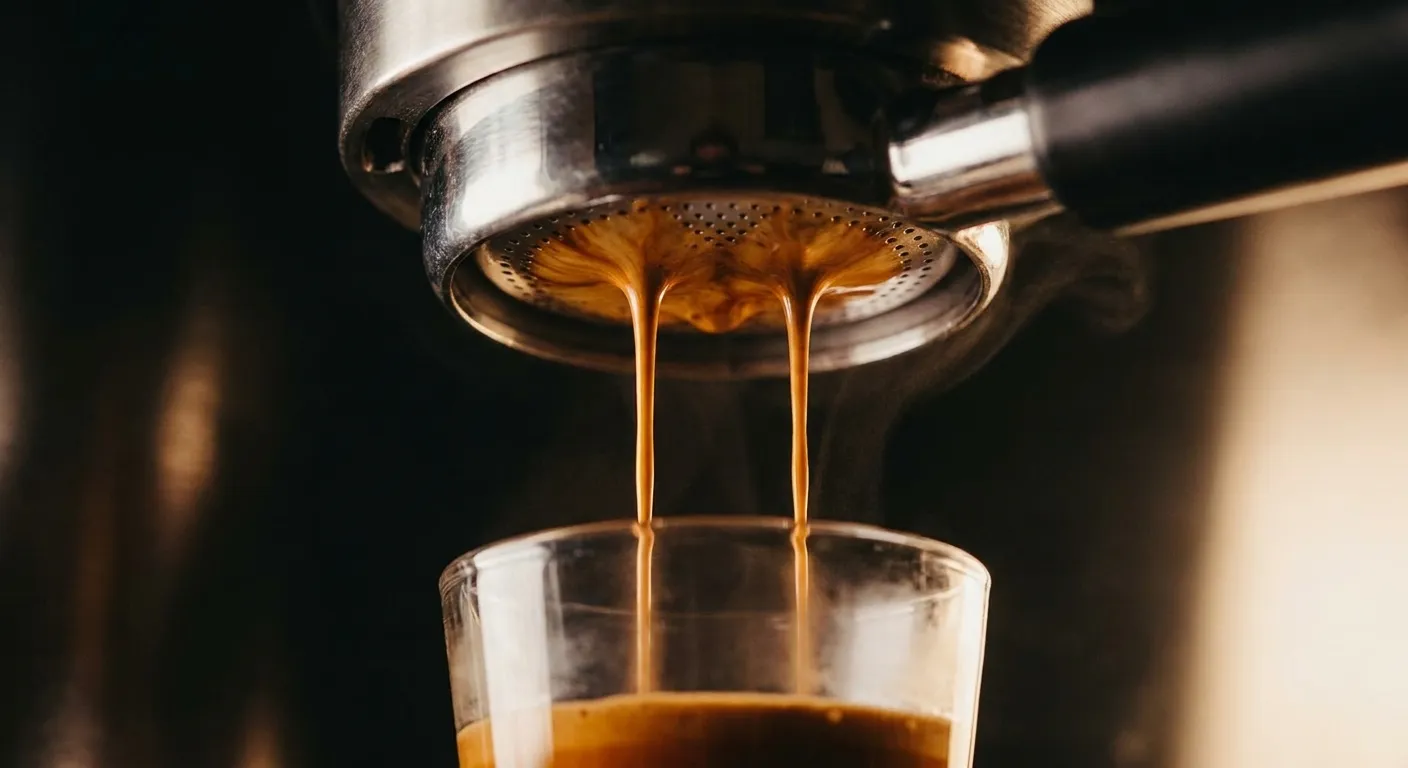
When hot water hits ground coffee, it begins dissolving and pulling soluble compounds out of the grounds into the liquid. That process is extraction.
Coffee grounds contain hundreds of compounds — acids, sugars, oils, bitter compounds, and more. Not all of them are desirable, and critically, they do not all dissolve at the same rate. Extraction follows a predictable sequence:
- Acids extract first — bright, sour, fruity notes
- Sugars and balanced compounds extract in the middle — sweetness, body, complexity
- Bitter compounds (tannins, harsh oils) extract last — bitterness, dryness, astringency
This sequence is why extraction percentage matters so much. Too little extraction and you get mostly acids with none of the sweetness. Too much and you drag out the bitter compounds that should have stayed in the grounds.
Extraction yield is the percentage of the coffee's dry weight that ended up dissolved in your cup. It is calculated as:
Extraction Yield (%) = (Weight of dissolved solids) ÷ (Dry weight of coffee grounds) × 100
The SCA 18–22% Target
The Specialty Coffee Association (SCA) recommends a target extraction yield between 18% and 22%. This range originated from research by Professor E. E. Lockhart at MIT in the 1950s and has been validated by the SCA through decades of sensory research. Within this window, the pleasant acids and sugars have been fully extracted while most of the harsh bitter compounds remain in the grounds.
A coffee extracted to 20% is not the same as one at 18% or 22% — you will taste the difference — but all three fall inside the "balanced" zone. Below 18% and you are in under-extraction territory. Above 22% and you are over-extracting.
Under-Extraction: The Sour, Thin Cup
Under-extracted coffee has not had enough of its soluble compounds pulled into the water. Because acids extract first, an under-extracted cup is dominated by sourness, with none of the sweetness or body that would balance it.
What It Tastes Like
- Sour or acidic — sharp, puckering, like unripe fruit or lemon without sugar
- Thin or weak — very little body, almost watery
- Salty — a slightly odd, vegetal saltiness is a hallmark of under-extraction
- Tea-like — dilute and hollow, with no lingering sweetness
What Causes Under-Extraction
- Grind too coarse — large particles have less surface area; water passes through without extracting enough
- Water too cool — cooler water dissolves compounds less efficiently; ideal range is 195–205°F (90–96°C)
- Brew time too short — not enough contact time between water and grounds
- Too little coffee — a very high water-to-coffee ratio can leave the cup thin even with good technique
- Insufficient agitation — in immersion methods, grounds that are never disturbed extract unevenly
Over-Extraction: The Bitter, Dry Cup
Over-extracted coffee has pulled too much from the grounds, reaching past the pleasant flavors and into the harsh compounds that give coffee its worst qualities.
What It Tastes Like
- Bitter — a sharp, medicinal bitterness that coats the mouth
- Astringent — a drying, puckering sensation on the back of the palate (similar to over-steeped black tea)
- Hollow or flat — the pleasant flavors have been overwhelmed or muted
- Dry finish — no sweetness remains on the palate after swallowing
What Causes Over-Extraction
- Grind too fine — massive surface area means water extracts too quickly and too aggressively
- Water too hot — above 205°F (96°C), water dissolves harsh compounds at an accelerated rate
- Brew time too long — extended contact time keeps pulling bitter compounds into the cup
- Too much coffee with too little water — high coffee concentration can over-extract even at correct brew times
- Too much agitation — excessive stirring or pouring can break down the grounds and speed extraction past the sweet spot
The Sweet Spot: Balanced, Sweet, and Complex
A properly extracted cup — roughly 18–22% extraction yield — tastes balanced. The acids are there, but they are rounded out by sweetness. There is body and texture. The finish is clean with no harsh bitterness.
You will often know it when you taste it. But here are the markers to look for:
- Sweetness — even without sugar, coffee extracted properly has a natural sweetness
- Complexity — multiple flavors are perceptible, not just one dominant note
- Balanced acidity — bright but not sharp, present but not overwhelming
- Clean finish — pleasant aftertaste that fades gradually, not a bitter or sour linger
- Full body — not watery, not syrupy, but a satisfying texture
If your coffee has all of these, you are in the zone. Do not change anything.
The 5 Variables That Control Extraction
Every brewing decision you make affects extraction percentage. Here are the five levers, in order of impact.
1. Grind Size
Grind size is the single most powerful extraction variable. Finer grinds have dramatically more surface area, which allows water to extract soluble compounds faster and more completely. Coarser grinds slow extraction down.
This is why grind size is almost always the first adjustment to make when dialing in. Our Grind Size Guide covers the correct grind for every brewing method from espresso to cold brew.
Under-extracted? Grind finer. Over-extracted? Grind coarser.
2. Water Temperature
Water temperature affects how quickly and aggressively compounds dissolve. Hot water extracts faster and more completely — including the bitter compounds at the end of the extraction curve.
- 195–205°F (90–96°C) is the SCA-recommended range for most brewing methods
- Lighter roasts generally benefit from the higher end of this range
- Darker roasts extract more easily and can tolerate slightly cooler water (around 195°F)
- Water below 185°F (85°C) consistently leads to under-extraction in most methods
3. Brew Time
The longer water and coffee are in contact, the more extraction occurs. Brew time is the natural result of grind size, pour rate, and method — but you can also control it directly.
Use our Brew Timer to track your contact time precisely. A consistent timer removes one variable from the equation and helps you isolate what else might need adjusting.
4. Coffee-to-Water Ratio
Ratio affects strength (TDS — total dissolved solids per unit of water) more than extraction yield, but the two interact. A very high ratio (lots of coffee, little water) can lead to over-extraction even at correct brew times. A very low ratio (little coffee, lots of water) can lead to under-extraction.
The standard starting point for most filter brewing is 1:15 to 1:17 (1 gram of coffee per 15–17 grams of water). Our Brew Ratio Calculator takes the guesswork out of measuring.
5. Agitation
Agitation — stirring, swirling, or the turbulence of pouring — affects how evenly water contacts all the grounds. Proper agitation prevents "channeling," where water finds paths through the grounds instead of extracting evenly.
In pour over, a slow spiral pour creates agitation and ensures even saturation. In French press, a gentle stir after the initial pour breaks up dry clumps. In AeroPress, a brief stir of 10–15 seconds before pressing increases extraction consistency. More aggressive agitation speeds extraction; less agitation slows it.
How to Dial In: The Practical Adjustment Guide
When your coffee tastes off, work through this decision tree:
| If your coffee tastes… | The problem is likely… | Try this first |
|---|---|---|
| Sour, thin, or salty | Under-extraction | Grind finer |
| Bitter, dry, or astringent | Over-extraction | Grind coarser |
| Sour AND bitter | Uneven extraction | Improve agitation or pour technique |
| Weak and watery | Low strength (not extraction) | Use more coffee |
| Strong but harsh | Over-extraction | Grind coarser or reduce water temp |
| Flat with no brightness | Over-extraction or stale beans | Grind coarser; check bean freshness |
The one-variable rule: Only change one thing at a time. If you change grind size AND temperature AND brew time simultaneously, you will not know which adjustment made the difference. Pick the most likely culprit, change it, taste again, and iterate.
Start with grind size. It is the fastest, most effective adjustment. Make it your first move in almost every situation. Temperature and time are secondary adjustments once grind is roughly dialed in.
Frequently Asked Questions
Does extraction yield actually matter for home brewers, or is it just for professionals?
The percentage itself is a professional metric — most home brewers never measure it directly. What matters is knowing that the concept exists and understanding what it predicts. If your coffee is sour, it is under-extracted. If it is bitter, it is over-extracted. You can dial in entirely by taste without ever calculating a percentage.
What is TDS and how does it relate to extraction?
TDS (total dissolved solids) measures the concentration of dissolved compounds in your brewed coffee, usually expressed in mg/L or as a percentage. Extraction yield measures how much of the coffee's mass ended up in the cup. They are related but distinct: a cup can be high TDS (strong) but under-extracted, or low TDS (weak) but well-extracted. Professionals use a refractometer to measure TDS and then calculate extraction yield.
Why does my pour over taste sour in the beginning and bitter at the end?
This is often a sign of uneven extraction — sometimes called "channeling." Water is finding fast paths through parts of the grounds (under-extracting those sections) while over-extracting others. Better agitation during the bloom, a more even pour pattern, and ensuring uniform grind size all help.
Can I fix bad coffee with milk or sugar?
Somewhat. Milk softens bitterness and sugar masks sourness. But these are band-aids. If you understand extraction, you can brew coffee that does not need fixing. Knowing whether to go finer or coarser is more satisfying — and cheaper — than adding sweeteners to mask the problem.
Where to Go Next
Grind size is your most powerful lever. Start there. Taste. Adjust. Repeat. The same process a barista uses, just with cheaper equipment.
For how each brewing method handles these variables differently, return to the Complete Guide to Coffee Brewing Methods.