Gooseneck Kettle vs Regular Kettle: Which Do You Really Need for Coffee?
 Tommie Chaney·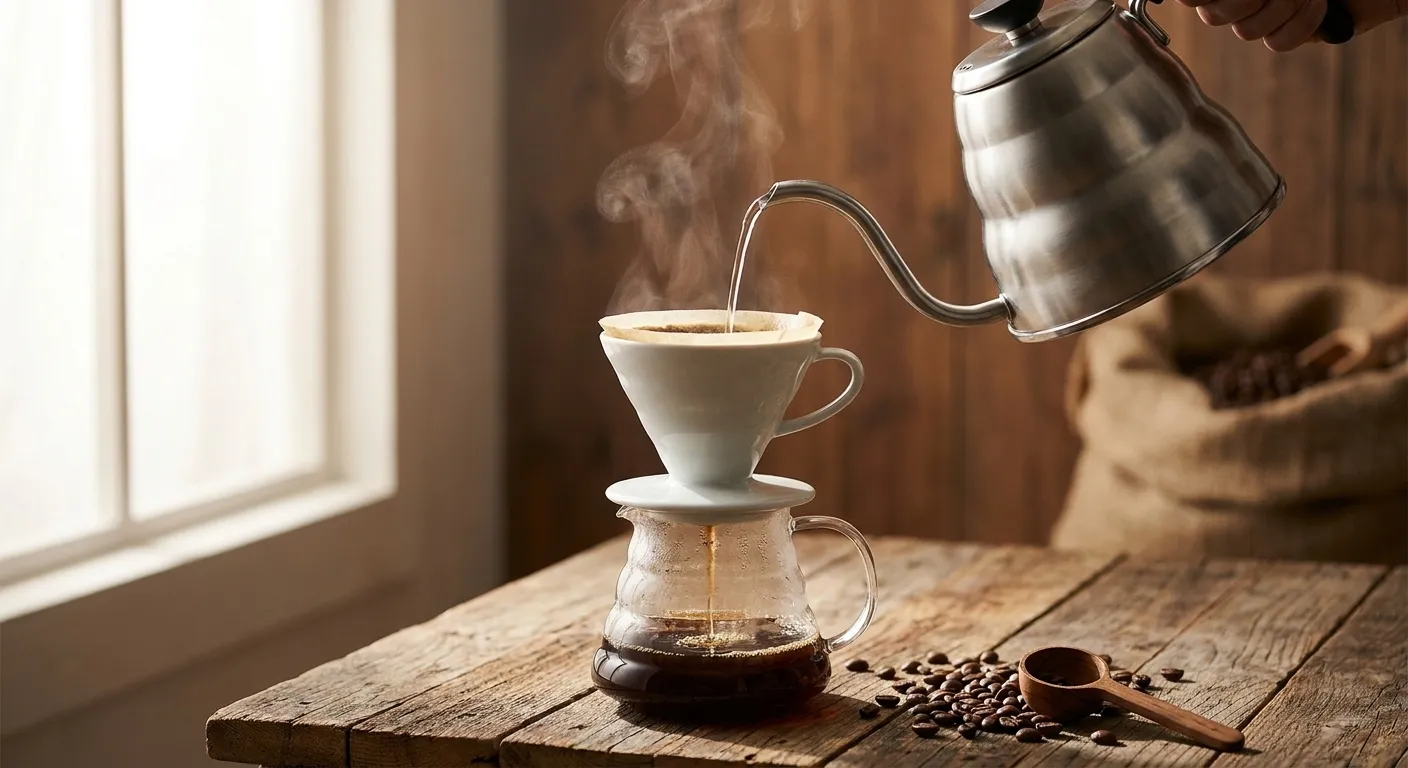
Affiliate disclosure: Sweeter Grind is a participant in the Amazon Services LLC Associates Program. We may earn commissions on qualifying purchases at no extra cost to you.
The gooseneck kettle is the single most visible piece of specialty coffee gear. Every third-wave cafe has one — but do you actually need one at home? Only for certain brewing methods, and even then only for the thing those methods specifically demand: pour control.
Below, the honest breakdown of when a gooseneck is worth buying, when a regular kettle does the job, and which kettle features matter more than the spout shape.
For the wider context of how kettles fit into a full coffee setup, see our Ultimate Coffee Equipment Guide 2026.
What a Gooseneck Actually Does
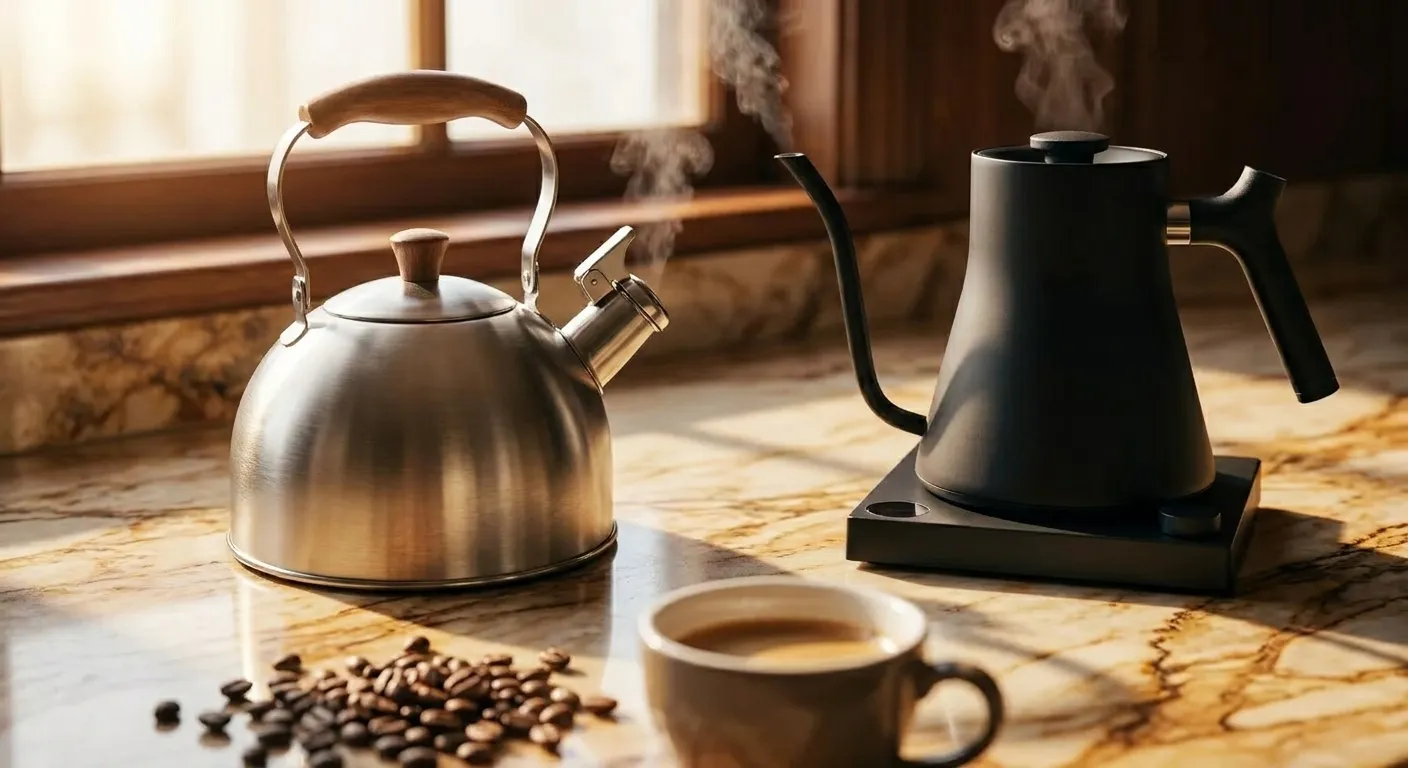
A gooseneck spout is a long, curved tube (shaped like a goose's neck, hence the name) that produces a thin, slow, controllable stream of water. The geometry matters: the narrow opening and long spout straighten the flow, so water comes out in a pencil-thin stream that you can direct precisely, at a steady rate, at any flow volume.
A regular kettle spout — whether on a traditional stovetop whistler or a modern electric — is designed for pouring efficiently into a mug or pot. Water comes out in a wider, faster, less controllable gush. Try to use a regular kettle to pour a slow, even stream for 30+ seconds and you will make a mess.
For most kitchen purposes (tea, instant coffee, oatmeal), a regular kettle is perfect. For pour over coffee, it is the wrong tool.
Which Brewing Methods Demand a Gooseneck?
Yes — Gooseneck Required
Pour over (V60, Chemex, Kalita Wave, Origami). Pour over extraction depends on where and how you pour water over the grounds. The gooseneck lets you:
- Bloom evenly. The first 30–45 seconds of a pour over involves pouring roughly 2x the coffee weight in water and letting it degas. Uneven bloom creates channels where water bypasses grounds. A gooseneck wets the grounds uniformly.
- Maintain pour rate. Pour over recipes specify pour rates (e.g., 150g of water in 30 seconds). A gooseneck gives you precise rate control; a regular kettle dumps water in uncontrolled bursts.
- Avoid disturbing the bed. Pouring too hard digs a crater in the grounds and exposes the filter. A gooseneck lets you pour gently enough to keep the bed intact.
If pour over is your method, a gooseneck is not optional. It is the difference between producing a pour over and producing a mess that happens to drain through a filter.
Sometimes — Gooseneck Helpful
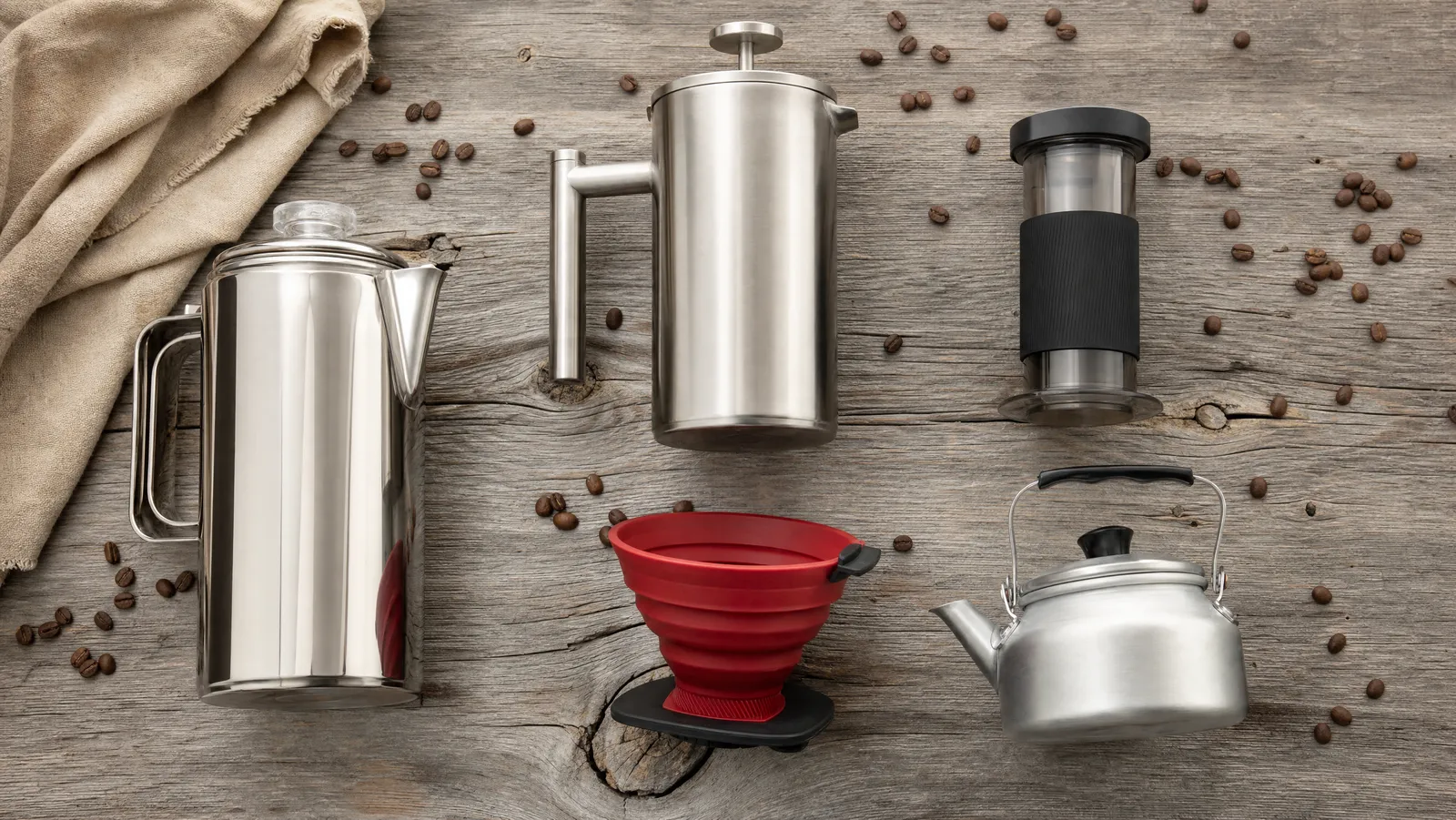
AeroPress. Most AeroPress recipes involve a single pour rather than a slow, controlled stream. A regular kettle works fine. However, some advanced AeroPress recipes (Hoffmann's Champion method, for example) specify a slow pour — in those cases, a gooseneck helps.
Siphon/vacuum pot. Water heats in the lower chamber, so the kettle is not involved in the extraction phase. Pre-heating water in a gooseneck makes no difference.
No — Regular Kettle Fine
French press. You pour water into the vessel, stir once, wait four minutes, press. A regular kettle does the entire job.
Drip coffee machine. The machine has its own water reservoir. The kettle is not involved at all.
Moka pot. Water goes in the lower chamber of the pot itself before heating on the stove. No kettle involvement unless you pre-heat water to speed things up.
Cold brew. Cold water goes over coarse grounds. No kettle needed.
Espresso machine. The machine has a boiler. No kettle involvement.
So the gooseneck question reduces to: Are you making pour over? If yes, you need a gooseneck. If no, you probably do not.
Temperature Control: The Feature That Matters More
People conflate "gooseneck" with "temperature-controlled electric kettle" because most cafe goosenecks are both. They're two separate features.
You can buy a gooseneck with no temperature control (just a boil function). You can buy a regular kettle with precise temperature control. And you can buy either combination.
For coffee specifically, temperature control matters more than spout shape. The SCA-recommended brewing range is 195–205°F (90–96°C). Water straight off the boil (212°F) is too hot for most brewing. If your kettle has no temperature readout or control, you are either guessing or boiling and waiting — and the temperature drifts rapidly in an open kettle.
A temperature-controlled regular kettle is genuinely useful for any brewing method. A non-temperature-controlled gooseneck is useful for pour over but still leaves you guessing at temperature.
Priority order:
- Temperature-controlled gooseneck (if you do pour over) — best of both worlds
- Temperature-controlled regular kettle — fine for most methods except pour over
- Non-temperature-controlled gooseneck — works for pour over with technique to manage temp
- Basic kettle with no features — works but you are giving up precision
For the deeper dive on which type of kettle to buy based on your stovetop vs electric preference, see our stovetop vs electric kettle for coffee comparison.
Pour Control: What a Gooseneck Enables
If you do pour over, these are the specific techniques a gooseneck makes possible:
The bloom pour. A spiral pour from the center outward, saturating every ground without leaving dry pockets. A regular kettle dumps water too fast — you end up saturating the center and missing the edges.
Rate-controlled pours. Typical V60 recipes call for a 30–45 second bloom with about 2× the coffee weight in water, then a main pour that lifts total water to ~60% of final weight by 0:45, then a final pour that finishes by 1:10. Hitting those timing targets requires a thin, steady stream. A gooseneck makes that possible; a regular kettle makes it nearly impossible.
Targeted pours. Kalita Wave brewing benefits from pouring in concentric circles, avoiding the edges. V60 brewing benefits from a strong center pour to agitate the grounds. Chemex benefits from alternating between center and outside. All of this requires precision placement that a wide-spout kettle cannot do.
Slow, steady streams. A gooseneck lets you pour at 3g/s or 5g/s at will. A regular kettle pours at whatever rate the spout decides, usually 10g/s+ if you are pouring at all.
What Else to Look For in a Kettle
Whether you go gooseneck or regular, a few features matter:
- Temperature control — ideally 1-degree increments across 140°F–212°F
- Hold function — maintains target temperature while you prep
- Stainless steel interior — no plastic or exposed copper in contact with hot water
- Fast heat-up — most 1500W kettles boil 1L in under 4 minutes
- Handle comfort — gooseneck brewing can take 3+ minutes of holding; a well-designed handle matters
- Display — a clear temperature readout is more useful than a screen full of features
- Capacity — 0.8L–1L is standard for coffee; larger capacities slow down pouring precision
Our roundup of the best electric kettles for pour over coffee covers specific gooseneck options worth considering.
Counter Pour-Over Technique Without a Gooseneck
If you want to try pour over before committing to a gooseneck, here are workarounds:
A stainless steel measuring cup. A 2-cup measuring cup with a narrow pouring lip produces a reasonable stream. Not as controlled as a gooseneck, but better than a regular kettle.
A squeeze bottle. Some home brewers use a chemistry-style squeeze bottle to achieve pour control. Awkward and not recommended long-term but usable.
Boil-and-transfer. Boil water in any kettle, transfer to a small pitcher with a pour spout, and use that to pour over. Temperature drops fast, so work quickly.
These are fine as experiments. If you decide pour over is your method, buy the gooseneck. It is $40–$100 for a basic one and transforms the experience.
Gooseneck Spout Design Details
Not all goosenecks pour the same. Within the category, a few design details differ meaningfully:
Spout tip angle. Some goosenecks angle the tip downward (easier for slow, vertical pours); others are more horizontal (better for long-arm, horizontal-flow pours). The downward angle is more common on enthusiast kettles and easier for beginners.
Spout length. Longer spouts produce finer streams but require more careful aim. Shorter spouts are more forgiving. Most premium goosenecks sit in the middle.
Spout opening diameter. Narrow openings produce thinner, slower streams. Wider openings allow higher-flow pours when needed. A gooseneck with too narrow an opening can feel slow to use; one with too wide an opening gives up some control.
Balance. A good gooseneck is balanced in the hand when full. Some kettles are front-heavy when full of water, which makes extended pour sessions tiring. Read reviews that mention handle balance if you plan to do long pour over sessions.
Handle material. Plastic handles stay cool; metal handles get warm. Bakelite or silicone-wrapped handles are common on enthusiast kettles.
If you can, handle a gooseneck in person before buying. A kettle that fits your hand and pours the way you like is worth the trouble to find.
Lid Design (It Matters More Than You'd Think)
Kettle lids are not decorative. Poorly designed lids slip off mid-pour — potentially catastrophic given the water is 200°F+. Quality goosenecks either:
- Lock the lid with a small mechanism that prevents slipping
- Have a heavy, tight-fitting lid that will not slide off at pouring angles
- Use a magnetic lid retention (premium models)
Check reviews specifically for the phrase "the lid slides off when I pour." If you see it, avoid the model. This is a safety issue, not an annoyance. The extra $20 for a quality lid is the cheapest safety upgrade you will ever make.
What About Travel?
Traveling with a gooseneck is possible but awkward. Traditional goosenecks have a long, protruding spout that does not fit well in suitcases. If you travel and want pour over control:
- Collapsible goosenecks exist but are rare and not high-quality
- Pour adapters that attach to any kettle spout exist; quality varies
- Dedicated travel pour over setups often use AeroPress (no kettle pour required), which eliminates the problem
For most travelers, bringing a manual grinder and an AeroPress is more practical than trying to travel with a gooseneck kettle.
Frequently Asked Questions
Can I use a gooseneck kettle for everything, including tea?
Yes. A gooseneck is slightly slower to pour large volumes, but it works for tea, instant coffee, hot chocolate, oatmeal — anything you would use a regular kettle for. Many home brewers use a gooseneck as their only kettle.
How much should I spend on a gooseneck?
Entry gooseneck kettles with no temperature control start around $30–$40. Temperature-controlled goosenecks start around ~$80 (Bonavita 1L BV07001US) and go up to ~$265 for the app-connected Fellow Stagg EKG Pro. $80–$140 is the sweet spot for everyday home use.
Is a stovetop gooseneck as good as an electric?
For pour control, yes — the spout is the spout. For temperature, no. Stovetop goosenecks boil water, which you then need to let cool to brewing temperature. Electric variable-temp goosenecks heat to the exact number you want and hold it.
Do cheap gooseneck kettles pour as well as expensive ones?
The premium kettles (Fellow Stagg EKG ~$195, Brewista Smart Pour 2 ~$140, Hario V60 Buono ~$75 stovetop) have more refined spout design and slower minimum pour rates, which matters for advanced pour technique. For basic pour over, a $40 gooseneck pours adequately. The upgrade from a regular kettle to any gooseneck is larger than the upgrade from a cheap gooseneck to a premium one.
Recommended Gooseneck Kettles (2026)
If you have decided you want a gooseneck, here is the shortlist we point readers at most often, from budget to premium. Prices are approximate and drift with retail inventory.
- Bonavita 1L (model BV07001US) — ~$80. The best budget variable-temperature gooseneck. Simple interface, accurate temperature set, thin and well-behaved spout. The default recommendation when someone wants to spend as little as possible without giving up temperature control.
- Cosori Original — ~$90. Popular midrange option. Presets for coffee and tea temperatures, a hold function, and a spout that produces a respectable slow pour. A reasonable first gooseneck.
- Brewista Smart Pour 2 — ~$140. A step up in spout design — slower minimum pour rate and better balance in the hand. Favored by pour-over enthusiasts who find cheaper kettles pour too fast at their slowest setting.
- Fellow Stagg EKG — ~$195. The style leader. PID-controlled temperature, counterbalanced handle, a spout many consider the benchmark. Worth it if you pour over daily and want a kettle that feels good in the hand for years.
- Fellow Stagg EKG Pro — ~$265. The Stagg EKG with app control and a built-in brewing timer. Overkill for most people; the right pick if you want temperature presets tied to specific recipes and you will actually use them.
For stovetop users, the Hario V60 Buono (~$75) is the original stovetop gooseneck and still a standard. The Fellow Stagg Pour-Over Kettle (~$99) is the stovetop sibling of the EKG — same silhouette, no electronics.
All of these pour well enough for pour-over work. Buy the cheapest one in this list that has the feature set you actually need.
Related reading
- The Ultimate Coffee Equipment Guide 2026
- Stovetop vs Electric Kettle for Coffee
- Coffee Brewer Buying Guide: What to Look For
- Best Electric Kettle for Pour Over Coffee
- How to Make Perfect Pour Over Coffee
- Brew Timer
The Short Version
For pour over, a gooseneck is close to mandatory. For every other method, a temperature-controlled regular kettle is equally capable and usually cheaper. If you want one kettle that does everything, a temperature-controlled gooseneck covers both bases.