Resting and Storing Freshly Roasted Coffee: The 2-Week Sweet Spot
 Tommie Chaney·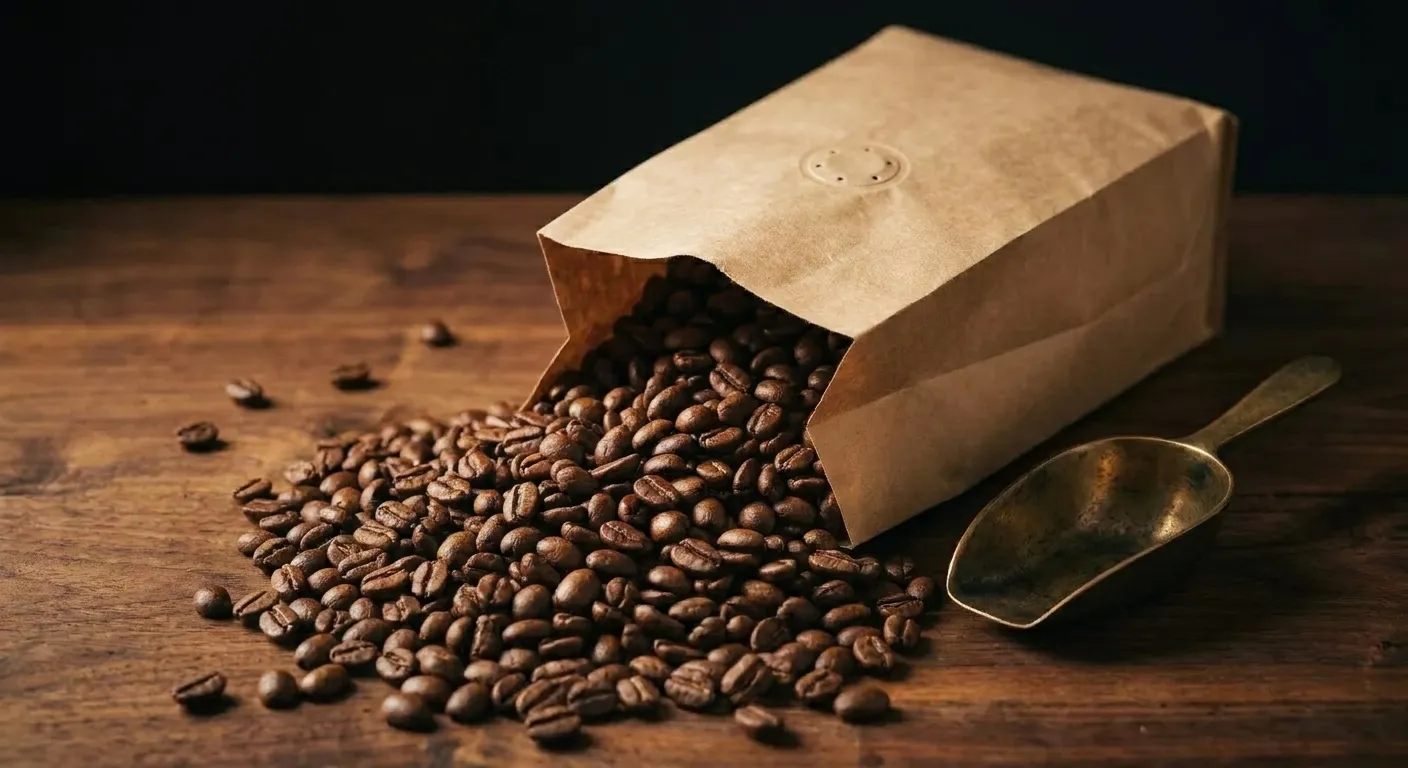
Affiliate disclosure: Sweeter Grind is a participant in the Amazon Services LLC Associates Program. We may earn commissions on qualifying purchases at no extra cost to you.
The counterintuitive truth of home roasting: the coffee you just roasted is not at its best. Brew it immediately and you will get a thin, flat, sometimes sour cup that may convince you home roasting is a waste of time. Wait three days and the same beans will be noticeably better. Wait a week and they can be spectacular. The beans did not change in storage — the chemistry inside them did.
The process is called degassing, and every roasted coffee on earth goes through it. Understanding the curve — when your beans start tasting good, when they peak, and when they begin to fade — is the difference between a home-roasting practice that rewards you and one that frustrates you.
Below: why freshly roasted coffee needs to rest, how long each brew method needs, how to store beans to keep them fresh for as long as possible, whether the freezer helps (yes, with caveats), and when coffee is finally past the point of being worth brewing. For the broader home-roasting context, see our pillar how to roast coffee at home.
Why Fresh Coffee Tastes Bad
Roasting coffee produces large quantities of carbon dioxide inside the bean. The CO2 is generated during pyrolysis — the heat-driven breakdown of sugars and other organic compounds from roughly first crack onward. A darker roast generates more CO2 than a lighter roast. All that gas gets trapped in the porous cellular structure of the bean.
After you stop the roast, that CO2 slowly escapes. This is degassing (or "off-gassing"), and it is exactly as physical as it sounds — you can see valves on coffee bags swell as the gas vents, and if you seal fresh coffee in a rigid airtight container it will visibly pressurize within hours.
CO2 is bad for brewing in two specific ways:
1. It disrupts extraction. When hot water hits fresh coffee grounds, the trapped CO2 rushes out, creating the familiar "bloom" on pour-over and drip coffee. In moderation this is good — a proper bloom signals freshness. In excess, the CO2 physically repels water from the grounds, preventing even extraction. The result is a thin, weak, under-extracted cup even at correct grind and ratio.
2. It carries sour, carbonic notes into the cup. Dissolved CO2 in your brew water behaves like a mild carbonic acid. In small amounts it adds perceived brightness. In the amounts present in just-roasted coffee, it pushes the cup toward sour and sharp — often mistaken for under-extraction when it is actually over-carbonation.
Rest the beans for 24–72 hours and most of the excess CO2 escapes. Rest them for 7–14 days and the remaining CO2 has equilibrated into a productive amount that aids bloom without disrupting extraction. The cup cleans up, sweetens, and opens up.
The Degassing Timeline
A rough timeline from the moment the beans hit the cooling tray:
| Time Off Roast | State | Taste |
|---|---|---|
| 0–12 hours | Aggressive degassing | Harsh, carbonic, thin |
| 12–24 hours | Heavy degassing | Sour, often unpleasant |
| 24–48 hours | Slowing degassing | Starting to show flavor |
| 3–5 days | Approaching peak | Balanced, bright, sweet |
| 5–14 days | Peak window | Complex, full-flavored |
| 2–4 weeks | Gentle decline | Still good but flattening |
| 4–8 weeks | Noticeable decline | Muted, aromas fading |
| 2+ months | Stale | Cardboard, papery, flat |
These windows shift with roast level (darker roasts degas faster), packaging, and storage conditions. The general shape is universal.
Resting by Brew Method
Different brewing methods expose different degrees of sensitivity to fresh coffee. In rough order from most tolerant to least:
Cold brew (2–21 days). The most forgiving method. Slow, cold extraction and long contact time mean CO2 has plenty of time to dissipate before it matters. You can cold brew coffee that is 24 hours off roast — it will work — though 4–7 days is still better.
French press (2–7 days). Full immersion is fairly forgiving. The crust that forms on fresh French press brewing is dense with CO2; wait a few days and the body improves noticeably.
AeroPress (2–7 days). Short contact time is forgiving. Fresh coffee works, but 3+ days is still the target.
Pour over (3–10 days). Where freshness becomes visible. Bloom is highly informative: a violent, towering bloom on day 1 is too much, a flat, weak bloom at week 4 signals stale. The 4–10 day window is where pour-over coffee comes alive.
Drip machine (3–10 days). Similar to pour over but with auto pre-infusion on higher-end machines, which helps manage excess bloom.
Espresso (5–21 days). The most sensitive method. Fresh espresso pulls erratically — channeling, gushing, and sour shots are common with coffee under 5 days. Most espresso coffee peaks 7–14 days off roast. Some naturals and darker roasts want 10+ days.
A general rule: if you can wait a full week before brewing any new bag, you will very rarely be disappointed.
Storage: Valve Bags, Canisters, and Containers
Three storage stages, each with different requirements.
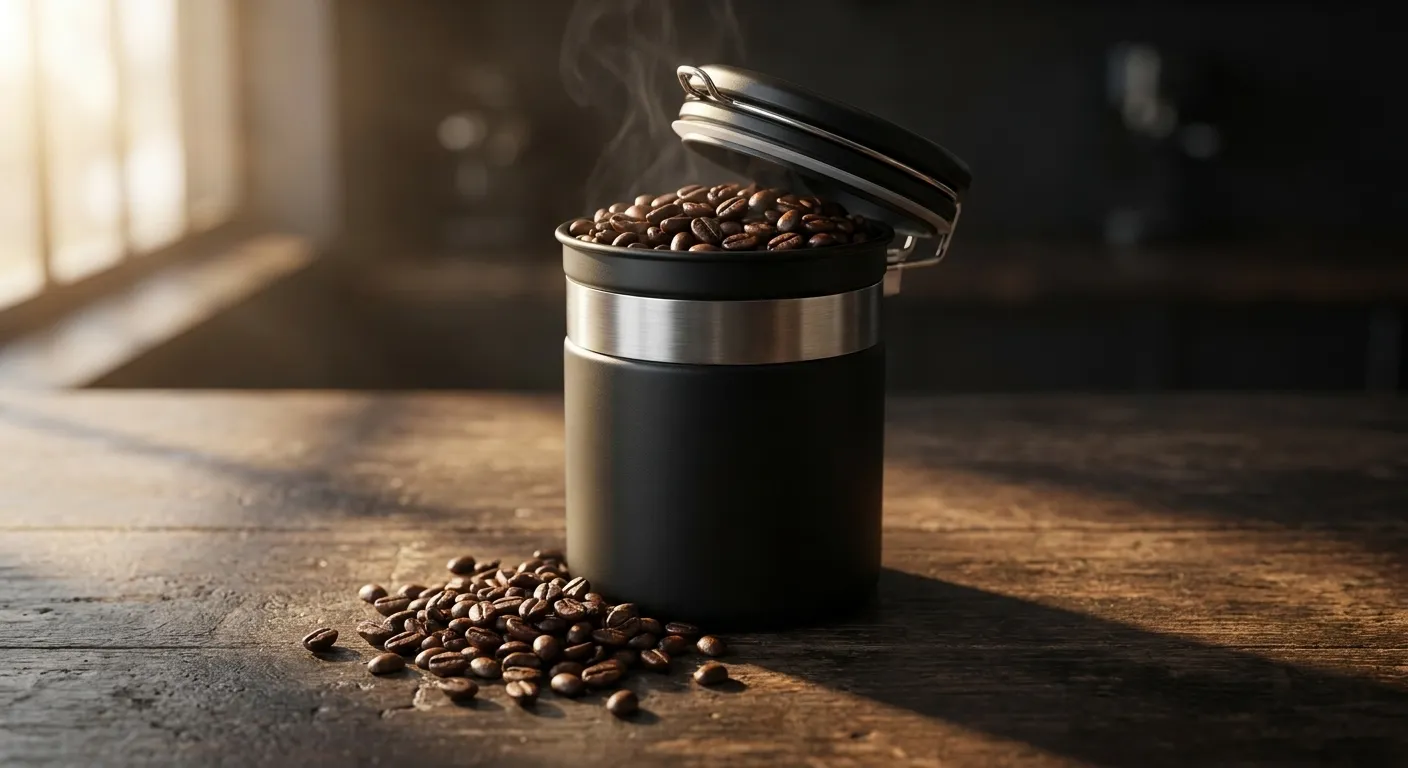
Stage 1 — Active degassing (0–48 hours). The beans are venting heavily. Sealing them in an airtight container risks pressurizing the container; in extreme cases (rigid glass with a tight lid) this can crack the seal or even the container. Either leave the beans in an open bowl loosely covered with a paper towel, or use a one-way valve bag — the standard for commercial roasters. A one-way valve allows CO2 to escape without letting O2 in.
Stage 2 — Primary storage (2 days – 4 weeks). By day 2–3, degassing has slowed enough that a sealed container is safe. The goal here is to block oxygen, light, and moisture.
Good options for primary storage:
- One-way valve bags (the fresh-roast standard; commercial foil-lined coffee bags work)
- Airtight canisters with a silicone gasket (Airscape, Fellow Atmos, Friis, Coffeevac)
- Mason jars with a rubber-sealed lid (imperfect but serviceable)
Bad options:
- Glass jars exposed to light on a countertop (UV degrades flavor compounds)
- Plastic bags without a valve (traps CO2 and oxidation)
- The original paper bags many cafes use (porous; fine for 1–2 days only)
Keep the canister or bag in a dark pantry or cupboard, away from heat and humidity.
Stage 3 — Long-term storage (4+ weeks). The freezer, properly used, dramatically extends coffee's useful life.
Freezer Storage, Done Right
Freezer storage is controversial in coffee circles, but when done correctly it is remarkably effective. The rules:
- Freeze the coffee in small, single-use portions. Vacuum-sealed or at minimum airtight, portioned to one brew session. A single bag of coffee frozen and thawed repeatedly collects moisture and loses quality fast.
- Freeze after degassing. Roughly 3–7 days off roast is ideal. You want the degassing window to be mostly complete.
- Brew directly from frozen. Grind and brew the beans while still frozen. The colder grind actually produces a slightly more uniform particle distribution, and there is no moisture migration into the bag.
- Do not refreeze. Once thawed (or ground), use the portion and move on.
Coffee frozen correctly stays within 90–95% of its peak flavor for 6–12 months. It is the single best hack for home roasters who want to roast larger batches or buy specialty single-origins that might otherwise go stale before they finish them.
Do not freeze coffee in the bag you just opened and will be reopening daily. Each opening condenses moisture onto the cold beans, and you will degrade them faster than if you left them at room temperature.
When Is Coffee Actually Stale?
Stale coffee is not dangerous — it is just disappointing. The telltale signs:
- Aromas are muted or absent. A whiff of fresh-ground beans should be vivid and specific. Stale coffee smells dusty, papery, or just faint.
- Crema on espresso is thin or vanishes quickly. Fresh espresso should produce a thick, stable crema that persists for a minute or more.
- Bloom is flat. Fresh pour-over coffee should rise visibly in the first 30–45 seconds. Stale coffee barely domes.
- Taste is cardboard or papery. The defining stale-coffee note.
- No complexity. A good coffee has layers — acidity, sweetness, finish. Stale coffee is one-dimensional or just bitter.
Coffee past about 6–8 weeks in good storage, or 3–4 weeks in poor storage (open paper bag on a countertop), is generally past its useful window. It is still drinkable, but it is no longer giving you what you paid for.
Quick Reference: Best Practices
| Stage | What to Do |
|---|---|
| Immediately after roast | Cool the beans fast (under 6 minutes to below 50°C / 122°F) |
| 0–12 hours | Leave in an open bowl or loosely covered |
| 12–48 hours | Transfer to a one-way valve bag |
| 2 days – 4 weeks | Airtight canister, dark cupboard |
| 4+ weeks if needed | Vacuum-sealed single portions in the freezer |
| Brewing | Respect per-method rest windows above |
FAQ
How soon can I brew after roasting? Technically, immediately — but it will not taste good. Minimum 24 hours, ideally 3+ days for any drip method, 5+ days for espresso.
Do roasted beans really go stale in a week? Not if stored properly. In an airtight container in a dark cupboard, roasted beans retain 85%+ of peak flavor for 3–4 weeks. In an open bag on the counter, they fade noticeably in a week.
Is it okay to freeze roasted coffee? Yes, if you follow the rules: vacuum-sealed or airtight in single-use portions, frozen after initial degassing, brewed directly from frozen, never refrozen.
Should I store coffee in the fridge? No. Refrigerator air is humid and absorbs ambient odors (onions, garlic, leftovers). Both degrade coffee. Freezer works because it is much drier and colder.
Whole bean or ground — does it matter for freshness? Enormously. Ground coffee has roughly 10,000 times more surface area than whole beans, and stales within hours of grinding. Always grind immediately before brewing.
How can I tell if my roast rested long enough? The bloom on pour-over is the easiest signal. Correctly rested coffee blooms steadily and calmly. Under-rested coffee blooms violently with visible bubbles erupting; over-rested coffee barely blooms at all.
Can resting fix a bad roast? Time cannot rescue a poorly roasted bean. It can soften some rough edges, but underdeveloped or baked roasts will not transform into great coffee no matter how long you wait.