Home Roasting Methods Compared: Air Popper vs Skillet vs Oven vs Dedicated Roaster
 Tommie Chaney·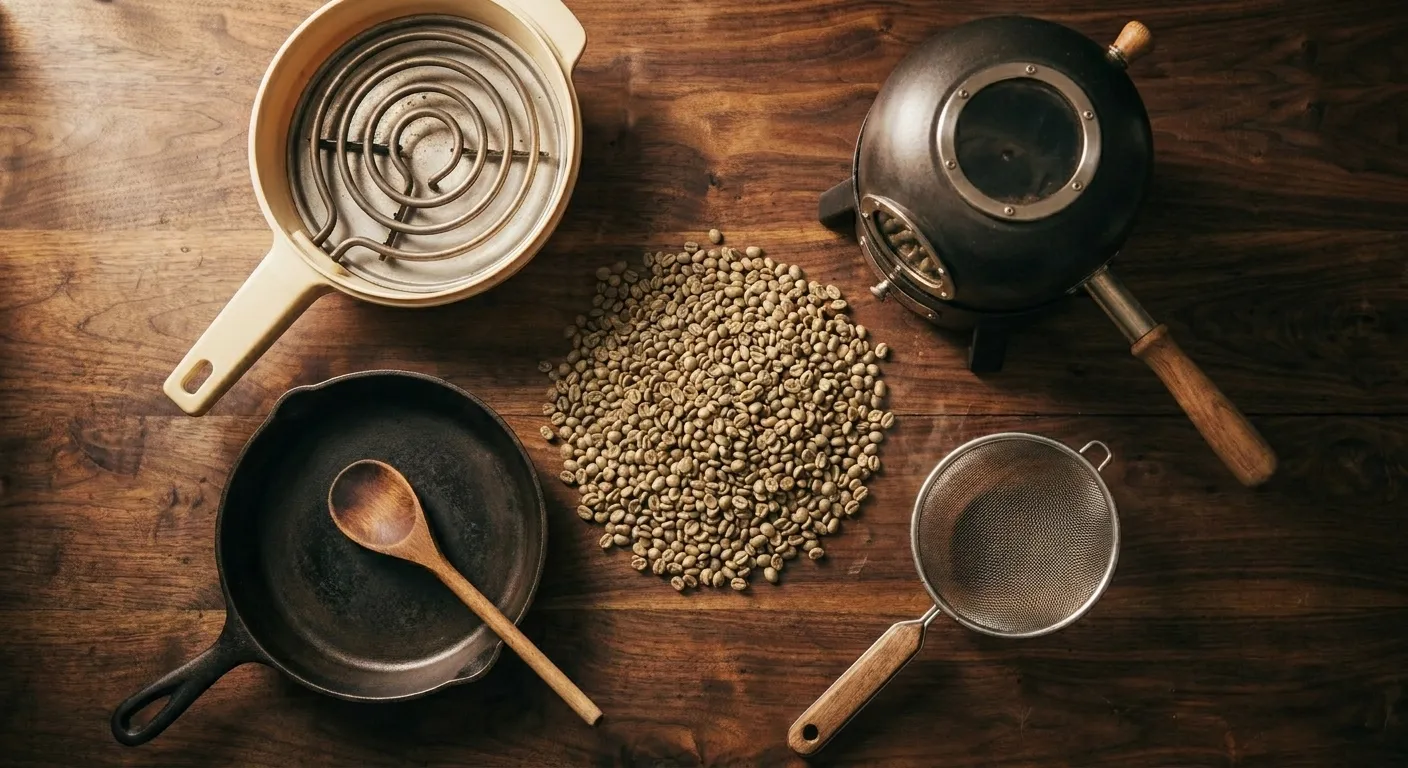
Affiliate disclosure: Sweeter Grind is a participant in the Amazon Services LLC Associates Program. We may earn commissions on qualifying purchases at no extra cost to you.
The first question every new home roaster asks is the same: "What should I roast on?" The honest answer depends on how much you want to spend, how much batch size you need, how much smoke you can tolerate, and how deep the hobby is likely to go for you. A $30 popcorn popper and a $3,500 dedicated drum roaster will both produce drinkable coffee. They do not produce the same drinkable coffee, and they are not the same experience.
This is a side-by-side comparison of the four methods most home roasters start with: a popcorn air popper, a stovetop skillet or wok, a kitchen oven with a perforated pan, and a purpose-built home roaster. We cover what each method is good at, what it is bad at, the realistic cost to get going, how much coffee you can roast per batch, how much smoke to expect, and how steep the learning curve is.
If you are still deciding whether to roast at all, start with our pillar guide, How to Roast Coffee at Home. If you have already picked your method and want to source beans, see where to buy green coffee beans.
The Quick Comparison
| Method | Entry Cost | Batch Size | Time | Smoke | Skill Curve | Dark Roast Capable |
|---|---|---|---|---|---|---|
| Popcorn air popper | $25–$40 | 2–4 oz | 4–7 min | Medium | Low | Limited |
| Stovetop skillet/wok | $0–$50 | 4–8 oz | 15–25 min | High | High | Yes |
| Oven (perforated pan) | $0–$25 | 8–12 oz | 15–20 min | High | Medium | Yes |
| Dedicated home roaster | $250–$3,500 | 4 oz – 2 lb | 8–15 min | Low–Medium | Low–Medium | Yes |
The takeaway: there is no universally best method. There is a method that matches your budget, your kitchen, and your patience for the first five batches.
Popcorn Air Popper
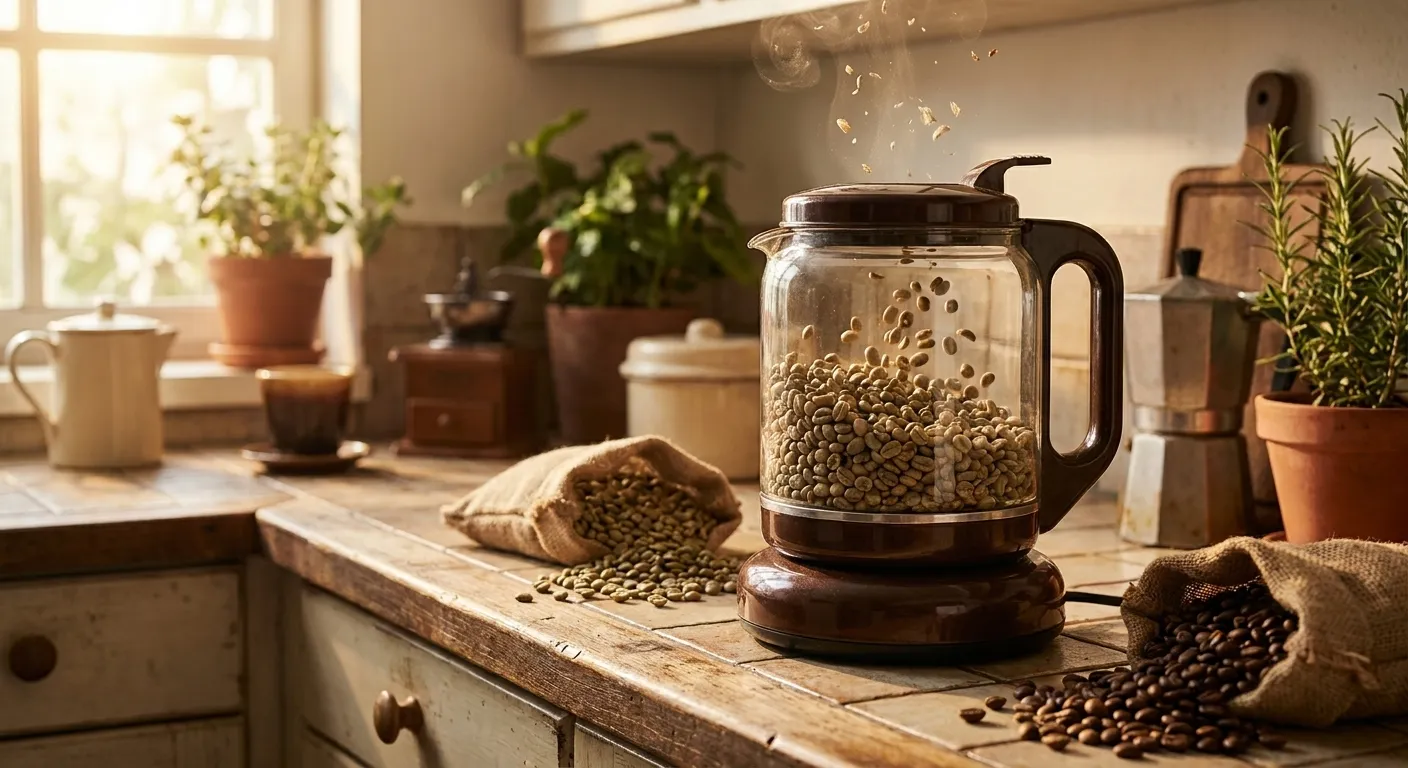
The popcorn popper is the classic gateway into home roasting. You can find one at any thrift store or Amazon listing for under $30, and it will roast a small batch of coffee in 4 to 7 minutes.
How it works: hot air is blown up through a chamber, agitating and heating the beans simultaneously. It is, functionally, a miniature fluid-bed roaster.
Pros:
- Cheapest entry point, often free if you already own one
- Short roast time is forgiving for beginners
- Even heat distribution from constant bean movement
- No pan-burning risk — beans are always in motion
Cons:
- Batch size is tiny — 2 to 4 ounces of green (you get roughly 1.7 to 3.4 oz roasted)
- Limited top-end temperature, making dark roasts unreliable
- Chaff blows everywhere
- Not designed for repeated high-heat use; units can burn out after 20–40 batches
- Ambient temperature affects the roast significantly
Who it's for: anyone who wants to try home roasting for the cost of dinner. If you fall in love with it, you upgrade. If you do not, you are out $30 and have a popcorn maker. See our dedicated how-to at air popper coffee roasting guide.
Stovetop Skillet or Wok
The oldest method in human history. Coffee was first roasted in shallow pans over open fires in 15th-century Yemen. You can do the same thing on your range right now.
How it works: a heavy pan — cast iron, carbon steel wok, or thick stainless — is preheated over medium-high heat. Green beans go in, and you stir continuously for 15–25 minutes until you hear first crack and hit your target color.
Pros:
- Zero new equipment if you already cook
- Larger batch sizes than a popper — 4 to 8 ounces easily
- Fully manual control; the best way to learn what a roast feels like
- Dark roasts are no problem — you control the heat
Cons:
- Smokiest method by a wide margin
- Uneven roast — beans in contact with the pan scorch while beans on top lag
- Requires constant stirring for 20+ minutes
- Hard to cool beans quickly without a second setup
- Easy to overshoot first crack while distracted
Who it's for: cooks who like the process, who have a powerful range hood that vents outside, and who want the lowest-cost path to a full half-pound batch. Plan to stand at the stove the entire time with a wooden spoon and a thermometer.
Pro tip: a carbon steel wok works better than a flat skillet. The curved shape keeps beans tumbling into each other, which evens out the roast considerably.
Kitchen Oven with a Perforated Pan
The oven method is the middle ground: bigger batches than a popper, less physical labor than a skillet, but smokier and more uneven than a dedicated roaster.
How it works: preheat the oven to 475–500°F / 246–260°C. Spread 8–12 ounces of green beans in a single layer on a perforated pan (pizza pan, broiler pan, or a chaff collector insert). Roast for 15–20 minutes, stirring every 3–4 minutes, until you hear first crack and hit target.
Pros:
- Largest batch size short of a dedicated roaster
- No new equipment if you have a pan with holes
- Hands-off between stirs
- Consistent oven-to-oven once you dial in your oven's real temperature
Cons:
- Oven recovery between door openings is slow; beans stall
- Extremely smoky — your range hood must vent outside
- Uneven roast; beans on the edges of the pan darken faster
- Cooling is clumsy — you need to dump into a colander fast
- Will season your oven with coffee smell for a week
Who it's for: home roasters with an outdoor-vented range hood who want to produce 8–10 ounces at a time without buying hardware. Not recommended for apartment kitchens or indoor-recirculating hoods.
Dedicated Home Roaster
A purpose-built home roaster is any countertop appliance designed specifically for coffee. They come in two main types: fluid-bed (hot air, like a bigger popcorn popper) and drum (rotating drum with conductive and convective heat, like a miniature commercial roaster).
Common models at different price points:
| Roaster | Type | Batch Size | Price | Notable For |
|---|---|---|---|---|
| Nuvo Eco Ceramic | Handheld | 2 oz | $35 | Camping / novelty |
| FreshRoast SR800 | Fluid bed | 4–8 oz | $265 | Best entry-level |
| Behmor 1600 Plus | Drum | 1 lb | $425 | Largest sub-$500 batch |
| Aillio Bullet R1 V2 | Drum | 1 lb | $3,500 | Pro-level control |
| Kaffelogic Nano 7e | Fluid bed | 2.5 oz | ~$1,300–$1,400 | Profile automation |
Pros:
- Built for the job — consistent temps, even heat, manageable smoke
- Most units have extraction fans, chaff collectors, and cooling cycles built in
- Profile repeatability becomes possible (especially with data-logging roasters)
- Can roast indoors with modest ventilation
- Dark roasts cleanly achievable
Cons:
- Real cost of entry
- Still not zero-smoke — you still need ventilation
- Each roaster has a learning curve to understand its heat curve
- Most sub-$500 units have limited airflow control
Who it's for: anyone past their first 10 batches who knows they like this hobby, or anyone who wants to skip the gateway step and go straight to repeatable roasts.
Choosing Your First Method
A simple decision tree:
- Budget under $50 and curious? Popcorn popper. Buy a bag of sampler greens. You will know within 5 batches if this is a hobby you want to pursue.
- Already a serious cook with a vented range hood? Skillet or wok. You will learn fast and produce respectable coffee with zero new equipment.
- Need 8+ oz per batch and have outside ventilation? Oven method is the cheapest way to get there.
- Ready to commit? FreshRoast SR800 or Behmor 1600 Plus. Either will serve you for years.
- Already committed and want pro control? Aillio Bullet or Kaffelogic.
Whatever you pick, the same fundamentals apply: you still need to hear the cracks (first crack and second crack explained), manage a profile (understanding coffee roast profiles), and rest the beans properly (resting and storing freshly roasted coffee).
FAQ
Can I really roast coffee in a popcorn popper? Yes, and thousands of home roasters started this way. The limitations are batch size (2–4 oz) and dark roast capability.
What's the smokiest method? Stovetop skillet, followed closely by oven. Both vent into your kitchen air directly. A dedicated roaster with an integrated fan produces significantly less ambient smoke.
Can I use an air fryer to roast coffee? Some people do, with mixed results. Most air fryers cap out at 400°F / 204°C, which is below first crack temperatures for the bean mass. You can roast, but only to very light profiles, and results are uneven. It is not recommended as a primary method.
Which method is most consistent? Dedicated roaster, by a wide margin. Fluid-bed roasters are the most consistent within a price tier because hot air distributes heat more evenly than radiant or conductive heat.
How many batches before I should upgrade? If you have done 15–25 batches on a popper and are still enthusiastic, upgrade. If you are roasting more than a half-pound a week, upgrade. If you want dark roasts and your popper cannot hit them, upgrade.