Where to Buy Green Coffee Beans: The Home Roaster's Sourcing Guide
 Tommie Chaney·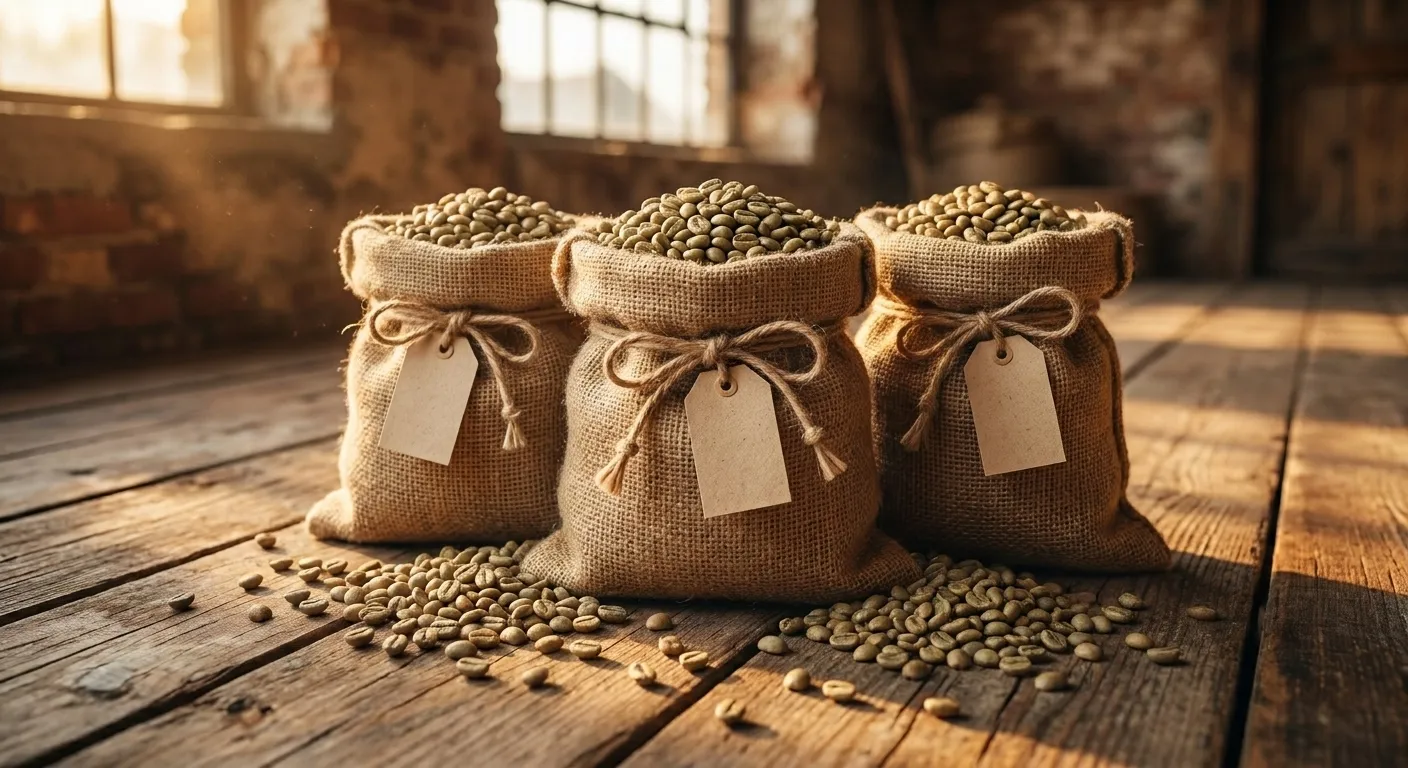
Affiliate disclosure: Sweeter Grind is a participant in the Amazon Services LLC Associates Program. We may earn commissions on qualifying purchases at no extra cost to you.
The most expensive mistake a new home roaster can make is sourcing bad green coffee. Dull, defect-heavy, or old greens will give you dull, defect-heavy, old coffee — no matter how carefully you roast them. The flip side is the entire point of the hobby: when you buy excellent green beans, roast them well, and brew them fresh, you get cups that are better than anything you can buy at the grocery store for any price.
Fortunately, the green coffee market for hobbyists is mature and competitive. A handful of trusted importers ship to home roasters in pound- and half-pound quantities, score their offerings on a 100-point scale, publish harvest dates, and include roasting notes. Below: the best-known sources, how to read a green coffee listing, how shipping economics work, and how to use sampler packs to learn fast.
If you are brand new to home roasting, read the complete home roasting guide first so you know what you are sourcing for. If you want to understand what you are tasting once you roast, the ultimate guide to coffee beans and roasts is your companion.
The Main Green Coffee Vendors for Home Roasters
Six vendors dominate the US home-roasting green market. They are different enough that most serious home roasters keep accounts at 2–3 of them.
| Vendor | Based In | Min Order | Notable For | Price Range/lb |
|---|---|---|---|---|
| Sweet Maria's | Oakland, CA | 1 lb | Curated notes, cupping scores, beginner-friendly | $7–$14 |
| Bodhi Leaf Trading | Fountain Valley, CA | 1 lb | Competition lots, direct trade focus | $8–$16 |
| Happy Mug Coffee | Meadville, PA | 1 lb | Lowest bulk prices, great for 5-lb bags | $6–$11 |
| Royal Coffee – Crown Jewel | Emeryville, CA | 1–5 lb (varies by lot) | 87+ scored exceptional lots | $10–$22 |
| Klatch Coffee | Rancho Cucamonga, CA | 2 lb | Well-known roaster selling own greens | $8–$14 |
| Coffee Bean Corral | Chattanooga, TN | 1 lb | Good variety, fast Southeast shipping | $7–$12 |
Sweet Maria's is the closest thing home roasting has to a canonical default. Founded in 1997, they essentially built the hobbyist green market in the US. Every listing includes their detailed tasting notes, cupping scores, origin photos, and roast-level suggestions. Prices are fair, selection is wide, and customer support is excellent. Start here if you have no preference.
Bodhi Leaf is a direct-trade-heavy importer with a strong focus on competition-grade lots — if you see a coffee with "CoE" (Cup of Excellence) in the name, Bodhi Leaf probably has it. Their curation trends toward clean, bright, modern specialty profiles.
Happy Mug is the budget-friendly volume option. If you are roasting 2+ pounds a week, their 5-pound bags have some of the best price-per-pound numbers of any US importer. Selection is narrower than Sweet Maria's, but quality is consistent.
Royal Coffee's Crown Jewel program is the premium option. Royal is a large commercial importer, and Crown Jewel is their curated selection of exceptional lots — typically 87+ SCA cupping scores, often single producers. Prices reflect the grade; you pay for what you get.
Klatch Coffee is a well-regarded roaster that also sells green beans. Useful if you want to replicate what a specific competition roaster pours.
Coffee Bean Corral serves the Southeast and Midwest especially well with faster ground shipping than West Coast importers can manage. Selection leans toward staple origins — Colombia, Brazil, Ethiopia, Sumatra — at reasonable prices.
What to Look For on a Green Coffee Listing
A good listing will tell you most of what you need to know before you buy. The signals that matter:
Cupping score. The SCA 100-point grading scale is the industry standard. A coffee scoring 80 is specialty grade — acceptable, but not exciting. 84+ is solid. 87+ is exceptional. 90+ is rare and usually expensive.
Harvest year. Green coffee is a crop. "Current crop" (the most recent harvest year) cups more vibrantly than "past crop" (one year old) or "old crop" (two+ years). The harvest date matters more than the roast date would on finished coffee. Look for listings that state harvest year explicitly.
Processing method. Washed (wet-processed) coffees are typically cleaner and brighter. Natural (dry-processed) coffees are fruitier and wilder. Honey processing is in between. Each produces a distinct cup profile, and you will develop preferences.
Origin specificity. "Ethiopia" is too vague. "Ethiopia Yirgacheffe Idido Station Heirloom" tells you the country, growing region, washing station, and varietal. The more specific, the better.
Bean density and screen size. Denser, larger beans generally roast slower and hold flavor more robustly. You do not have to obsess over this starting out, but it is worth noticing.
Suggested roast level. A reputable importer will tell you what roast range the bean shines at. A bright Ethiopia Yirgacheffe might be flagged "light to medium light, not recommended for dark." A dense Sumatra might be "medium to dark." Start with the importer's suggestion, then explore.
Shipping Economics
Shipping can easily be 20–35% of your green bean cost if you are not careful. A few realities:
- One-pound orders are expensive per pound. Shipping might run $8–$12 regardless of weight, so one pound of $10 greens becomes $18–$22 landed. Buy multi-pound orders when possible.
- West Coast vs East Coast matters. If you live in the Southeast and order from a California vendor, you are probably paying 3-day or longer ground shipping. Regional vendors (Coffee Bean Corral, Happy Mug) often beat West Coast pricing door-to-door.
- Sampler packs are the efficient first purchase. Four 1-pound varieties for $45–$55 shipped is typically cheaper per-pound than ordering four individual 1-pound bags, and it exposes you to multiple origins.
- Bulk orders of 5–10 pounds of one coffee drop the price per pound significantly, but commit you to a single origin for weeks or months.
A reasonable first year of sourcing: 1–2 sampler packs to find what you like, then monthly 3–5 pound orders of the 2–3 origins you gravitate toward.
Sampler Pack Strategy
Every major importer sells samplers. They are the single best tool for learning what you like.
A typical sampler arrangement:
- Regional sampler — 4 pounds, one each of Central American, South American, East African, and Southeast Asian origins. Best starting sampler.
- Processing sampler — the same origin (often Ethiopia or Colombia) in washed, natural, and honey processes. Teaches you what processing actually does to flavor.
- Roast level sampler — beans curated for light, medium, and dark roast targets. Useful for practicing to hit consistent roast levels.
- Single origin deep dive — four 1-pound lots from different farms or washing stations in the same country. For learning origin character.
If you are buying your first sampler, pick the regional sampler from Sweet Maria's or Bodhi Leaf. Roast each one at a classic medium (drop 90 seconds after first crack), cup them side by side, and start forming opinions.
Direct Trade, Importers, and Farm Names
You will see three kinds of sourcing language on green coffee listings:
Direct trade means the importer or roaster has a relationship with a specific farm or cooperative, pays above commodity prices, and often visits the farm. "Direct trade" has no legal definition — it is a claim, not a certification — but reputable vendors use the term honestly.
Importer-sourced means the beans came through a large specialty importer (Royal, Cafe Imports, Balzac Bros, etc.) who aggregates lots from many farms. This is how most green coffee moves; it is not a quality signal either way.
Named farm or producer on the bag is a strong signal. When a listing says "Finca La Esperanza, producer Jairo Arcila," you are buying from a specific place with a specific reputation. Generic "Colombia Supremo" tells you nothing about the farm or the grower.
Fair Trade and organic certifications are separate from cupping quality — they signal labor practices and agricultural methods, not flavor. Plenty of exceptional coffee is neither certified Fair Trade nor organic, and plenty of certified coffee cups mediocre.
Storing Green Coffee Beans
One of the hidden advantages of green coffee: it is shelf-stable in a way that roasted coffee is not. Green beans at roughly 10–12% moisture content, stored in a cool, dry place in their original burlap or GrainPro lining, will keep for 6–18 months without meaningful flavor degradation. Some origins hold quality longer; delicate high-grown beans degrade faster.
A few practical rules:
- Do not store greens in the freezer or fridge — condensation on temperature shifts is the enemy.
- Keep out of direct sunlight and away from heat sources.
- Seal in food-grade containers if you transfer out of the original packaging. A 5-gallon food-grade bucket with a gamma seal lid is a common home-roaster solution for bulk greens.
- Buy what you will use in 6 months, not 2 years. Freshness still matters at the green stage.
Contrast this with roasted coffee, which peaks at 4–14 days off roast and is stale at 6–8 weeks. The green bean shelf advantage is why home roasters can buy 5-pound bags without concern.
FAQ
Is buying green coffee in bulk worth it? Yes, if you roast regularly. A 5-pound bag drops per-pound cost by 15–25% compared to 1-pound sizes, and greens keep long enough that 5 pounds at a time is not a storage problem for most households.
What is the single best vendor for a first-time buyer? Sweet Maria's. Detailed listings, accurate scoring, reasonable prices, excellent customer support, and a big library of educational content.
Can I buy directly from a farm? Rarely, as a home roaster. Most farms work with importers because the logistics of selling pound quantities directly to US consumers are prohibitive. A few micro-farms do ship direct, usually at premium prices.
How much should I pay per pound for green coffee? $7–$12 per pound for solid specialty grade. $12–$18 for exceptional lots. $18+ for competition-grade or microlot coffees. Below $7, you are probably buying commodity-grade green that will taste dull regardless of how you roast it.
What if I want organic or Fair Trade? Every major home roasting vendor carries certified options. Expect to pay a 15–25% premium. Quality varies — certifications are independent of flavor grade.
How do I know if the green beans I received are fresh? Look at the color (gray-green or blue-green depending on origin — never yellow or brown at the edges), smell the beans (fresh greens smell faintly vegetal or hay-like; stale greens smell dusty or like cardboard), and check the importer's published harvest date.