How to Clean a French Press, AeroPress, and Pour-Over Gear
 Tommie Chaney·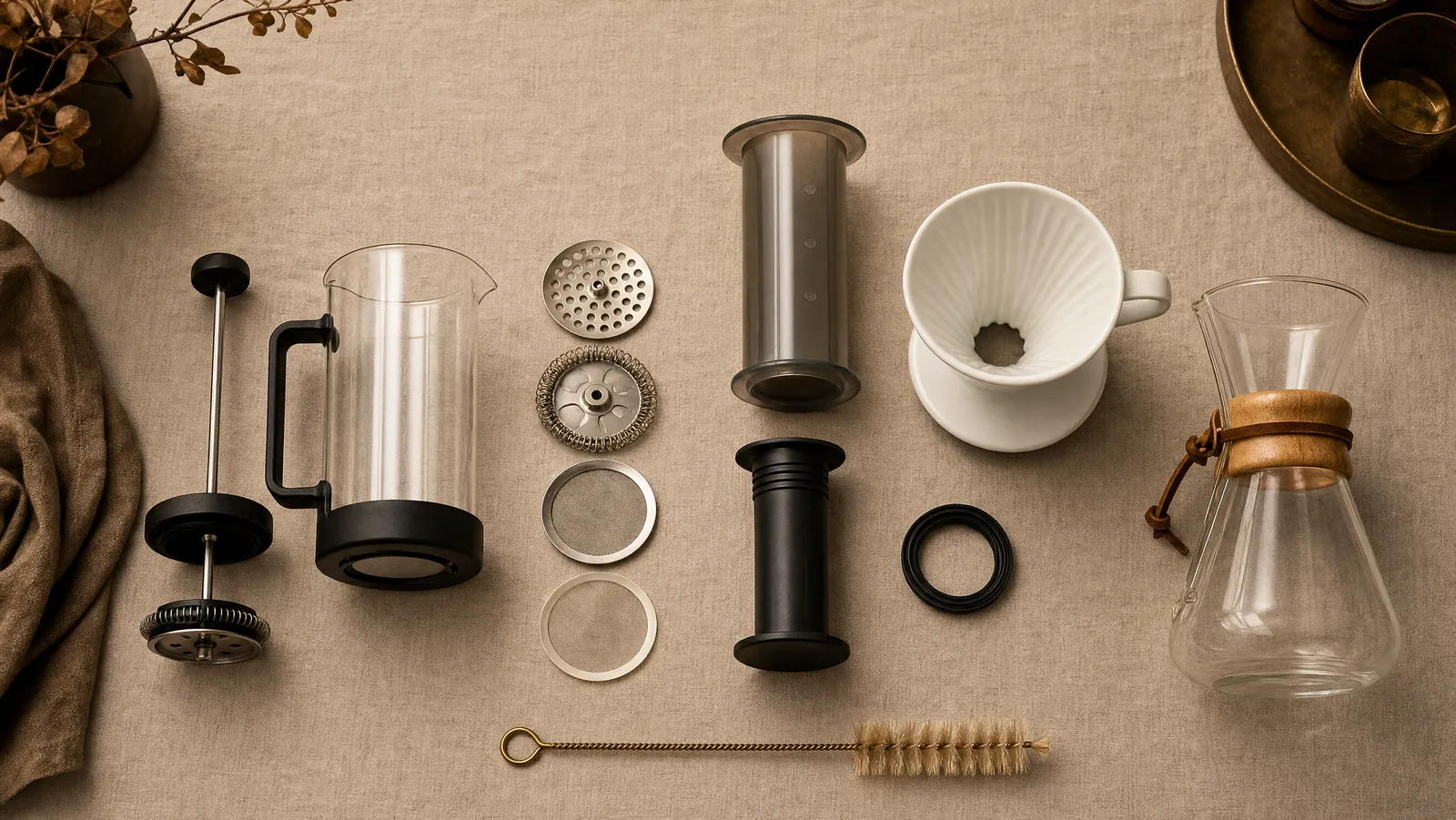
Affiliate disclosure: Sweeter Grind is a participant in the Amazon Services LLC Associates Program. We may earn commissions on qualifying purchases at no extra cost to you.
A rinse is not cleaning. Here is how to clean a French press properly: rinse after every brew, then once a week unscrew the filter assembly into its separate discs and wash each one. The same rule runs through every manual brewer — the oils that make coffee taste bitter live in the parts you never take apart.
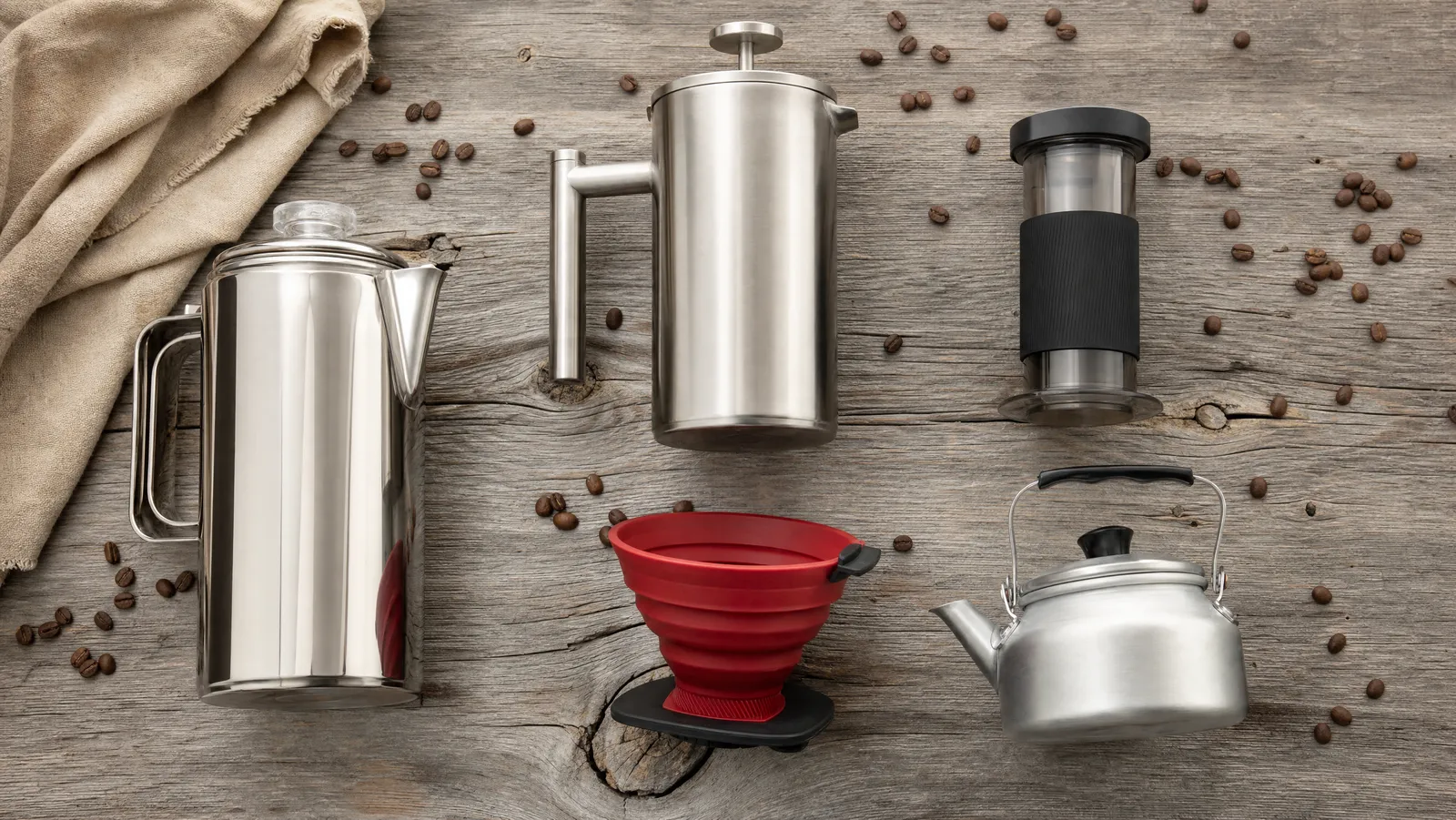
On a French press that's the plunger's filter stack. On an AeroPress it's the seal at the end of the plunger. On a V60 or Chemex it's a curve your sponge never reaches. On a moka pot it's the funnel and the gasket behind the filter plate. Below, brewer by brewer — part of our larger guide to cleaning every piece of coffee gear you own.
Why Manual Brewers Get Bitter
According to Ratio Coffee's guide to carafe cleaning, coffee oils carry many of the flavour compounds you're brewing for, but left exposed to air and heat they oxidise and turn rancid — like cooking oil standing in a pan. Papel Espresso's write-up on dirty equipment describes the end state: thin films oxidising into a sticky, dark residue, with fresh water picking up those acrid notes on the way through. A brewer that looks clean can still season every cup with old coffee.
Here's the trap specific to manual gear: there's nothing to descale. A French press, V60, AeroPress or Chemex has no heated water path, so the scale problem that drives machine maintenance doesn't apply — that's separate chemistry, covered in how to descale a coffee maker. Because manual brewers can't scale up, people conclude they need no maintenance. They need a different one: degreasing.
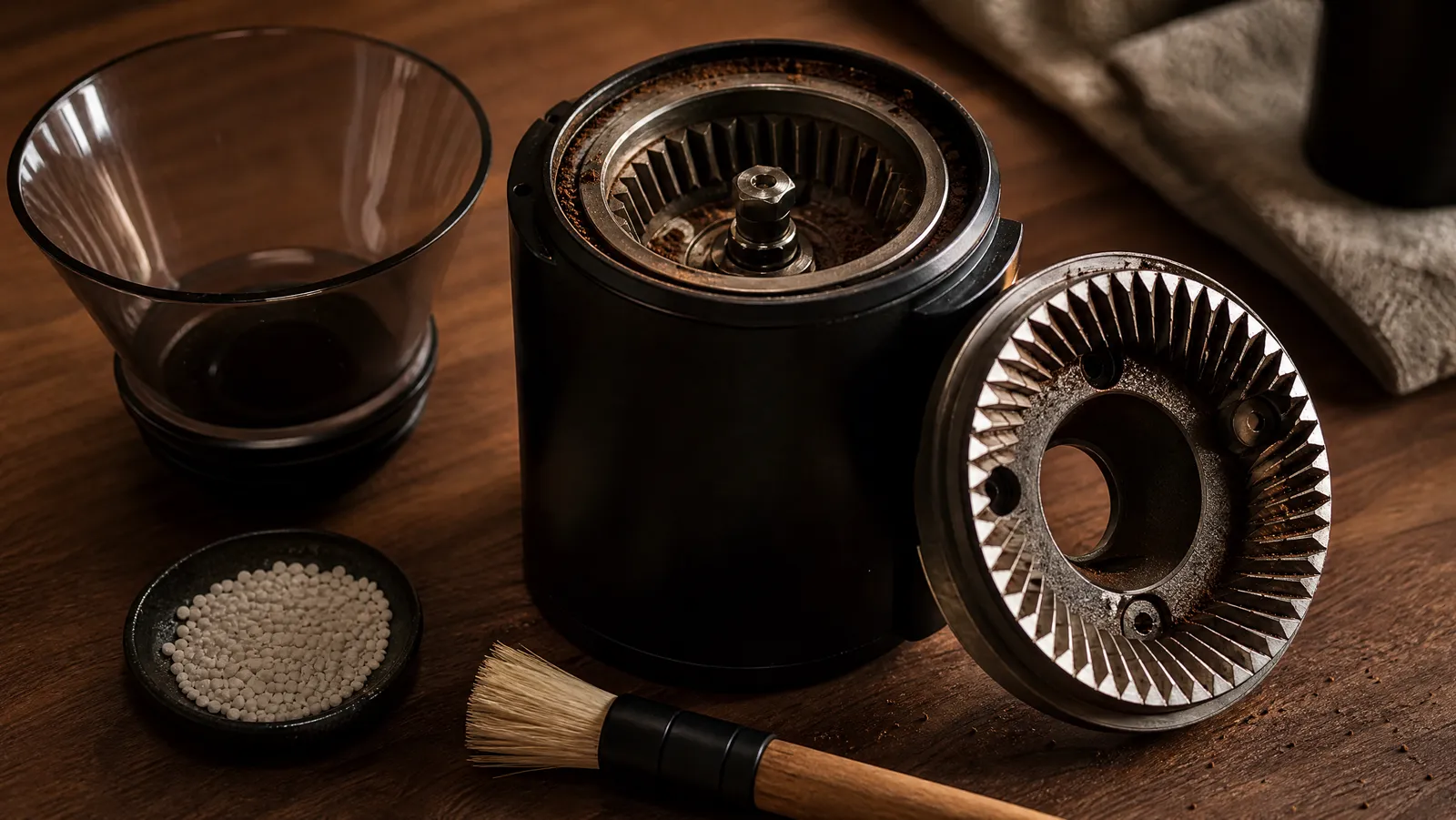
The grinder is the other half of the problem, holding rancid oil that never gets thrown out. Cleaning the brewer while ignoring the burr grinder fixes half the taste.
What You'll Need
- Mild dish soap and warm water — the default for nearly everything here, with two exceptions flagged below.
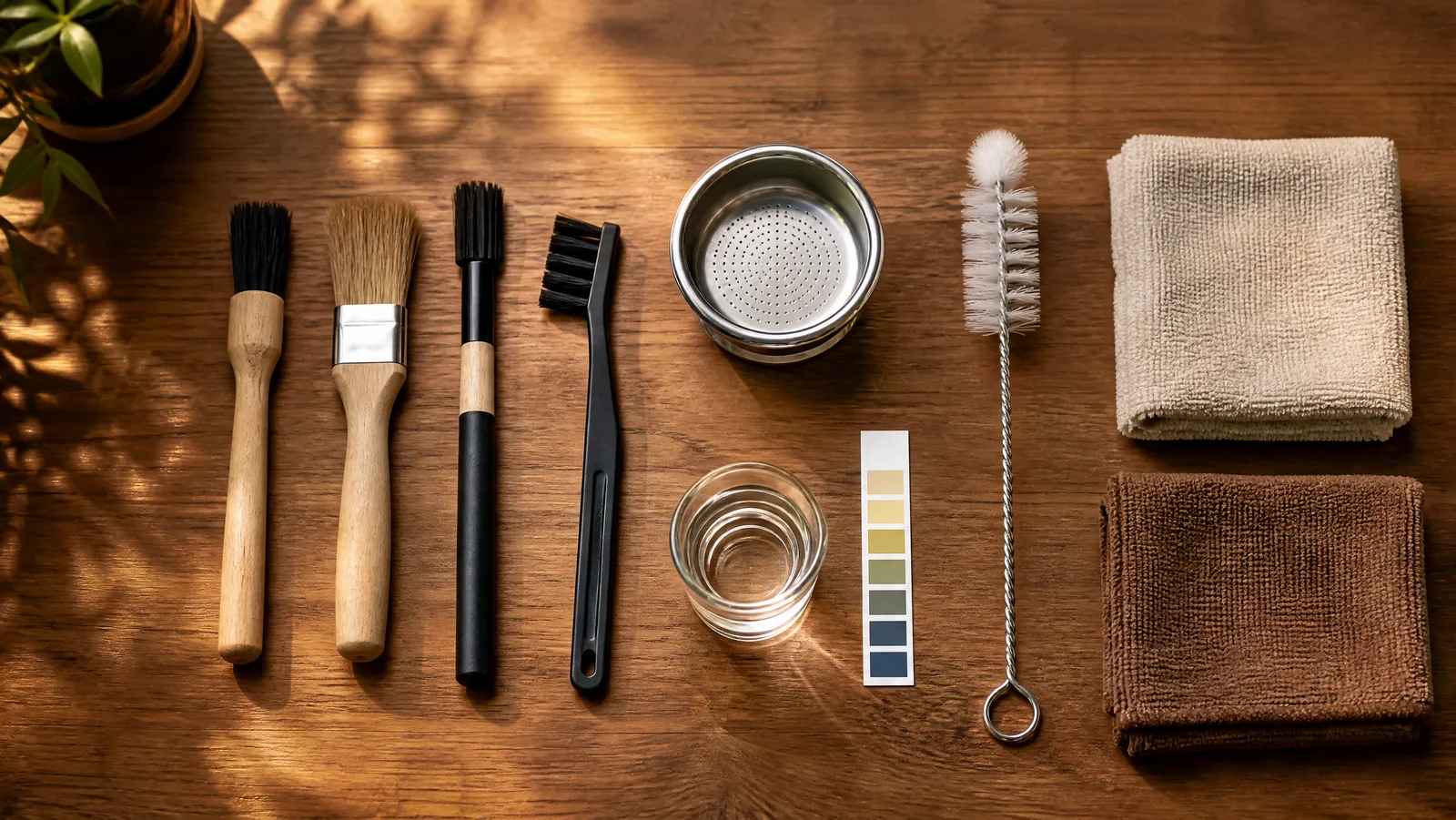
- A soft bottle brush for carafes and the Chemex neck, plus an old toothbrush for mesh screens, dripper ribs and filter-plate grooves.
- A coffee-equipment cleaner for soaks. Urnex makes two easy to find: Cafiza, which Urnex lists as NSF certified, and Full Circle Coffee Equipment Wash, positioned for lifting coffee stains and making a soaking solution.
- Baking soda as the pantry alternative for glass, and a microfibre cloth so parts go back together dry.
Avoid steel wool, scouring pads and abrasive powders — Bialetti's care notes explicitly rule these out. Skip bleach entirely; it's hard to rinse out of mesh and seals. And never mix cleaning products: according to CDC guidance and state health departments including Washington State's, bleach plus an acid such as vinegar releases chlorine gas, and bleach plus ammonia produces chloramine gas.
How to Deep Clean a French Press, Step by Step
Weekly if you brew daily; ten minutes. The brewing side lives in how to make French press coffee.
Step 1: Knock out the grounds — into the bin, not the sink
Scrape the puck into compost or the rubbish. Plumbing companies are consistent here: grounds don't dissolve, they clump, and they bind with the grease in your trap. A disposal makes them sludgier, not gone.
Step 2: Rinse and separate the plunger
Run warm water through the carafe and over the plunger to shift fines while they're soft, then lift the plunger clear. Never leave a used press assembled with the plunger down — wet grounds pack into the mesh and dry there.
Step 3: Unscrew the filter assembly into its discs
The step almost everyone skips, and the one that matters. On a Bodum-style press the rod unscrews at the base and the stack separates into a cross plate, the mesh screen, and a spiral plate held by a nut. Note the order. Bodum's own user instructions direct owners to unscrew the filter assembly and clean the plunger unit after each use.
Step 4: Wash each disc and the mesh screen
Warm water, mild soap, soft brush. Work the outer edge of the mesh where it meets the plates, and the spiral plate's grooves — that rim is a joint no rinse reaches, so it's where oil collects. Hold the mesh to a light: yellow-brown rather than metallic means it isn't clean yet.
Step 5: Wash the carafe
Bottle brush, soap, warm water, with attention to the corner where the wall meets the base. Glass shows its film as a dull haze you notice only once it's gone. Stainless and double-wall carafes hide it entirely — clean those on schedule, not on appearance.
Step 6: Soak the metal parts for stubborn oil film
If brushing hasn't restored the mesh, soak the metal parts in hot water with a cleaner such as Cafiza or Full Circle, dosed per the packet — most home guides use around ten minutes for small parts. Baking soda in hot water is the slower version.
Step 7: Rinse thoroughly, dry, and reassemble
Rinse until there's no soap smell; residue on a mesh screen shows up in the next cup. Dry, then rebuild in order — cross plate, mesh, spiral plate, nut, finger-firm. A screen left loose or out of order lets grounds past the edge, which tastes like sludge and gets blamed on the grind.
Cleaning an AeroPress
Ejecting the puck feels like cleaning. It isn't — that removes the grounds and leaves the oil.
After each brew: eject the puck, then rinse the seal and chamber rim under warm water. Ten seconds.
Every week or two: slide the seal off the plunger and wash both sides. AeroPress's own care guidance recommends occasionally removing the seal from the end of the plunger and washing it inside and out with warm water and dish soap. The underside of that seal is the dirtiest square inch of the brewer, and until you take it off you've never touched it.
On the dishwasher: AeroPress's help documentation says its coffee makers can go on the top rack only, with the AeroPress Premium hand-wash only. Even where it's permitted, hand-wash the seal.
On replacement: AeroPress sells the seal as a standalone part — the clearest signal it's a wear item — and its cleaning and storage guidance says to store the brewer with the silicone seal pushed all the way through the chamber, which keeps the seal free of compression. Brewing side: AeroPress recipes and techniques.
Cleaning V60, Kalita, and Other Cone Drippers
Cone drippers look self-cleaning. They aren't — the spiral ribs that hold the paper off the wall are where fines and oil lodge, and brew water flowing past does nothing to shift them. Rinse immediately after brewing while the oil is hot, then run a soft soapy brush around the ribs and drain hole weekly.
Dishwasher safety depends on material and model:
| Material | Notes |
|---|---|
| Plastic | Generally listed dishwasher safe; top rack only |
| Glass | Hario lists its glass V60 as hot water and dishwasher safe |
| Ceramic | Usually fine, but Hario's metallic-finish drippers are hand-wash |
| Metal | The copper V60 is listed as hand-wash only; check plated models |
Read the listing for the model you own rather than trusting the category. Ceramic and glass also dislike sudden temperature swings — don't pour boiling water into a cone straight from a cold cupboard. If pour-overs taste flat, clean the dripper before you change anything else, then revisit the pour-over method.
Cleaning a Chemex
The Chemex's problem is geometry: a tall narrow neck your hand doesn't fit through, and stains settling inside the bulb where a sponge can't reach. That brown ring at the waterline isn't cosmetic — it's the oxidising oil film, made visible.
Per Chemex's own product support, the glass carafe can go in the dishwasher once the wooden collar and rawhide tie are removed; the collar and tie never go in, and get wiped with a damp cloth and mild soap instead. Chemex sells a coffeemaker cleaning brush, the simplest answer to the neck. For film a brush won't shift, a hot soak with baking soda loosens it in half an hour.
The ice-and-salt trick is everywhere, so it's worth addressing. The widely repeated home method: half-fill the carafe with crushed ice, add a couple of tablespoons of coarse salt and a splash of water, then swirl so the ice tumbles the salt against the stained glass. It's a home technique, not manufacturer guidance. Watch thermal shock — Chemex describes its carafes as borosilicate, the glass used for labware, known for thermal-shock resistance, but resistant is not immune. The guides recommending it warn to rinse afterwards with cool water, not boiling.
Cleaning a Moka Pot
The moka pot is the exception to the no-water-path rule: you boil water in the base, so it can pick up limescale as well as oil. It's also where the standard advice gets contested.
On soap, both positions. Bialetti's care guidance advises against detergent on aluminium models, on the grounds it can taint the aluminium and therefore the coffee, while noting mild detergent is acceptable for stainless steel. The Kitchn's reporting quotes a Bialetti product manager taking the harder line — no soap, ever, on aluminium. Independent guides follow that: hot water only, dried thoroughly to prevent limescale and mould. Enthusiasts counter that a rinse-only pot accumulates rancid oil of its own. We won't declare a winner — follow the manufacturer, or deviate rarely.
The parts nobody removes. Unscrew the pot into three pieces every time — base, funnel, upper chamber — and rinse each. Then, on a schedule, lift out the filter plate and the rubber gasket behind it. Bialetti's guidance is to check the funnel, filter plate and ring for wear and replace as required, and to periodically clean the inner column. Third-party guidance commonly suggests replacing the gasket every 6 to 12 months with daily use; the signal is a gasket gone hard, cracked or flat, or steam leaking at the seam.
Check before the dishwasher. Bialetti's care notes say its stovetop makers must not go in one, and its US client support says the same for aluminium; that support page does list stainless steel moka pots as dishwasher safe while still recommending handwashing. Follow the guidance for your model. Store the pot apart. Brewing: how to make moka pot coffee.
Reusable Metal and Cloth Filters
Metal mesh filters — reusable cones, the AeroPress metal disc, a Kone-style basket — are dense screens sitting in the path of every drop of oil the brew produces. Rinsing clears the surface, not the perforations. Brush under running water after each use, and when flow slows or the metal looks bronzed rather than bright, soak in hot water with a coffee-equipment cleaner and brush again. AeroPress lists its reusable metal filter as dishwasher safe, top rack only.
Cloth filters — Hario's Woodneck and other nel-drip setups — carry the one storage rule in coffee that surprises people. Guides to nel-drip care converge on it: rinse thoroughly in hot water after brewing, then store the cloth fully submerged in clean water in a sealed container in the fridge, changing the water regularly. Never let it dry out; dried-in coffee oil oxidises in the fibres and is impossible to rinse back out. The same guidance says no soap on cloth — the fabric holds detergent and passes it into every later brew. Cloth is a consumable, 50 to 100 brews being the usual figure.
How Often to Clean Each Brewer
| Brewer | Every use | Weekly | Monthly or as needed |
|---|---|---|---|
| French press | Bin grounds, rinse | Strip filter stack, wash each disc | Soak metal parts and carafe |
| AeroPress | Eject puck, rinse seal | Remove seal, wash both sides | Inspect seal for shrinkage |
| V60 / Kalita | Rinse hot | Brush ribs and drain hole | Soak if flow slows |
| Chemex | Rinse hot | Bottle-brush neck and bulb | Baking soda soak for stains |
| Moka pot | Split into 3, rinse, dry | Pull filter plate and gasket | Inspect gasket; descale base |
| Metal filter | Brush under water | Soak in cleaner solution | Replace if clogged |
| Cloth filter | Rinse, store submerged, chill | Change the storage water | Replace at 50–100 brews |
Manual brewers need degreasing often and descaling almost never; anything with a heated water path needs descaling on a hardness-driven schedule — see how often you should descale your coffee maker.
Frequently Asked Questions
Is a French press dishwasher safe?
Depends on the model, so check your manual — and take it apart first either way. Bodum's user instructions indicate the glass, plastic, chrome and filter parts are dishwasher safe when disassembled, but they also direct owners to unscrew and clean the filter assembly after each use.
Can I use vinegar to clean a French press?
With caveats. Vinegar is an acid, and acids target scale — which manual brewers don't get — so an alkaline cleaner or baking soda suits oil film better. Rinse thoroughly, keep it off unlacquered aluminium, and never combine it with bleach.
Does baking soda actually work on coffee stains?
On glass, yes — a mild alkaline that lifts oil film, as a hot soak or a light paste. It's also mildly abrasive, so keep it off polished, coated and non-stick finishes; Bialetti's care notes rule out abrasive products on moka pots.
Why does my coffee still taste bitter after I cleaned the brewer?
Soap residue is one cause: an under-rinsed mesh or carafe carries detergent into the cup as a soapy bitterness. The other is cleaning the wrong half of the setup — do the burr grinder next, since its oil meets fresh water in every brew.
How do I get coffee stains off glass?
Soak rather than scrub. Hot water plus a tablespoon or two of baking soda, or a coffee-equipment cleaner per its label, loosens most staining in 20 to 30 minutes; follow with a bottle brush. On a Chemex, rinse with cool water rather than boiling.
When should I replace an AeroPress seal?
When it stops sealing, not on a fixed date. Published intervals range from 6 to 12 months of heavy daily use up to two or three years, so go by symptoms: shrinkage, hardening, lost grip, or air escaping on the plunge.
The Habit, Not the Project
Deep cleans are memorable, which is exactly why they're the wrong unit of maintenance. What keeps manual brewers tasting clean is a 20-second rinse while the oils are still warm, plus one weekly disassembly of the part you'd otherwise never open — the filter stack, the seal, the gasket. Do that for the grinder too, and most of the mysterious bitterness in home coffee disappears without a single change to your recipe.
For the machines that heat their own water, work through Sweeter Grind's complete coffee equipment cleaning guide.