How to Make Moka Pot Coffee Like an Italian Nonna
 Tommie Chaney·
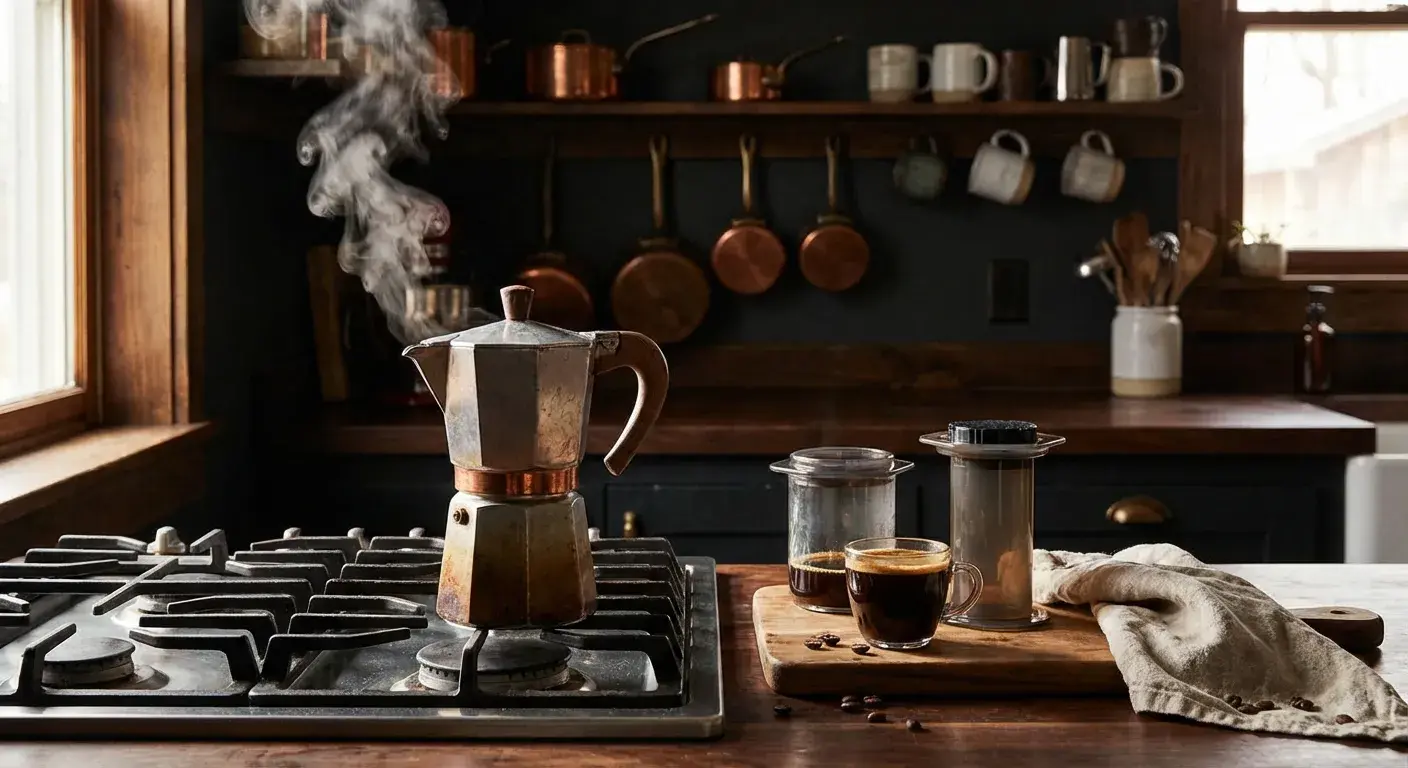
The moka pot — the eight-sided aluminum kettle Bialetti has been making since 1933 — is the most widely used coffee brewer in Italy and one of the most misused elsewhere. Put it on a high flame with cold water and a tamped puck of fine espresso grind, and it produces exactly the burnt, acrid cup that has convinced generations of Americans they hate it. Treated correctly, it produces something else entirely: a dense, syrupy, chocolate-forward coffee that sits somewhere between filter and true espresso.
The moka pot is not an espresso machine. It brews at roughly 1-2 bar of pressure, while a proper espresso machine pushes 9 bar. What the moka pot is good at is pulling heavy, full-bodied coffee out of medium-dark roasts, fast, with no electricity and no plastic parts. Get three small things right — water temperature, grind, and heat level — and it is one of the most rewarding brewers you can own.
This article contains affiliate links. We may earn a commission if you make a purchase through our links, at no extra cost to you.
The moka pot is one of eight brewing methods covered in our broader guide. It also shows up in our adjacent guide on how to make espresso without an espresso machine, where we compare it against the AeroPress and French press as espresso-style alternatives.
What You Need
The moka pot's appeal is that the gear list is short and cheap.
The pot. A classic 6-cup Bialetti Moka Express is the reference piece — aluminum, octagonal, around $35. It brews roughly 300ml of coffee (Italian "cup" = demitasse, not a mug). Stainless steel versions (Bialetti Venus, Alessi 9090) work on induction cooktops where the aluminum Moka Express will not. Buy the size that matches how much coffee you want — a 6-cup underfilled brews poorly, and overfilling any size is dangerous.
A burr grinder. Moka pots need a consistent medium-fine grind, somewhere between drip and espresso. Pre-ground espresso is too fine for a moka pot and will clog, stall, and taste burnt. Pre-ground drip is usually too coarse and will brew weak and watery. A burr grinder like a Timemore C2 or a Baratza Encore ESP set to the fine end of its range nails the target. Our Coffee Grinders Under $50 guide has solid budget options.
A kettle. Yes — a kettle, for a stovetop brewer. You will preheat the water before pouring it into the lower chamber. This is the single biggest upgrade to moka pot coffee and we will cover why below.
A kitchen scale. For dosing the basket consistently.
A damp kitchen towel. Laid in the sink to cool the base of the pot at the end of the brew. This stops the extraction at the right moment and keeps the last of the coffee from burning.
Fresh beans. Medium-dark and dark roasts are the classic choice — the moka pot's extraction profile pulls the best out of chocolate, nut, and caramel notes. See the best dark roast whole bean coffee for matched recommendations.
The Recipe
Numbers for a standard 6-cup Bialetti (≈300ml yield). Scale proportionally for a 3-cup (≈150ml) or 9-cup (≈450ml).
| Variable | Target |
|---|---|
| Coffee dose | 17-20g (fills the basket level) |
| Water volume | ~300ml (just below the pressure valve) |
| Water temperature | Pre-heated to ~200°F (93°C) before pouring in |
| Grind size | Medium-fine (finer than drip, coarser than espresso) |
| Heat level | Medium, never high |
| Tamping | None — level the puck, do not pack |
| Total brew time | 4-6 minutes |
| Pressure | ~1-2 bar |
Start here: 18g of medium-fine ground coffee, 300ml of hot water, medium heat, pull off the burner at the first gurgle. Our Brew Ratio Calculator handles other pot sizes if you are working with a 3-cup or 9-cup.
The ratio on a moka pot is largely fixed by the pot's geometry — the basket dictates the dose, the water line dictates the volume. What you have control over is grind and heat. Those are the two levers.
Step-by-Step Guide
Step 1: Pre-Heat the Water in a Kettle
Heat water in a separate kettle to near-boiling — about 200°F (93°C). This is the single most important step in moka pot brewing and the one most people skip.
Here is why. When you fill the moka pot with cold water and put it on the heat, the aluminum base gets extremely hot before the water inside starts to move. That heat conducts up into the funnel and directly into the coffee grounds, which are sitting in the filter basket above. By the time the water finally pushes up through the coffee, the grounds have been roasting on a hot plate for several minutes — and that is the "burnt" taste people complain about.
Starting with hot water shortens the time the pot sits on the burner by 3-4 minutes and keeps the grounds from scorching. Some Italian purists insist on cold water for tradition. It works either way; hot water is cleaner-tasting.
Step 2: Grind Your Coffee Medium-Fine
Grind 17-20g of coffee to a medium-fine consistency. Test it with your fingers: when you squeeze a pinch, it should clump lightly, then crumble. That is the target.
Reference settings: on a Timemore C2, around 15-18 clicks from zero. On a Baratza Encore ESP, setting 8-12. On a Breville Smart Grinder Pro, around setting 14-18 out of 60.
If your moka pot is sputtering angrily on the stove and brewing in under 3 minutes, your grind is too coarse. If water is not making it up through the coffee at all — or only a thin trickle appears — your grind is too fine. The sweet spot lets water push through steadily for 60-90 seconds once extraction starts.
Step 3: Fill the Base with Hot Water
Unscrew the pot. Fill the bottom chamber with the pre-heated water up to just below the pressure valve (the small metal nub on the inside wall). Do not go above the valve. That valve is a safety release for when pressure gets too high, and if water covers it, it cannot do its job.
For a 6-cup Bialetti, this works out to roughly 300ml. Your pot will have its own line.
Step 4: Fill the Basket, Level — Do Not Tamp
Drop the funnel filter into the base. Fill the filter basket with ground coffee until it is level with the rim. Tap the side of the basket gently to settle the grounds, then run a finger across the top to level it off.
Do not tamp. This is the single most common mistake with moka pots. A tamped puck is for espresso machines pushing 9 bar through the grounds. A moka pot produces 1-2 bar, and a packed puck will either block flow entirely or force water to channel around the edges, scorching what makes it through. Level, do not compress.
Wipe any loose grounds off the rim of the base — they will foul the seal. Screw the top chamber onto the base. Use a kitchen towel; the base is already hot from the water.
Step 5: Put It on Medium Heat, Lid Open
Place the pot on the stovetop over medium heat. Not high. Never high. High heat is the second most common mistake, and it produces the same burnt result as cold water. If you are on a gas burner, keep the flame so it does not lick up the sides of the pot.
Leave the lid open. Flip it up so you can watch the chamber fill.
Within 2-3 minutes (faster with pre-heated water), you will hear a soft hiss and see coffee start to appear in the top chamber. It should rise in a slow, honey-colored stream — almost lazy. If it is blasting up violently and hissing, your heat is too high. Turn it down.
Step 6: Pull It Off at the First Gurgle
Watch and listen. As the base empties, the stream will change color — going from dark brown to pale blond. At the same moment, the sound will change from a steady hiss to a sputtering gurgle. This is the signal that the water is gone and the pot is pushing steam through the grounds.
Pull the pot off the heat immediately. That blond stream is over-extracted steam-scorched coffee, and every extra second you leave the pot on the burner adds more of it.
Move the pot to the damp kitchen towel in the sink and set the base down on the towel. The damp cloth rapidly cools the base and stops extraction cold. Close the lid, give the pot a gentle swirl to combine the coffee that pooled at different stages, and pour into a pre-warmed demitasse or small mug.
Rinse the pot with hot water when done. Do not use soap — the seasoned aluminum is part of why the classic Bialetti improves over its first few months of use.
Troubleshooting Table
| Problem | Likely Cause | Fix |
|---|---|---|
| Burnt, acrid taste | Heat too high, started with cold water, left on burner past the gurgle | Use medium heat, pre-heat water, pull off at first gurgle, cool base on a damp towel |
| Sour, thin, weak taste | Grind too coarse, not enough coffee in the basket, water came through too fast | Grind a step finer, fill basket level to rim, check heat is not too high |
| Water will not push up / stalls | Grind too fine, coffee tamped, base not tight on top, too much water (above valve) | Grind a step coarser, level don't tamp, re-seal the pot, fill just below the valve |
| Violent hissing and sputtering early | Heat too high | Turn heat down to medium; aim for a slow honey-colored rise, not a blast |
| Metallic or aluminum taste | New pot not yet seasoned, or washed with soap | Brew 2-3 throwaway batches in a new pot; rinse with hot water only going forward |
Tips from the Pros
Use hot water. This one move fixes half of all "moka pot tastes burnt" complaints. Starting with pre-heated water cuts the burner time in half and keeps the aluminum base and the grounds above it from getting roasted before extraction even starts. If you change only one thing about how you brew, change this.
Pull off at the gurgle, not after. The moment the steady stream breaks into a sputtering gurgle, the flavorful brew is done and what is coming out now is bitter steam-extracted residue. Having the damp towel ready in the sink before you start means you can move fast when the signal comes.
Dark roasts belong in a moka pot. The high-temperature, short-contact extraction is tuned for the heavier, chocolate- and nut-forward notes of a medium-dark or dark roast. Light, bright, fruity coffees tend to turn sour or one-dimensional under moka pot pressure. Match the bean to the brewer — see our dark roast picks.
Match your pot size to your serving size, and never underfill. A 6-cup Bialetti is designed to brew 6 Italian cups (~300ml total, or about two generous Americano-style drinks). Brewing 150ml in a 6-cup pot leaves a huge empty upper chamber and produces an unbalanced cup. If you drink less, buy a 3-cup. If you entertain, buy a 9-cup. Do not split the difference.
Frequently Asked Questions
Is moka pot coffee the same as espresso?
No. A moka pot brews at roughly 1-2 bar of pressure, while a proper espresso machine pushes 9 bar. The result is a strong, concentrated coffee with real body, but it lacks the crema and the specific texture that true espresso has. Think of moka pot output as its own category — denser and more intense than drip, not as refined as espresso. It's excellent in milk drinks and as the base for a stovetop Americano.
Should I use hot or cold water in a moka pot?
Hot. Pre-heating the water to around 200°F before pouring it into the base shortens the time the pot sits on the burner, which protects the grounds from over-roasting on the hot aluminum. Italian tradition uses cold water, and it works — but hot water almost always produces a cleaner-tasting cup. Once you try it, you will not go back.
What grind size should I use for a moka pot?
Medium-fine — finer than drip, coarser than espresso. When you pinch a bit between your fingers, it should clump lightly and then crumble. Pre-ground espresso is too fine and will clog. Pre-ground drip is too coarse and will brew weak. A good burr grinder set roughly in the middle of its range is the target.
Why does my moka pot coffee taste burnt?
Three likely culprits, usually in combination: heat too high, started with cold water, or left on the burner past the gurgle. The fix is medium heat, pre-heated water, and pulling the pot off at the first sputter — then cooling the base on a damp towel to stop extraction instantly.
Do I need to tamp the coffee in a moka pot?
No. Tamping is for 9-bar espresso machines. In a moka pot, tamping either blocks water flow entirely or forces it to channel around the edges, burning whatever gets through. Fill the basket level with the rim, tap gently to settle, wipe the edges clean, and screw the pot together.
Can I use a moka pot on an induction stovetop?
Only if it is a stainless steel moka pot (Bialetti Venus, Alessi 9090, Bialetti Moka Induction). The classic aluminum Moka Express will not work on induction because aluminum is not magnetic. If you are on induction, buy the stainless version directly — induction adapters work but significantly slow the brew.
The Short Version
Buy a 6-cup Bialetti, 18g of a medium-dark roast, and a kitchen kettle. Pre-heat your water, grind medium-fine, fill the basket level without tamping, keep the heat at medium, and pull off the burner at the first gurgle. Do that four mornings in a row and you will understand why half of Italy starts the day with one.