Pour Over vs French Press vs AeroPress: Which Brewing Method Is Right for You?
 Tommie Chaney·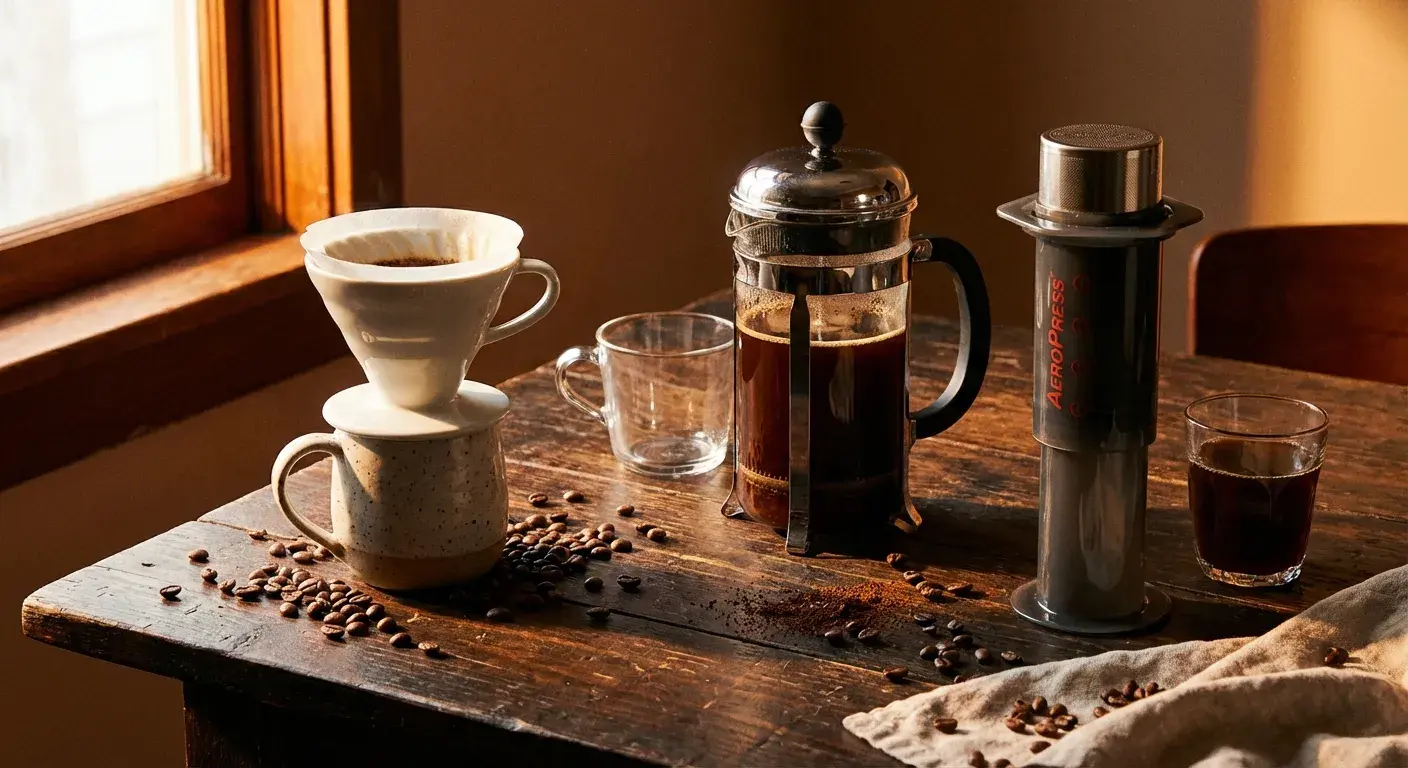
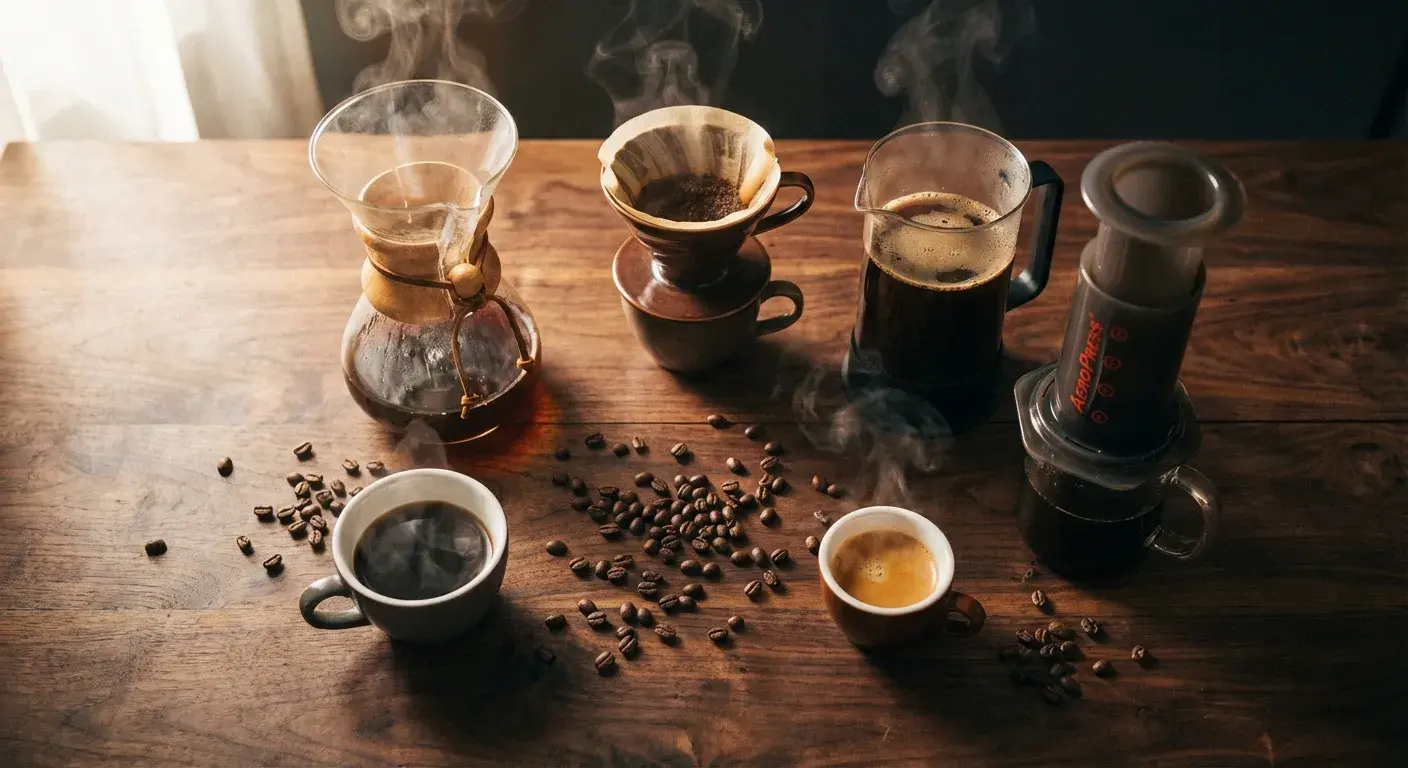
Pour over, French press, and AeroPress are the three most popular manual brewing methods in the world. Each makes excellent coffee, each costs under $50 to start with, and each produces a completely different cup from the same beans.
The question is which one suits you. Taste profile, effort, brew time, cleanup, and portability all diverge in ways that matter.
This article contains affiliate links. We may earn a commission if you make a purchase through our links, at no extra cost to you.
Quick Verdict: Pour Over vs French Press vs AeroPress
| Pour Over | French Press | AeroPress | |
|---|---|---|---|
| Taste profile | Clean, bright, nuanced | Bold, full-bodied, oily | Smooth, rich, versatile |
| Ease of use | Moderate | Easy | Easy–Moderate |
| Brew time | 3–5 minutes | 4–8 minutes | 1–3 minutes |
| Cleanup | Easy (rinse + filter) | Moderate (disassemble) | Easy (eject puck) |
| Portability | Low–Moderate | Low | Very high |
| Entry cost | $15–$45 | $15–$50 | $30–$45 |
| Best for | Flavor exploration | Bold everyday drinking | Speed + versatility |
Pour Over: The Flavor Explorer's Brewer
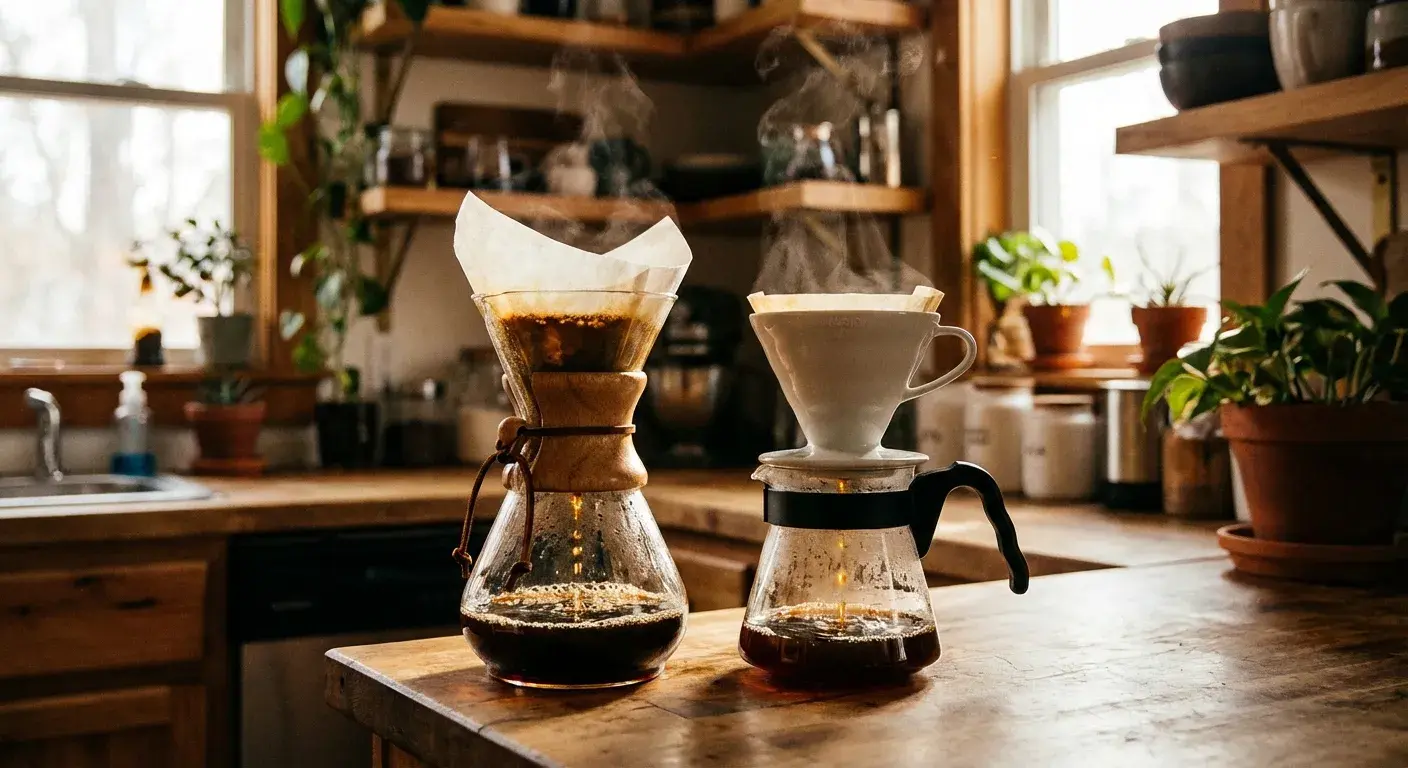
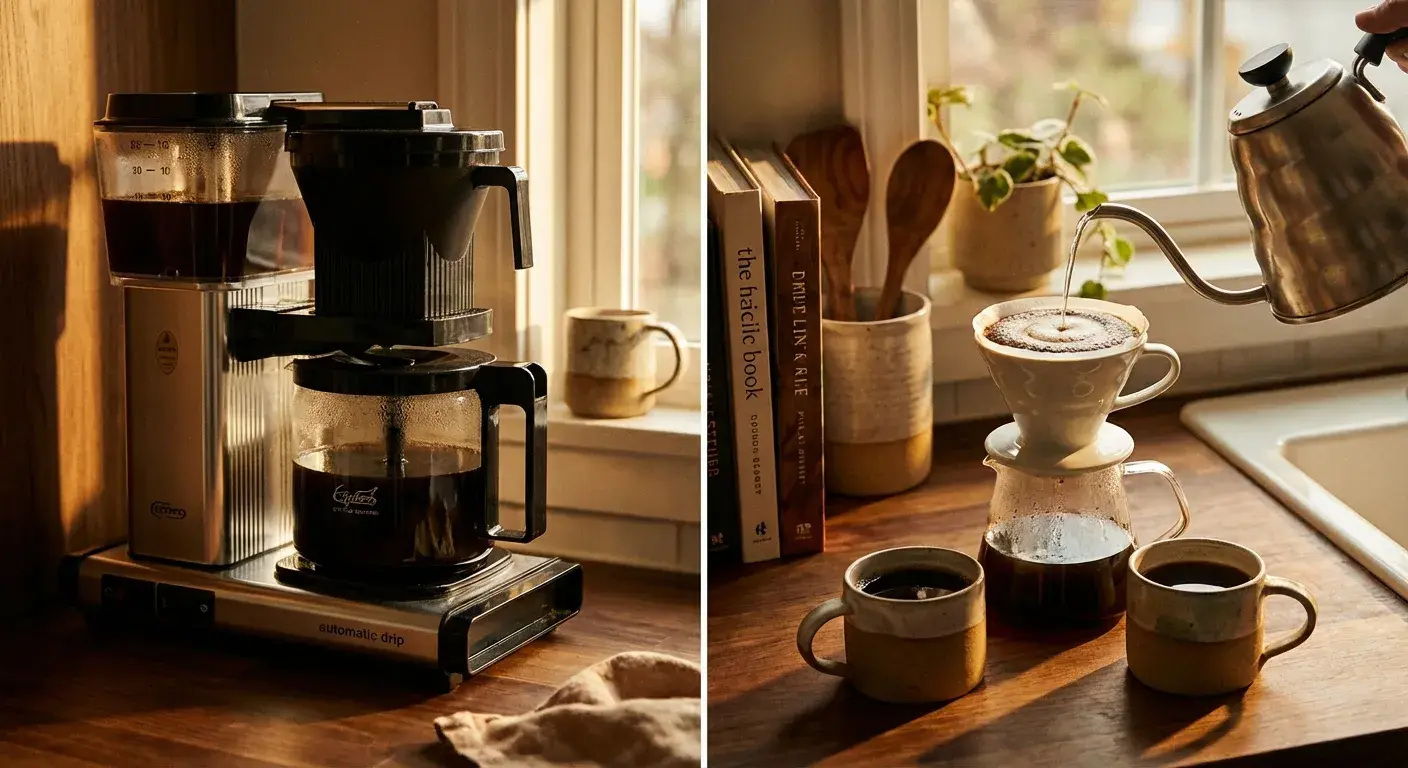
Pour over coffee is brewed by slowly pouring hot water over ground coffee in a filter cone. Water passes through the grounds by gravity alone, draining into a cup or carafe below. The entire brew takes 3 to 5 minutes depending on your technique and grind size. Each of these three brewers wants a different grind, and our visual grind size guide shows where they sit relative to one another along with starting settings for common grinders.
What It Tastes Like
Pour over produces the cleanest, most transparent cup of the three methods. The paper filter removes virtually all coffee oils and fine particles, leaving a cup that is bright, crisp, and nuanced. If a coffee has tasting notes of strawberry, bergamot, or jasmine in its roaster description, a pour over is the brewing method most likely to actually let you taste them.
The trade-off is body. Pour over coffee is lighter on the palate than French press. There is no coating sensation, no heaviness — just clarity. For people who grew up drinking dark, heavy coffee, this can initially feel thin. For anyone curious about specialty coffee and single-origin beans, it is revelatory.
Acidity in pour over is more pronounced and better defined. This is not a flaw — it is what creates brightness and liveliness in the cup. If acidity bothers you, pour over may not be your ideal method.
Who It Is For
- People who want to taste what makes a single-origin coffee special
- Anyone who enjoys lighter or medium roasts
- Coffee drinkers who enjoy the ritual of a slow, deliberate morning
- Those who find French press too heavy or gritty
What You Need
A dripper (Hario V60, Chemex, Kalita Wave), paper filters, a gooseneck kettle for control, a scale, and fresh coffee ground to medium-fine. For our picks on the best drippers, see Best Pour Over Coffee Makers 2026.
French Press: The Bold Classic
The French press (also called a press pot or cafetière) is one of the oldest modern brewing methods. You add coarse-ground coffee to the cylindrical vessel, pour hot water over it, steep for 4 to 8 minutes, then press the mesh plunger down to separate the grounds from the liquid.
What It Tastes Like
French press produces the heaviest, most full-bodied cup of the three methods. Because there is no paper filter, all of the coffee's natural oils remain in the cup. These oils create a rich, velvety mouthfeel that coats the tongue — you do not just taste the coffee, you feel it.
The flavor profile tends toward deep, round, and chocolatey. Dark roasts shine in a French press. Medium roasts become richer and more substantial than they would be in a pour over. The oils also carry aromatic compounds that add to the sense of depth.
One honest downside: sediment. Fine coffee particles pass through the metal mesh filter and settle at the bottom of your cup. Most French press drinkers learn to stop pouring before they reach that last half-inch of sludge. It is a minor annoyance for fans of the method; for others, it is a dealbreaker.
Who It Is For
- People who want a bold, substantial cup
- Dark roast drinkers who want maximum body
- Brewers who prefer a hands-off steep over an active pour
- Anyone who does not mind a little sediment
For gear recommendations, see our Best French Press Coffee Makers guide.
AeroPress: The Fast, Versatile Traveler
The AeroPress was invented in 2005 by engineer Alan Adler. It is a plastic cylinder with a plunger that uses gentle air pressure to push hot water through coffee grounds. The standard brew time is 1 to 3 minutes. The whole device fits in a backpack.
What It Tastes Like
AeroPress coffee sits between pour over and French press on the spectrum. It uses a paper micro-filter (like pour over) so there is little to no sediment and oils are largely filtered out. But the immersion-style brewing — where grounds steep in water before pressing — extracts more body than a drip filter method. The result is smooth, rich, and notably low in acidity.
The AeroPress's greatest strength is versatility. Change your grind size finer and you get an espresso-style concentrate. Add ice to your cup and brew directly over it for iced coffee. Flip it upside down (the inverted method) for longer steeps and more body. The AeroPress accommodates almost any style you want.
The taste is generally described as smooth and clean — it has more body than a pour over but less grit than a French press. Acidity is the lowest of the three methods. For anyone who finds pour over too acidic or French press too heavy, the AeroPress often hits the sweet spot.
Who It Is For
- Travelers, campers, and people who want to brew quality coffee anywhere
- Busy weekday mornings when speed matters
- People who enjoy experimenting with different recipes and techniques
- Low-acidity coffee drinkers
For detailed recipes including championship-style methods, iced coffee, and espresso concentrate, see Best AeroPress Recipes and Techniques.
Head-to-Head Comparison
| Category | Pour Over | French Press | AeroPress |
|---|---|---|---|
| Body/Mouthfeel | Light to medium | Heavy, velvety | Medium, smooth |
| Clarity/Transparency | Very high | Low | Medium-high |
| Acidity | High (defined) | Medium | Low |
| Sediment | None | Some (bottom of cup) | None |
| Oils in cup | Minimal | High | Minimal |
| Grind size | Medium-fine | Coarse | Medium to fine |
| Water temperature | 93–96°C (200–205°F) | 93–96°C (200–205°F) | 85–96°C (185–205°F) |
| Serves | 1–3 cups | 2–8 cups | 1 cup (1–2 with dilution) |
| Forgiveness | Low (technique matters) | High | Medium |
| Learning curve | Moderate | Low | Low–Moderate |
Which Should You Choose?
The right brewer depends entirely on what you want from your morning cup.
Choose Pour Over if...
You care about tasting the full complexity of your coffee. You enjoy lighter or medium roasts. You have 5 minutes and like the meditative ritual of a careful brew. You want to explore single-origin coffees and actually notice the difference between a Kenyan and an Ethiopian.
Choose French Press if...
You want bold, heavy coffee with minimal fuss. You drink dark roasts. You want to brew multiple cups at once without babysitting a kettle. You do not mind sediment and want a reliable, no-frills morning brew that delivers substance.
Choose AeroPress if...
You want speed without sacrificing quality. You travel frequently or brew away from home. You want to experiment — espresso shots, cold brew in minutes, iced coffee, championship recipes. You find pour over too acidic and French press too heavy. You want one device that can do almost everything.
Frequently Asked Questions
Can I make espresso with any of these three methods? Not true espresso — real espresso requires 9 bars of pressure from a dedicated machine. However, the AeroPress can produce a concentrated, espresso-style shot that works well as a base for lattes or Americanos. The other two cannot replicate that concentration.
Which method makes the strongest coffee? Strength depends on your coffee-to-water ratio more than your brewing method. However, the AeroPress at high coffee doses produces the most concentrated result of the three. French press at standard ratios tends to taste stronger than pour over because of the oils and body, even at the same ratio.
Is French press coffee bad for your health? There is ongoing discussion about cafestol and kahweol — diterpenes in unfiltered coffee oils that can raise LDL cholesterol with high, daily consumption. Paper-filtered methods (pour over, AeroPress) remove these compounds. This is generally only a concern with heavy daily French press consumption, but it is worth knowing.
Which is easiest for a complete beginner? French press has the lowest skill floor — add coarse coffee, add water, wait 4 minutes, press. You can produce a good cup your first time. AeroPress is nearly as forgiving. Pour over has the steepest learning curve because your pouring technique and grind size have a bigger effect on the final result.
Which to Buy First
If you have to pick one: most people are happiest starting with a French press or an AeroPress. Both are forgiving, affordable, and produce genuinely excellent coffee without demanding much technique. French press delivers bold, classic coffee. AeroPress gives you speed, portability, and room to experiment.
Pour over is the most rewarding of the three once you've developed technique — nothing else shows you what a great single-origin is actually capable of. It just demands more attention.
For espresso, cold brew, Moka pot, and every other method, see the Complete Guide to Coffee Brewing Methods.