Drip Coffee vs Pour Over: Is Manual Brewing Worth the Effort?
 Tommie Chaney·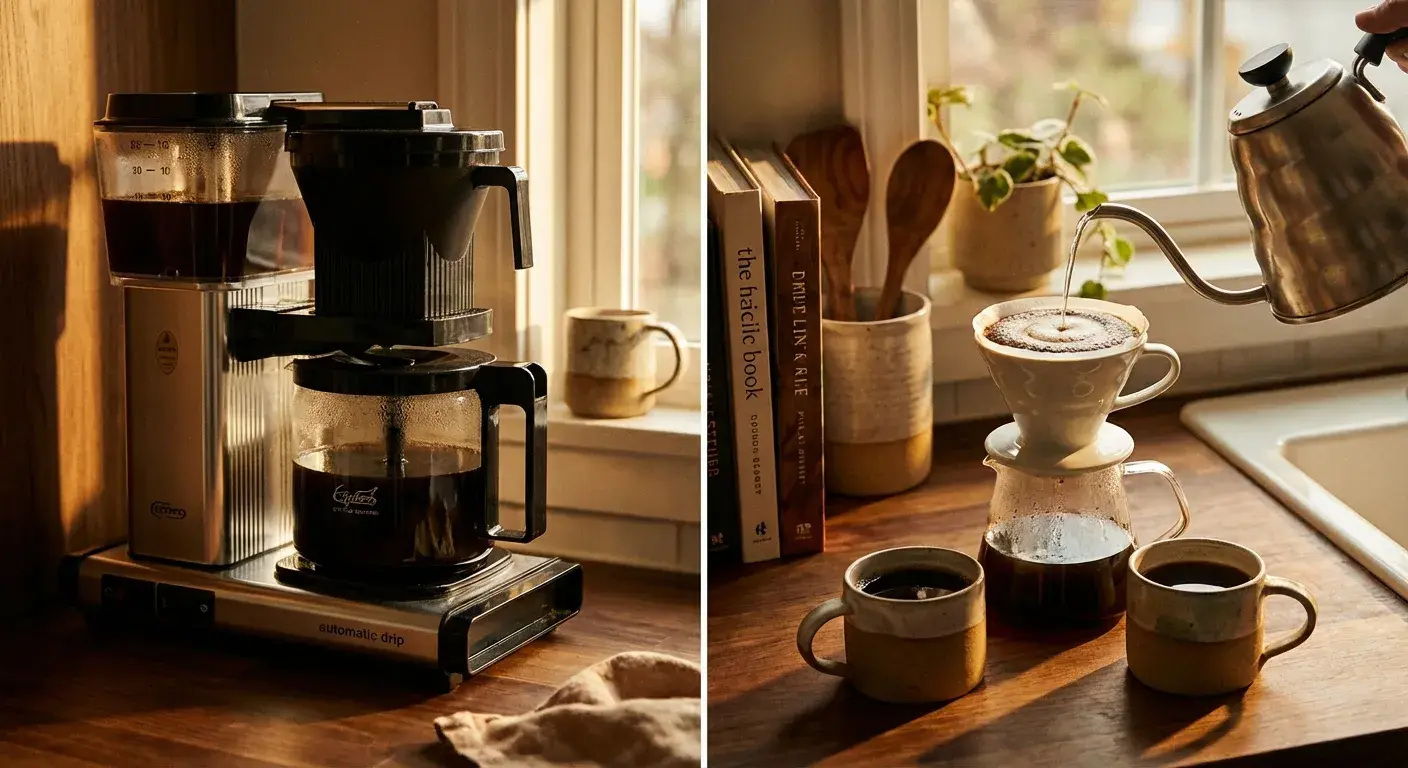
Most Americans grew up with automatic drip coffee. It is the default — a machine on the counter, a button to press, coffee ready when you need it. Manual pour over is a different proposition: you control the water, the pour, the pace, and the result. It takes more time and attention, but the payoff can be dramatically better coffee.
The question this article answers honestly: is pour over actually worth the extra effort, and for whom?
This article contains affiliate links. We may earn a commission if you make a purchase through our links, at no extra cost to you.
The short answer: for most people using a cheap drip machine, yes — pour over is a real upgrade. For anyone with a quality auto-drip that hits 93–96°C, the gap narrows to near-zero.
Quick Verdict
| Automatic Drip | Manual Pour Over | |
|---|---|---|
| Taste | Consistent, mellow, reliable | Cleaner, brighter, more nuanced |
| Effort | Very low (press a button) | Moderate (active 4–5 min) |
| Total brew time | 5–10 minutes (mostly hands-off) | 4–6 minutes (hands-on) |
| Cups at once | 4–12 cups | 1–3 cups |
| Entry cost | $25–$300+ | $10–$50 |
| Ongoing supplies | Filters (~$5–10/year) | Filters ($7–14/year) |
| Portability | None | High |
| Learning curve | Almost none | Moderate |
How Drip Machines Work
An automatic drip coffee maker works by heating cold water in a reservoir and spraying it over a basket of ground coffee through a showerhead. The water drips through the grounds, passes through a paper or reusable filter, and collects in a carafe below. Most machines complete the entire brew cycle in 5 to 10 minutes.
The main variables in a drip machine — water temperature, bloom time, flow rate, and spray pattern — are fixed by the manufacturer. You control only the coffee-to-water ratio and grind size. This is by design: consistency and ease are the product.
Where most budget drip machines fall short is water temperature. The ideal brewing temperature for coffee is 93–96°C (199–205°F). Many machines in the $25–$80 range heat water to only 80–88°C (176–190°F), which under-extracts the coffee and produces a flat, sour, or thin cup. Premium drip machines — the Technivorm Moccamaster ($300–$360), Breville Precision Brewer ($180–$220), OXO Brew 9-Cup (~$200) — maintain proper brewing temperatures and often include a bloom cycle that pre-wets the grounds. These machines can produce coffee that rivals manual methods.
How Pour Over Works
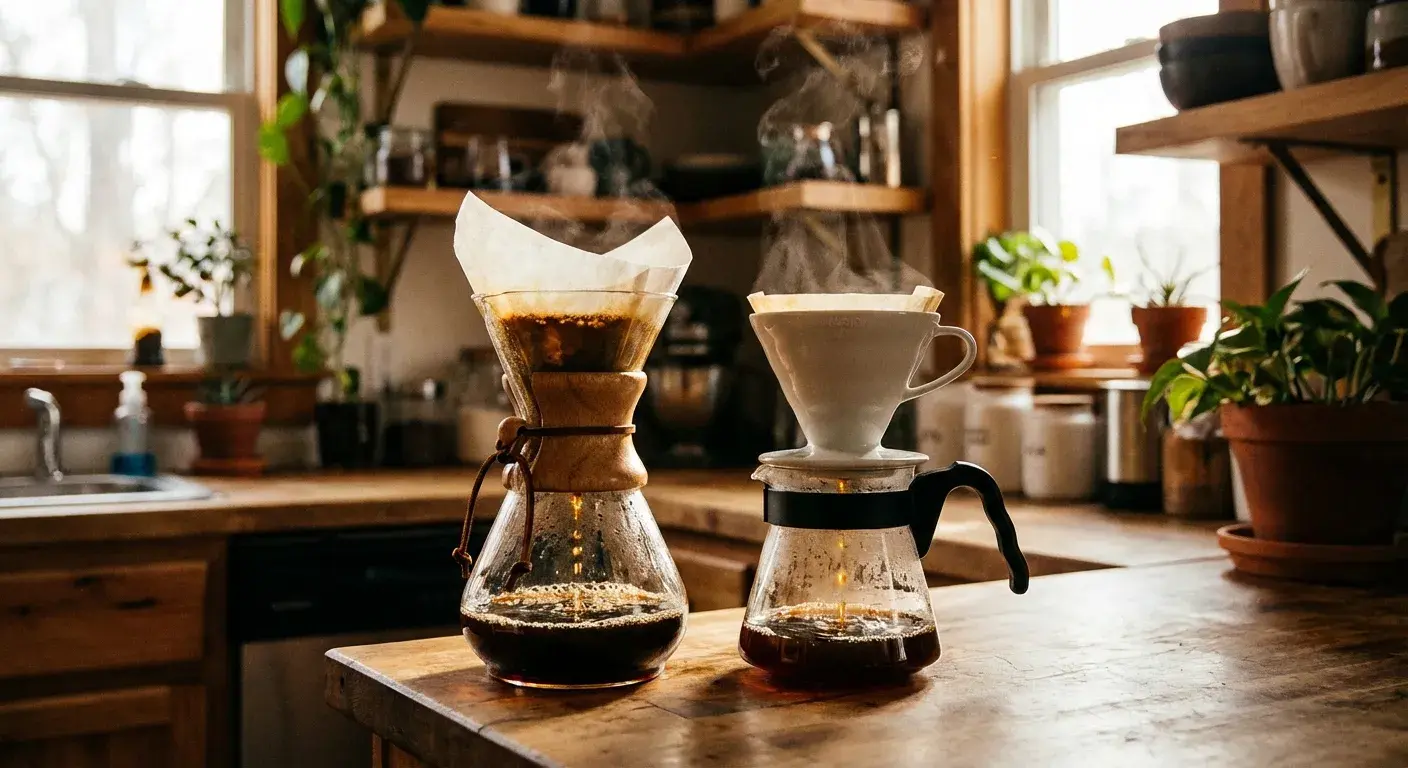
Manual pour over involves slowly and deliberately pouring hot water from a gooseneck kettle over ground coffee in a filter cone. You control the pour rate, the pattern, the intervals, and the total time. Water passes through the grounds and filter by gravity into a cup or carafe below.
The process typically involves a 30-second bloom (a small initial pour that allows CO2 to release from fresh grounds), followed by two to four additional pours over 3 to 4 minutes. Total active brew time is 4 to 5 minutes, but you are present and pouring the entire time — it is not a set-and-forget operation.
The quality ceiling is higher because you control every variable. The floor is also lower — a distracted or inconsistent pour produces a noticeably worse result than a careful one.
Taste: What Is the Actual Difference?
This is where pour over genuinely earns its reputation.
Drip coffee at its best is consistent, clean, and reliable. A quality drip machine using good beans and proper ratios makes an excellent everyday cup. What it cannot do is match the precision of a skilled manual pour. The fixed flow rate and showerhead design do not saturate the grounds as evenly as a careful hand pour, and the extraction is slightly less even as a result.
Pour over coffee at its best is cleaner, brighter, and more transparent. The paper filter removes coffee oils (just like in drip), but the active, even saturation extracts more of what is good in the beans and less of what is flat or bitter. If you are using quality beans — particularly a light or medium roast single-origin — pour over will show you flavors that a drip machine simply does not reveal. Fruity, floral, and complex notes come through more vividly.
The difference is less pronounced with dark roasts. A dark roast's dominant flavors (chocolate, smoke, char) come through clearly in both methods. Where pour over's advantage is sharpest is with lighter roasts and specialty single-origin coffees.
Important caveat: A $200 premium drip machine with proper temperature control narrows the gap significantly. A Moccamaster or Breville Precision Brewer produces coffee that many experienced home brewers cannot distinguish from a good manual pour over in blind tests. What you are really comparing at the high end is: premium auto drip vs. budget auto drip, not premium auto drip vs. manual pour over.
Time and Effort: The Real Trade-Off
Drip coffee is genuinely effortless once it is running. Fill the reservoir, add coffee, press a button. Many machines have programmable timers — set it the night before and wake up to a full carafe. The time investment is under 2 minutes of actual effort; the machine does the rest.
Pour over requires your full attention for 4 to 5 minutes. You need a gooseneck kettle (ideally with temperature control), a scale, fresh coffee, and a relatively quiet stretch of morning where you are not rushing. It is not a long process, but it cannot be ignored or delegated to a timer.
The honest time cost comparison:
| Drip | Pour Over | |
|---|---|---|
| Setup time | 1–2 minutes | 2–3 minutes |
| Active brew time | 30 seconds (then hands-off) | 4–5 minutes (hands-on) |
| Total elapsed time | 6–10 minutes | 5–7 minutes |
| Cleanup | Rinse basket, discard filter | Rinse dripper, discard filter |
Counterintuitively, the total elapsed time is similar. The difference is entirely in whether those minutes are passive (drip) or active (pour over).
Cost Comparison
Entry-Level Setup
A basic drip machine from Mr. Coffee or Hamilton Beach starts at $25. A Hario V60 plastic dripper starts at $10. Both use paper filters. At the most basic level, pour over is cheaper to start.
However, pour over benefits greatly from a gooseneck kettle ($25–$90) and a kitchen scale ($15–$40). A full pour over setup with decent equipment runs $50 to $150. A decent basic drip machine runs $25 to $80.
Mid-Range
A quality electric gooseneck kettle with temperature control ($50–$80) + a V60 or Chemex ($15–$55) + a scale ($25) totals $90 to $160 for a capable manual pour over setup. A mid-range drip machine (Breville Precision, OXO 9-Cup) costs $180 to $220 for comparable cup quality — all in one machine.
Premium
The Moccamaster at $300–$360 is the benchmark premium drip machine. At this price, it produces coffee of a quality that few home pour over setups can consistently beat without serious skill and fresh beans. But it also brews 40 oz in under 6 minutes, hands-free.
| Budget Level | Drip | Pour Over Setup |
|---|---|---|
| Entry | $25–$80 | $10–$50 (dripper only) |
| Mid-range | $100–$200 | $90–$160 (kettle + dripper + scale) |
| Premium | $200–$400 | $100–$200+ |
When to Use Each
Drip Coffee Is the Better Choice When:
- Weekday mornings are hectic. You need multiple cups, fast, without standing over a kettle. A programmed drip machine gives you coffee before you are fully awake.
- You are brewing for multiple people. Drip machines can brew 8 to 12 cups at once. Pour over is a single-serving method — brewing for four people means four consecutive manual pours.
- Consistency matters more than ceiling. The same drip machine with the same settings produces the same cup every day. Manual pour over varies slightly with your technique, mood, and attention.
- Someone else in your household also drinks coffee. Auto drip is a shared resource. A pour over ritual is often a solo activity.
Pour Over Is the Better Choice When:
- You want the best possible single cup. If you care about getting the most out of quality beans, a careful pour over with a gooseneck kettle and scale is hard to beat.
- You enjoy the process. The morning ritual of boiling water, weighing coffee, and doing a deliberate pour is genuinely pleasurable for many people. It is a 5-minute meditation.
- You travel or work from different locations. A V60 dripper and travel kettle fit in a carry-on. A drip machine does not.
- You are exploring specialty coffee. If you are buying single-origin, light-roast beans from specialty roasters, pour over extracts their complexity far better than most drip machines.
The Middle Ground: Premium Drip Machines
If you want consistent quality without the daily manual effort, a premium auto drip machine with proper temperature control (93–96°C) and a bloom pre-infusion cycle is a serious option. For gear recommendations on quality drip machines see our Best Automatic Drip Coffee Makers guide. For manual pour over equipment, our Best Pour Over Coffee Makers 2026 guide covers the best drippers, kettles, and setups at every price point.
Frequently Asked Questions
Does pour over coffee have more caffeine than drip? Not inherently. Caffeine content is primarily determined by your coffee-to-water ratio, not the brewing method. At standard ratios, the difference in caffeine between pour over and drip is negligible.
Can I use a drip machine with the same coffee I use for pour over? Yes. However, the grind size needs to match the method. Pour over typically uses a slightly finer medium grind compared to the medium grind used in drip machines. Using pour over-ground coffee in a drip machine may cause slower flow or over-extraction.
Is pour over worth it if I already have a good drip machine? If you have a quality drip machine (Moccamaster, Breville Precision Brewer) and are happy with your coffee, probably not. The upgrade from good drip to good pour over is meaningful but modest. Where pour over makes the biggest difference is upgrading from a cheap drip machine or when you are brewing specialty beans where every nuance matters.
Do I need a gooseneck kettle for pour over? You can technically brew pour over with a regular kettle, but a gooseneck kettle with temperature control makes an enormous practical difference. The narrow spout gives you precise control over flow rate and pour placement. It is the single most impactful equipment upgrade for manual pour over.
Which to Choose
If convenience is the priority — multiple cups quickly, someone else in the household who drinks coffee, press-and-walk-away mornings — a quality drip machine is the right tool.
If you want the highest ceiling, drink one cup at a time, and don't mind 5 minutes of attention each morning, pour over will reward you consistently. And if you want both — great coffee and no daily effort — a premium auto-drip like the Moccamaster narrows the gap to near-zero.
For every brewing method side by side, visit the Complete Guide to Coffee Brewing Methods.