Café de Olla: The Mexican Clay-Pot Coffee Recipe
 Tommie Chaney·
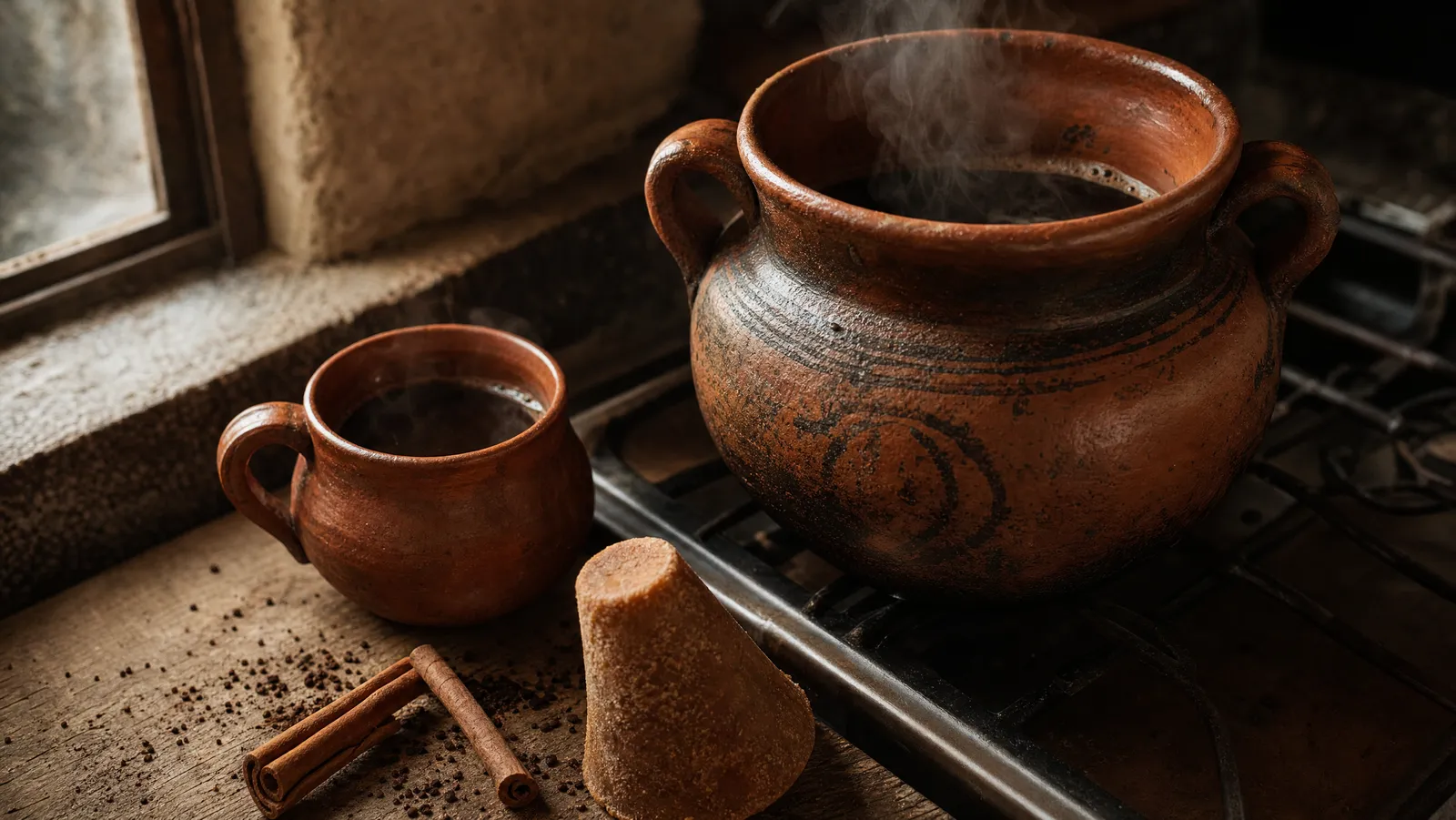
Café de olla is coffee simmered with piloncillo — unrefined Mexican cane sugar — and a stick of canela, then steeped off the heat and strained. The short version of the café de olla recipe: 4 cups (950 ml) of water, half a 6-ounce piloncillo cone, one canela stick, and 1/2 cup of coarse dark-roast grounds. Dissolve the sugar first, add the coffee off the boil, steep 5 minutes, strain.
Sweeter Grind is reader-supported. We may earn a commission on purchases made through links on this site, at no extra cost to you.
It is one of the more forgiving brews in coffee around the world: no filter to rinse, no pour to steady, no scale needed. What takes practice is balance: piloncillo and canela will bury the coffee, and grounds dropped into a rolling boil taste scorched.
What Café de Olla Is, and Why the Olla Matters Less Than You Think
The drink is named for its vessel. An olla is the round, narrow-necked clay pot Mexican kitchens have long used for beans, often sold as an olla frijolera. Brew coffee in it with sugar and spice and you have café de olla.
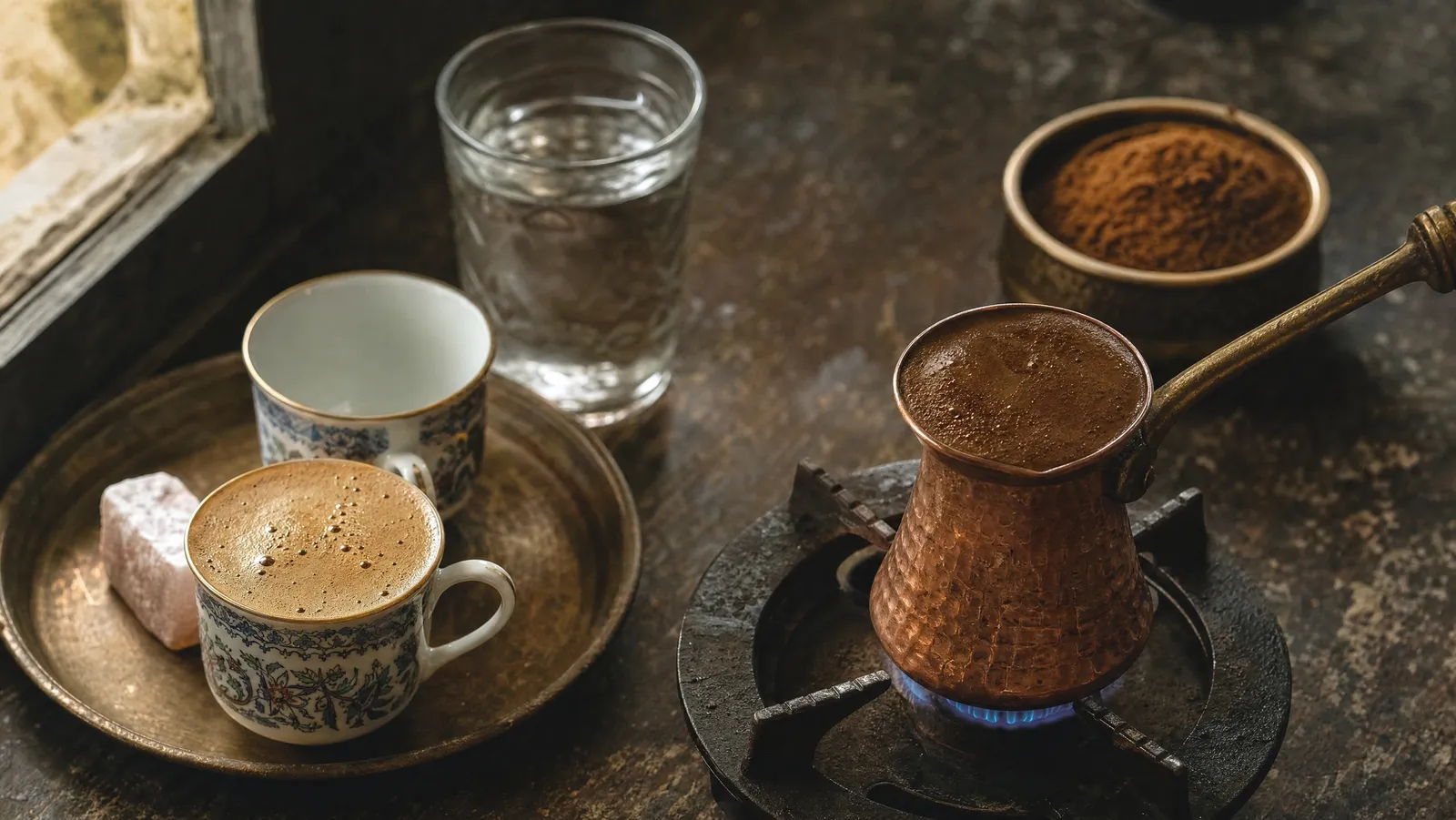
You do not need one. Plenty of Mexican home cooks make this in a saucepan and it is still café de olla. Clay contributes heat retention and, by most accounts, a faintly earthy note — the Mis Jarritos listing claims clay cookware "adds a subtle earthy taste" to coffee and tea, a manufacturer claim rather than a measurement. Neither is why the drink works: the piloncillo, the canela and the coarse grind are. Brewing in the pot instead of through a filter is the logic behind how to make Turkish coffee in a cezve too — the pot is the brewer.
Origins are contested. The usual account places the drink in the war camps of the Mexican Revolution, where women known as soldaderas or Adelitas brewed coffee for soldiers. Barista Magazine tells that story — "It was here, in the war camps of the Mexican Revolution, that café de olla was born" — and then calls it apocryphal, since sweetening and spicing drinks was already so traditional in Mesoamerica that something like it likely came earlier. Several accounts also place it on ofrendas during Día de Muertos, a link that is widely repeated but thinly documented. It reads as a holiday drink in much of Mexico and the US.
Piloncillo: The Sugar Behind Piloncillo Coffee
Piloncillo is unrefined cane sugar sold in hard cones. According to Isabel Eats and Mashed, the cane is crushed, the juice boiled down to a syrup, and that syrup poured into cone-shaped molds where it hardens. Nothing is stripped out and nothing added back, unlike supermarket brown sugar — refined white sugar with molasses mixed back in. So piloncillo brings molasses, smoke and a mineral edge plain sugar cannot. Café de olla made with white sugar is just sweet coffee with cinnamon in it.
The cones are rock hard. Saw at one with a serrated knife, grate it, or drop the chunk into cold water and let a long simmer do the work — which is why Step 2 starts cold. Sizes are not standardized either — Rick Bayless calls for 4 1/2 ounces, "roughly 1/2 9-ounce cone" — so weigh rather than counting cones. The Loma Vista piloncillo cones we recommend are 6 ounces each, about $8 as of November 2026 for a two-pack; half a cone is the 3 ounces (85 g) a 4-cup pot wants.
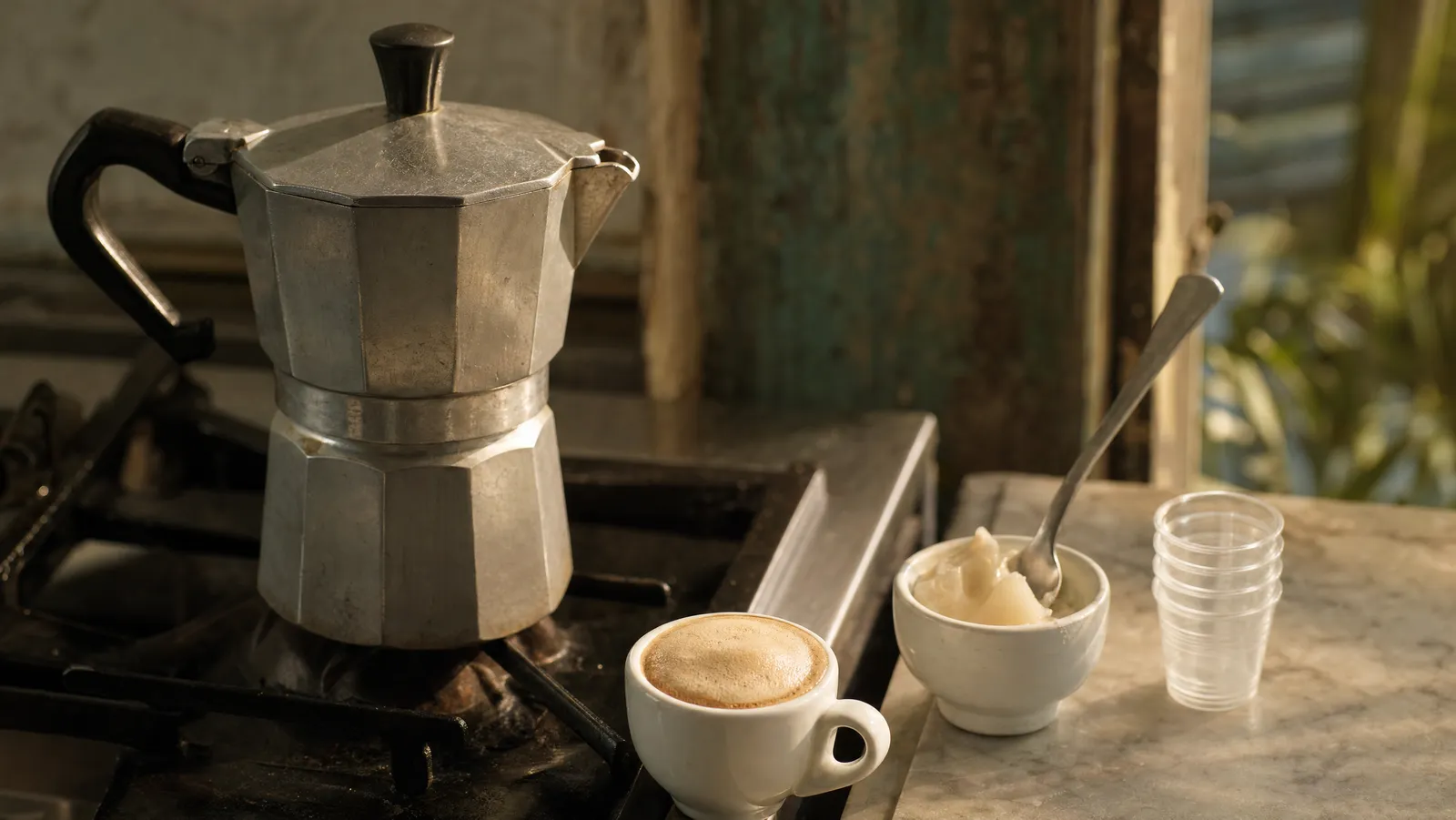
Latin America has more than one tradition built on dark roast and a lot of sugar. Cuban cafecito whips sugar into the first drops of espresso rather than simmering it into the water — same ingredients, opposite physics.
Canela: Why Canela Coffee Isn't Just Cinnamon Coffee
There are two commercial cinnamons, and the one in most US spice racks is not the one in a Mexican kitchen. Ceylon cinnamon is Cinnamomum verum, literally "true cinnamon"; cassia is the cheaper, more common species, and most jars labeled simply "cinnamon" in US supermarkets are cassia. Spice-trade references describe Ceylon sticks as thin layers that crumble when bent against cassia's single rigid tube, and Ceylon as the milder, sweeter of the two.
Which one is canela? Sources conflict — most say Ceylon, a few note that cassia sells in Mexico too. The trade data leans one way: a market analysis from IndexBox reports Sri Lanka supplied about 92% of Mexico's cinnamon imports by volume in 2023, roughly 16,000 tons, and OEC trade data shows the same pattern. Sri Lanka is where Ceylon cinnamon comes from, so canela is overwhelmingly Ceylon in practice — but the word is not a species guarantee. Bend a stick.
Cassia's heat competes with the coffee; Ceylon's softer aromatics sit under it. If your café de olla tastes like a cinnamon candle, that is probably cassia, and too much of it. The El Alebrije canela sticks are sold as canela entera Oaxaqueña, about $11 as of November 2026 for 4 ounces, and the maker calls them stronger, sweeter and more aromatic than common cinnamon. Buy sticks so you can pull the spice out when you strain.
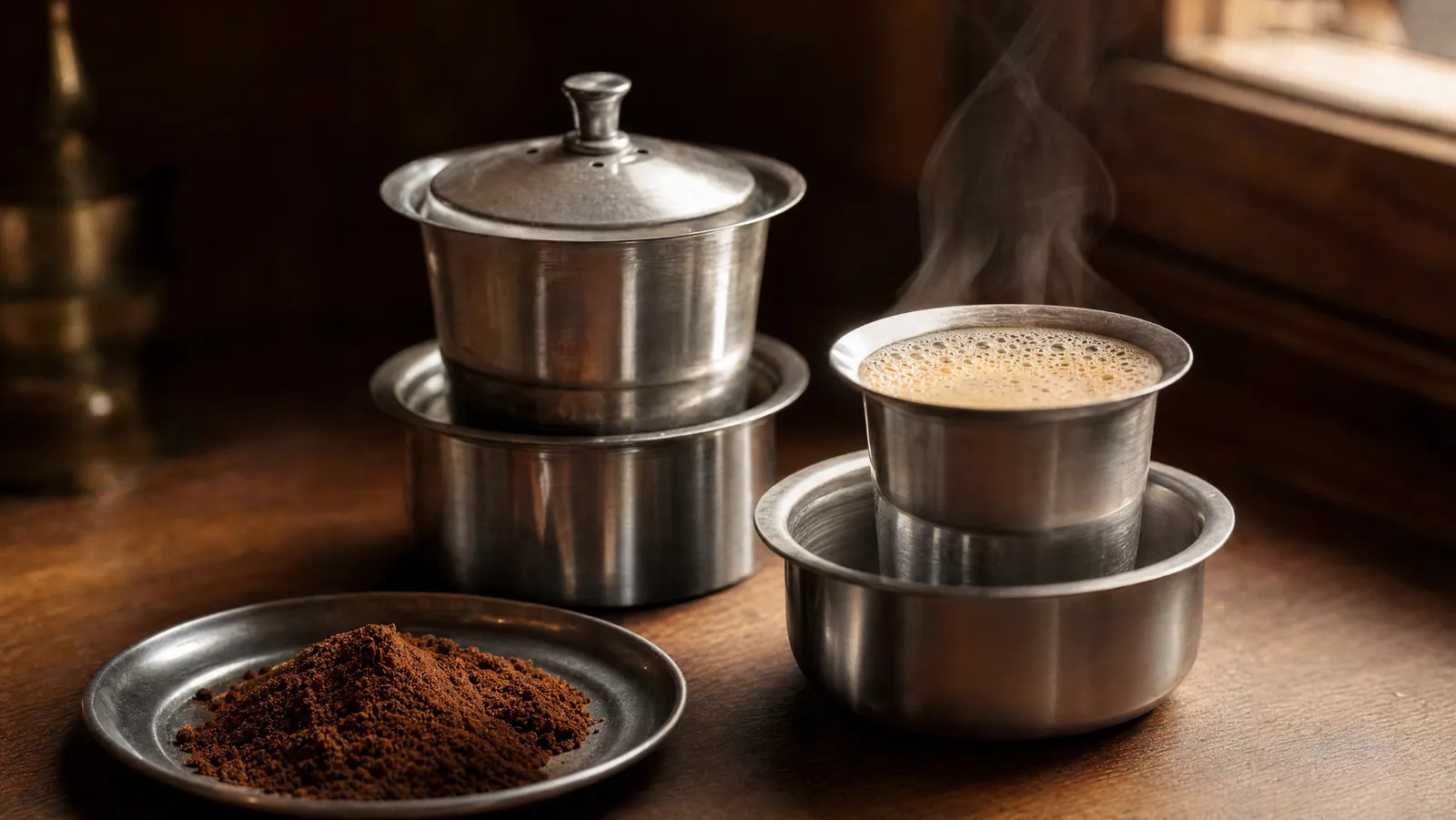
Optional additions you will genuinely see. Bayless builds his syrup with the zest of one orange, 1/4 teaspoon of whole cloves and a 3-inch Mexican cinnamon stick; World Spice's adds cloves and star anise. Some cooks add a dried chile piquín. Add one at a time. Nor is this the only tradition here that cooks something besides coffee into the brew — South Indian filter coffee blends roasted chicory into the grounds themselves.
The Beans: Dark Roast, Coarse Grind
Dark roast is traditional and functionally right. Pati Jinich's recipe specifies coarsely ground dark-roast coffee; Bayless calls for "a fairly dark-roasted Mexican coffee." The arithmetic is simple: 85 g of unrefined sugar and a stick of spice flatten the citrus and florals you pay for in a light Ethiopian, while a dark roast's chocolate and molasses run alongside the piloncillo. Our guide to coffee beans and roasts covers the trade-off.
A Mexican coffee is the obvious pick: a buying guide from the roaster Colipse, citing USDA Foreign Agricultural Service figures, says Chiapas, Veracruz, Oaxaca and Puebla grow about 90% of the country's coffee between them.
Grind coarse. This is full immersion with a strainer at the end, the same mechanical family as how to make French press coffee. Fines over-extract during a hot steep and slip through mesh as silt. Aim for coarse sea salt — our grind size guide shows where that sits on your grinder.
The Ratio, and How to Scale It
Published ratios vary more here than in almost any tradition, because the sugar does so much of the work. Jinich uses 6 tablespoons of coffee to 9 cups of water, which is lean; Bayless uses 3/4 cup of grounds in an 8-cup press pot filled three-quarters, roughly drip strength. Ours sits between the two.
| Water | Piloncillo | Canela | Coarse grounds |
|---|---|---|---|
| 2 cups / 475 ml | 1.5 oz / 40 g | 1 short stick | 1/4 cup / 20 g |
| 4 cups / 950 ml | 3 oz / 85 g (half a 6 oz cone) | 1 stick, 3 in / 7.5 cm | 1/2 cup / 40 g |
| 8 cups / 1.9 L | 6 oz / 170 g | 2 sticks | 1 cup / 80 g |
Forty grams to 950 ml is about 1:24 by weight, leaner than the 1:16 you would use for pour over — deliberate, because a long hot steep extracts hard and the piloncillo supplies body. For a punchier cup go to 2/3 cup (about 55 g), near Bayless's dose. The sugar is sweet by design; halving it makes a good drink, just a less traditional one. For an odd-sized pot, run the numbers through our brew ratio calculator and scale the spices to match.
How to Make Café de Olla
Step 1: Measure cold water into the pot
Pour 4 cups (950 ml) of cold water — not hot from the tap — into your olla or saucepan, filling it no more than three-quarters full to leave headroom for the grounds.
Step 2: Add the piloncillo and canela to the cold water
Drop in about 3 ounces (85 g) of piloncillo — half a 6-ounce cone, broken into chunks — and one 3-inch (7.5 cm) canela stick, then set the pot over medium heat so the cone gets the entire climb to temperature to break down.
Step 3: Simmer and stir until no grit is left
Bring the water to a gentle simmer and stir until a spoon dragged across the bottom finds nothing granular, usually 5 to 10 minutes — undissolved piloncillo just sits there and sweetens the last cup unevenly.
Step 4: Grind the coffee coarse while the syrup simmers
Grind 1/2 cup (about 40 g) of dark-roast coffee to a coarse, sea-salt texture — the setting you would use for a French press.
Step 5: Take the pot off the heat before the coffee goes in
Lift the pot off the burner, wait about 30 seconds for the surface to stop churning, then stir in the coarse grounds. Coffee added to a rolling boil is the main reason homemade café de olla tastes scorched; just off the boil you are near 200°F (93°C), hot enough to extract cleanly.
Step 6: Cover and steep for five minutes
Put the lid on and leave the pot off the heat for 5 minutes without stirring. Jinich's recipe simmers the coffee about 5 minutes then steeps it covered for 5 more; for a stronger cup, extend the steep rather than adding grounds.
Step 7: Strain it off the grounds immediately
Pour the whole pot through a fine-mesh strainer or cheesecloth and fish out the canela stick. Strain the whole batch: coffee left on its grounds turns harsh.
Step 8: Serve it hot in a warmed jarrito
Rinse the cups with hot water, then pour. Café de olla is traditionally served in a small clay jarrito, and thick-walled clay holds it at drinking temperature longer than thin porcelain — the Baderke clay mugs run about $25 as of November 2026 for a pair.
Clay-Pot Care and the Lead Question
Cure it first. MexGrocer's guide to ollas de barro says many traditional clay pots need curing before first use to reduce porosity: soak the base in cold water, fill the pot with cool water, bring it to a boil, let it cool, discard the water, then scrub with a salt paste or baking soda and rinse. NPR's account of cooking with a terra cotta cazuela is simpler: soak it overnight in water before the first use.
Then treat it gently. MexGrocer's care notes: avoid sudden high heat, work low to medium, never move a hot clay pot onto a cold surface, never pour cold liquid into a hot pot. Check too that your pot is rated for direct heat at all — the Ancient Cookware cazuela, about $83 as of November 2026, is listed by its maker for gas, electric and glass stovetops, while the Mis Jarritos olla at about $53 makes no stovetop claim at all.
Now the part people skip. The FDA's guidance on lead-glazed traditional pottery states that lead may be present in the glazes or decorations covering the surface of some traditional pottery, and that if the pottery is not manufactured properly, that lead "can leach into food and drink that is prepared, stored, or served in the dishes" — and that no amount of washing or boiling removes it. It also reports that some pottery "labeled as 'lead free' in fact contains levels of extractable lead," partly because potters who switched glazes may still fire in old kilns. Its advice: test with lead swabs, and consider not using pottery for food if you cannot test it or confirm it came from a reliable manufacturer.
So: buy from a maker that states a lead-free certification, as Ancient Cookware does, and still swab the pot before it becomes a daily habit.
Troubleshooting
| Problem | Likely cause | Fix |
|---|---|---|
| Too sweet | A whole cone, or a cone over 6 oz | Weigh to about 3 oz (85 g) per 4 cups, or halve it |
| Bitter, scorched | Grounds added at a rolling boil | Pull the pot off the heat first, and keep it off |
| Harsh and drying | Brew left sitting on its grounds | Strain the whole batch at 5 minutes |
| Muddy, silty cup | Grind too fine | Go coarser, strain through cheesecloth |
| Weak and thin | Dose too low | Move from 1/2 to 2/3 cup per 4 cups |
| Spice dominates | Too much canela, or cassia | One stick per 4 cups, pulled at straining |
FAQ
Do I really need a clay olla to make café de olla?
No. A saucepan makes this drink, and plenty of Mexican home cooks use one. What clay adds is heat retention and, by most accounts, a faint earthy note — pleasant, but not what defines the drink. Piloncillo, canela and a coarse dark-roast grind do.
What can I substitute for piloncillo?
Dark brown sugar, which both Jinich and Bayless list — Bayless gives 1/2 cup plus 1 tablespoon in place of 4 1/2 ounces of piloncillo. As Isabel Eats explains, brown sugar is refined white sugar with molasses added back, so you get the sweetness but not the smoky depth. Muscovado gets closer.
Is the canela in a Mexican grocery the same as the cinnamon in my cupboard?
Probably not. Most US jars labeled "cinnamon" are cassia, the harder and hotter species, while canela is generally Ceylon — milder, sweeter, sold as soft sticks of thin papery layers that crumble when bent. Sources disagree on whether all canela is Ceylon, so check the label or bend a stick.
Can I make café de olla in a French press or a drip machine?
A French press works well, and Jinich's recipe offers it as the straining step: simmer the syrup and coffee in a pot, then pour everything into the press. A drip machine does not, because you cannot simmer a sugar cone in a drip basket — Bayless's workaround is to build the syrup on the stove, then brew the coffee into it in a press pot.
Is it safe to brew coffee in glazed Mexican pottery?
Only if you know the piece. The FDA says lead from glazes and decorations can leach into food and drink if the pottery was not manufactured properly, that boiling or washing will not remove it, and that some pottery labeled "lead free" has still contained extractable lead — so its advice is to test with lead swabs and avoid untested pieces for food. The California Department of Public Health lists ollas — "deep pots for cooking beans that often have a lid or are used covered" — among glazed ware that can leach lead, while noting unglazed pieces are not a hazard. Decorative items may be stamped "Not for Food Use—May Poison Food."
Where to Go Next
Café de olla rewards three things: real piloncillo instead of brown sugar, canela instead of supermarket cassia, and a coarse dark-roast grind that goes in after the boil. Make it once at 4 cups, then push the sugar down or the coffee up until it tastes like yours.
For how it sits next to the cezve, the phin and the other pot-brewed methods, our world coffee guide maps the whole set.
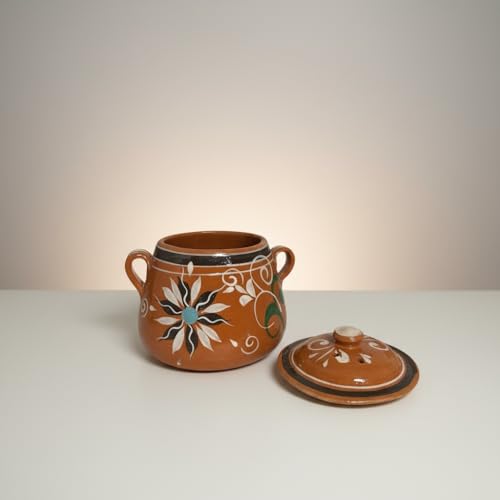
Mis Jarritos Mexican Clay Bean Pot with Lid (Olla de Barro, 2-3 Quart)
A hand-crafted olla frijolera in the traditional bean-pot shape, made in Mexico from barro clay and sold with a lid. At 2 to 3 quarts (0.50 to 0.75 gallon) it is the right size for a 4-to-8-cup batch of café de olla, which the listing names among its intended uses alongside beans and stews. Buy it if you want the vessel the drink is named after rather than a general-purpose pot.
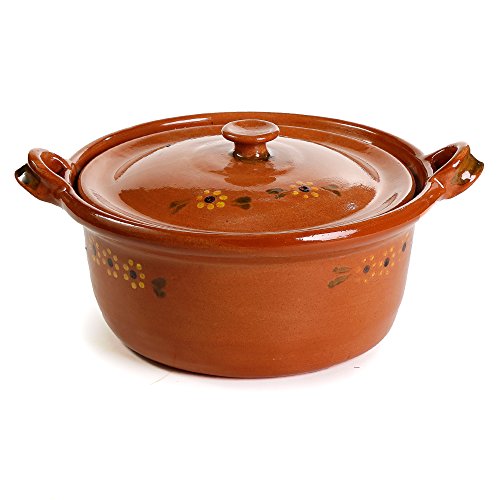
Ancient Cookware Mexican Clay Lidded Cazuela Pot, Medium (3.5 Quarts)
A 3.5-quart lidded terracotta cazuela handcrafted by the maker's artisans in Hidalgo, Mexico. This is the pick if you want one clay vessel you can actually put on the burner: the maker lists it for gas, electric and glass stovetops as well as the oven, microwave and grill, and describes it as certified lead free. It earns its keep beyond coffee, which matters at this price.

Loma Vista Piloncillo (Panela) Cones, 6 Ounces (Pack of 2)
Two 6-ounce cones of unrefined cane sugar, also sold as panela, from Loma Vista — a family business in Albuquerque, New Mexico that the listing says has operated since 1988. Six-ounce cones are the convenient size for this recipe: half a cone sweetens a 4-cup pot, so one cone covers two batches. This is the cheapest ingredient on the page and the one that most changes the cup.

El Alebrije Authentic Mexican Cinnamon Sticks, 4 oz (Canela Entera Oaxaquena)
A 4-ounce (114 g) pack of whole cinnamon sticks sourced from Mexico and sold as canela entera Oaxaqueña, with no additives, preservatives or artificial flavors. Canela is the second half of what makes this drink taste Mexican rather than simply sweetened, and 4 ounces of sticks is a long supply when a 4-cup pot wants one. For coffee, buy sticks rather than ground.
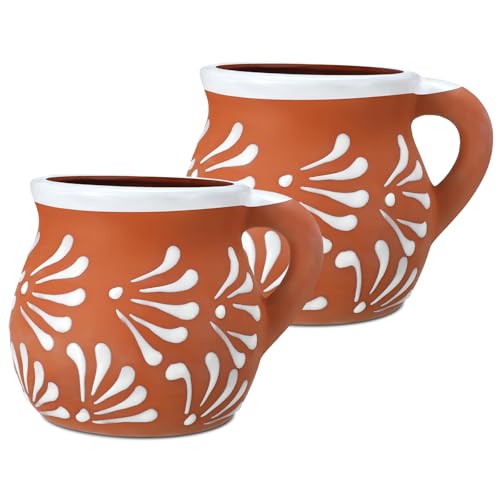
Baderke Mexican Clay Mugs, 2 Pack, 12 oz
A pair of 12-ounce handcrafted terracotta mugs with a painted white floral pattern, sold for exactly this job — the listing names café de olla directly among intended uses alongside agua de horchata, champurrado and atole. Café de olla is traditionally poured into a small clay jarrito, and a thick-walled clay mug holds a sweet, spiced coffee at drinking temperature longer than a thin porcelain cup does.