How to Read a Coffee Bag Label (And Spot a Great Bean)
 Tommie Chaney·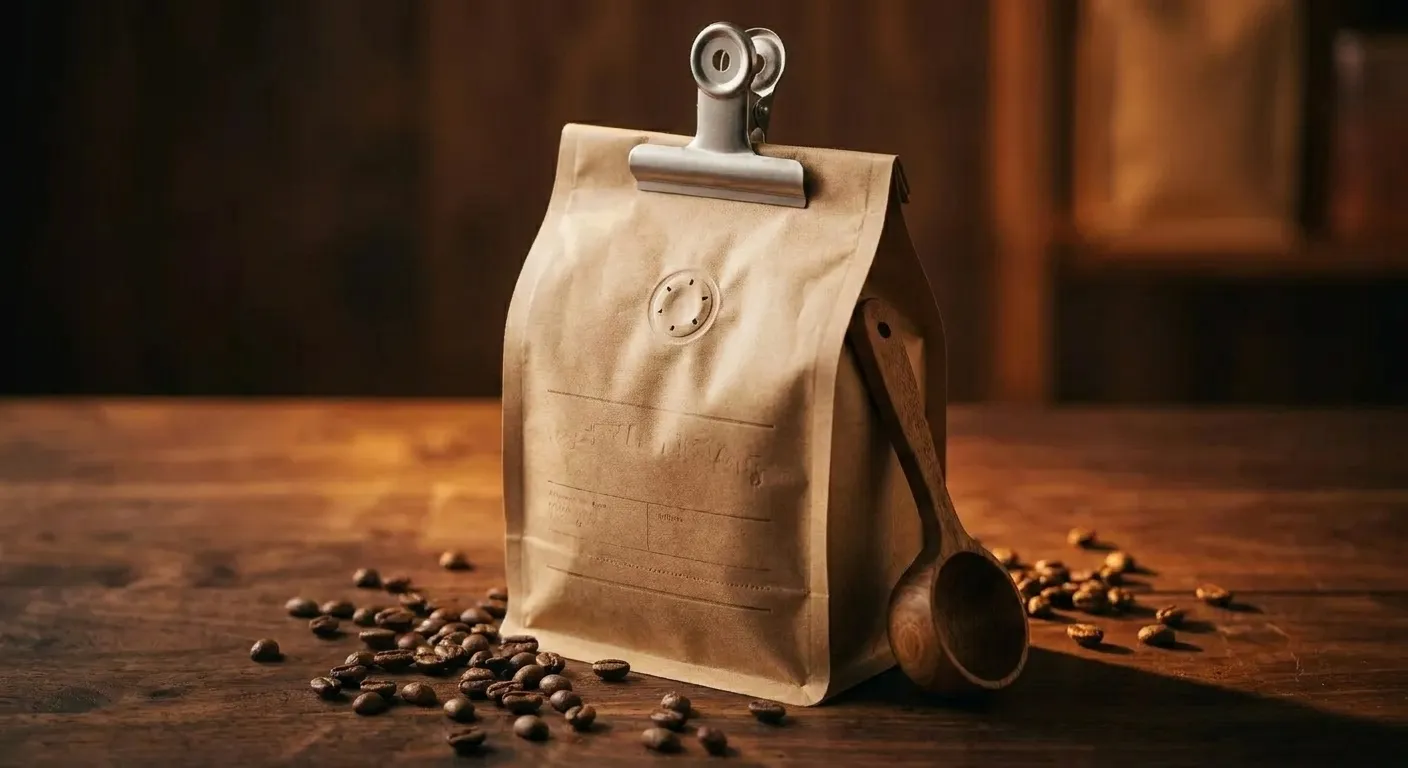
Affiliate disclosure: Sweeter Grind is a participant in the Amazon Services LLC Associates Program. We may earn commissions on qualifying purchases at no extra cost to you.
A specialty coffee bag is covered in information. Origin. Variety. Process. Altitude. Roast date. Tasting notes. Cupping score. Farm name. Producer name. Certifications. For someone new to specialty coffee, the wall of text is intimidating — and it's easy to focus on the wrong things (the flashy brand logo, the roast level) while missing what actually matters (the roast date).
Below is every element you'll see on a bag, ranked by importance, with the marketing language that means nothing flagged along the way.
For the bigger picture of beans, roasts, and origins, see the pillar guide: The Ultimate Guide to Coffee Beans and Roasts.
The Three Things That Actually Matter
Before we dive into every label element, here is the shortcut. In order of importance, these are the only three things that determine whether a bag is worth buying:
- Roast date — within the last 2–3 weeks, ideally.
- Reputation of the roaster — a good roaster with any origin beats a mediocre roaster with a famous origin.
- Origin specificity — the more specific (region, farm, lot), the more likely it is specialty grade.
Everything else — the varietal, the process, the certifications, the tasting notes — is detail that helps you predict flavor. If the three above are dialed in, the bag is probably good. If any of them is missing or bad, no amount of the rest can save it.
Now, the element-by-element breakdown.
Roast Date
This is the single most important piece of information on the bag. If the bag has a roast date within 2–3 weeks of purchase, you are getting fresh coffee. If it has a "best by" date instead of a roast date, you are buying stale coffee.
What to Look For
- "Roasted on [date]" or just a date printed on the bag
- Within 2–3 weeks of purchase — ideal for home use (gives you time to drink it while still fresh)
- Within 1 week of purchase — even better, though beans less than 4 days old can be a little "gassy" in extraction
Warning Signs
- "Best by [date]" — means nothing without knowing when it was roasted. Most "best by" dates are 12–18 months post-roast, which is wildly stale.
- No date at all — walk away. Commodity product.
- Month and year only ("MAR 2026") — better than nothing, but not precise enough for freshness evaluation.
For the full freshness timeline, see How to Store Coffee Beans for Freshness.
Origin Specificity
The more precise the origin, the more specialty the coffee. Levels from least to most specific:
- No origin listed or "Specially selected beans from around the world" — commodity, almost always.
- "100% Colombian" or just a country name — minimum acceptable specialty; often mass-produced.
- Country + region — "Colombia Huila," "Ethiopia Yirgacheffe." Standard specialty level.
- Country + region + cooperative or washing station — "Ethiopia Kochere Worka Cooperative." Higher tier.
- Country + farm name — "Guatemala Finca El Injerto." Estate-level specialty.
- Country + farm + lot or microlot — "Finca El Injerto, Lot 17." Top-tier specialty.
A specialty bag should list at minimum the region. Missing region is a strong negative signal. Farm or lot-level is a positive signal that suggests the roaster traces their supply chain carefully.
Variety (Cultivar)
The variety — sometimes called the cultivar or varietal — is the specific genetic strain of Coffea arabica the coffee comes from. Different varieties have different flavor potential.
Common Varieties You Will See
- Typica, Bourbon — the two foundational Arabica varieties. Classic, balanced flavor.
- Caturra, Catuai, Mundo Novo, Pacas — Bourbon mutations common in the Americas. Productive, balanced.
- SL28, SL34 — Kenyan selections. Intense blackcurrant and wine-like acidity.
- Geisha (or Gesha) — the exotic, floral variety. Jasmine, bergamot, peach. Expensive.
- Heirloom — the umbrella term for Ethiopia's uncatalogued indigenous varieties. Usually signals floral, fruity, complex cup.
- Pacamara — large-bean Salvadoran variety. Floral, tropical.
- Sudan Rume, Laurina, Mokka — specialty/rare varieties, often distinctive.
- Castillo, Colombia, Marsellesa, Obata — rust-resistant hybrids. Productive and stable, but generally less flavor-complex than heirloom or bourbon-derived varieties.
Variety is not a required label element, but its presence is a good sign — the roaster cares about detail. Most specialty bags list it.
Processing Method
How the cherry fruit was removed from the bean. Major categories:
- Washed (wet) — clean, clear acidity. Dominant in Kenya, Colombia, Central America.
- Natural (dry) — fruit-forward, wild. Traditional in Ethiopia and Brazil.
- Honey (pulped natural) — sweet, syrupy, in between. Costa Rica's specialty.
- Anaerobic / carbonic maceration — experimental, often cinnamon or cola-like. Trendy, expensive.
- Wet-hulled (giling basah) — Sumatran specialty. Earthy, low-acid.
Processing is the second-biggest flavor variable after origin, and a good bag will list it. For the complete breakdown, see Coffee Processing Methods: Washed, Natural, and Honey.
Altitude
Altitude is listed in meters above sea level (MASL) on specialty bags. Higher altitudes generally produce denser beans with more concentrated flavors.
Altitude Benchmarks
- Below 1,000m — typically commodity or low-grown specialty. Heavier body, less complexity.
- 1,000–1,400m — baseline specialty altitude. Many Brazilian and some Central American lots sit here.
- 1,400–1,800m — solid specialty altitude. Most Colombian and Central American microlots.
- 1,800–2,200m — high-altitude specialty. Most Kenyan, Ethiopian, and Panamanian competition lots.
- Above 2,200m — rarefied air. Usually competition-tier or rare microlots.
Higher is not automatically better — Brazilian coffee at 1,000m can be excellent, and some of the best coffees in the world come from 1,500m — but above ~1,400m is a meaningful quality signal.
Some bags use regional grading terms that correlate with altitude:
- SHB (Strictly Hard Bean) in Costa Rica and Guatemala — above ~1,200m (CR) or 1,350m (GT)
- HB (Hard Bean) — lower altitude
- AA, AB, PB in Kenya — size-based rather than altitude-based
Tasting Notes
Specialty bags list 2–4 tasting notes describing what the roaster perceives in the cup. Examples:
- "Blueberry, milk chocolate, bergamot"
- "Green apple, honey, almond"
- "Ripe strawberry, dark cocoa, wine"
These are not flavorings added to the coffee — they are descriptors of what the coffee naturally tastes like to a trained palate. Whether you taste the exact same things depends on your palate, your brewing, and your water. But directionally, tasting notes help you predict profile:
- Fruity notes (blueberry, orange, grapefruit) → African, bright, light-to-medium roast
- Floral notes (jasmine, rose, bergamot) → Ethiopia or Geisha
- Chocolate/nut notes (cocoa, almond, hazelnut) → Brazilian, Colombian, medium roast
- Earthy/woody notes (cedar, tobacco, mushroom) → Sumatran
- Honey/caramel notes → Costa Rica, honey-process, balanced
If the bag has no tasting notes — just a roast level like "medium roast" or vague marketing like "smooth and bold" — it is almost certainly commodity.
Cupping Score
The SCA cupping score is a 100-point rating given by trained Q-graders. The scale:
- 80–84: Specialty baseline. Good, clean coffee.
- 85–87: Excellent specialty. High quality, above-average complexity.
- 88–89: Outstanding. Competition-tier coffee.
- 90+: Exceptional. Usually reserved for the best lots from the best farms (e.g., Geisha, top microlots).
Not every bag lists a score. Some roasters score internally but do not advertise numbers. When a score is listed, it is a credible signal (roasters do not make up scores — it damages their reputation if called out). 85+ is a safe bet for "really good coffee."
Roast Level
The roast level tells you how dark the beans were roasted. Common terms:
- Light / Cinnamon / Nordic / New England — lightest, preserves origin character and acidity
- Medium / City / American / Breakfast — balanced, caramelized, versatile
- Medium-dark / Full City / Vienna — heavier, starting to show roast flavor
- Dark / French / Italian / Spanish — darkest, roast flavor dominates
Some roasters provide a more specific indicator — a visual meter on the side of the bag or a specific temperature. "Light" to one roaster may be "medium" to another.
For an everyday coffee drinker who likes balance: aim for medium. For a specialty-forward drinker who wants bright, fruity cups: light. For traditional espresso and milk drinks: medium to medium-dark.
Weight and Format
Specialty bags typically come in 8 oz (227g), 10 oz (284g), or 12 oz (340g). Some roasters sell 5 lb (2.27kg) wholesale bags. A 12 oz bag typically yields ~20 cups of coffee.
Whole bean vs pre-ground: always buy whole bean if you have a grinder. Pre-ground coffee loses most of its freshness within 15 minutes of grinding and is thoroughly stale within 2–3 days, regardless of packaging. If you do not have a grinder yet, a $30 hand grinder or a budget electric option from our best coffee grinders under $50 guide pays for itself within a month in improved flavor.
Certifications
Labels may carry one or more certifications. What they mean:
- USDA Organic — grown without synthetic pesticides or fertilizers
- Fair Trade Certified — guarantees minimum prices to farmer cooperatives; does not guarantee quality
- Rainforest Alliance — environmental and social sustainability standards
- Bird Friendly (Smithsonian) — shade-grown, preserves migratory bird habitat
- Direct Trade — not a regulated term, but used by roasters who buy directly from farms. Can be very meaningful (with a good roaster) or meaningless (with a bad one).
None of these certifications guarantee flavor quality. They guarantee how the coffee was grown and traded. Buy certified coffee if the ethical or environmental values matter to you, but do not confuse certifications with quality grades.
Marketing Language to Ignore
Some terms mean literally nothing on a coffee bag. Skip them when evaluating:
- "Premium" — no legal definition
- "Gourmet" — no legal definition
- "Artisan" — no legal definition
- "Small batch" — applies to almost every specialty roaster; not a quality differentiator
- "Hand-roasted" — all specialty roasting involves human oversight
- "Smooth" — vague enough to mean anything
- "Bold and rich" — typical of commodity bags; real specialty bags use specific tasting notes
- "Single origin" at a grocery store without region detail — often just means "from one country"
A Sample Specialty Bag, Annotated
Here is what a well-labeled specialty bag looks like in practice:
Ethiopia Yirgacheffe Worka Chelbesa Producer: Worka Chelbesa Cooperative Variety: Heirloom Process: Washed Altitude: 1,900–2,100m Tasting notes: Bergamot, jasmine, peach, black tea Cupping score: 88 Roast date: April 18, 2026 Roast level: Light-medium
Every element tells you something concrete. The origin is specific to the cooperative. The variety is heirloom (Ethiopia-native). The process is washed (clean clarity). The altitude is genuinely high (~2,000m). The tasting notes signal a bright, floral, tea-like cup. The cupping score is competition-tier. The roast is recent. This is a bag worth buying.
Compare that to:
Morning Blend Premium whole bean Arabica coffee Smooth and bold Best by: March 2027
Nothing useful. No origin. No roast date. No variety. No process. No tasting notes. This is a commodity product dressed up in marketing language.
Frequently Asked Questions
What if the bag has a roast date that is 2 months old?
Skip it. Two months past roast, most coffee has lost its aromatic intensity. Some beans (particularly dark roasts stored well) hold up okay at 2 months, but there is no reason to settle when fresh beans are readily available online and in specialty shops.
Does pre-ground coffee ever make sense?
Only in a true pinch — traveling without a grinder, for example. Otherwise, no. The speed of flavor loss after grinding is dramatic. If budget is the issue, a $25 hand grinder is a better investment than continuing to buy pre-ground.
Are the tasting notes made up?
No, not at reputable roasters. Trained palates really do perceive those specific notes during cupping. You may or may not taste them yourself — palate training is a learned skill — but the notes are the roaster's honest best effort to describe the cup.
Is there a reliable way to buy specialty coffee without learning all this?
Yes. Pick a well-reviewed specialty roaster (local or mail-order), buy their current offerings, and trust their curation. Once you try a few, you will learn which profiles you like and can get more specific from there.
The Short Version
Three signals matter most on a coffee bag: roast date, roaster's reputation, and specificity of the origin. Scan for those in ten seconds. If they check out, the coffee is probably good. If any are missing — especially the roast date — put the bag down.
Related reading
- The Ultimate Guide to Coffee Beans and Roasts — the pillar guide
- How to Store Coffee Beans for Freshness — protecting beans after purchase
- Arabica vs Robusta Explained — the species on the label
- Coffee Processing Methods: Washed, Natural, and Honey — decoding process terms
- Coffee Growing Regions and Flavor Profiles — predicting flavor from origin
- Single Origin vs Blends: Which Is Better? — reading blend labels vs single-origin labels