Coffee Processing Methods: Washed, Natural, and Honey Explained
 Tommie Chaney·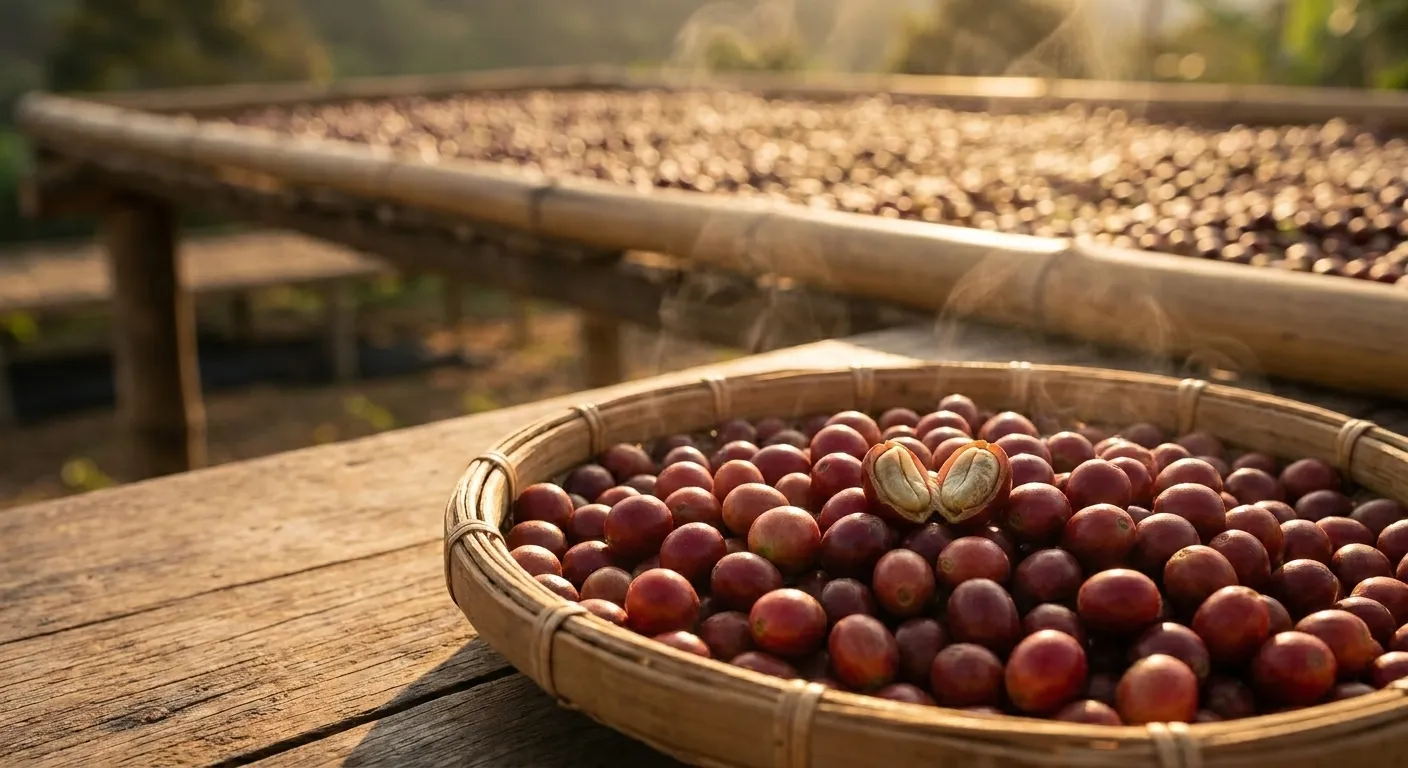
Affiliate disclosure: Sweeter Grind is a participant in the Amazon Services LLC Associates Program. We may earn commissions on qualifying purchases at no extra cost to you.
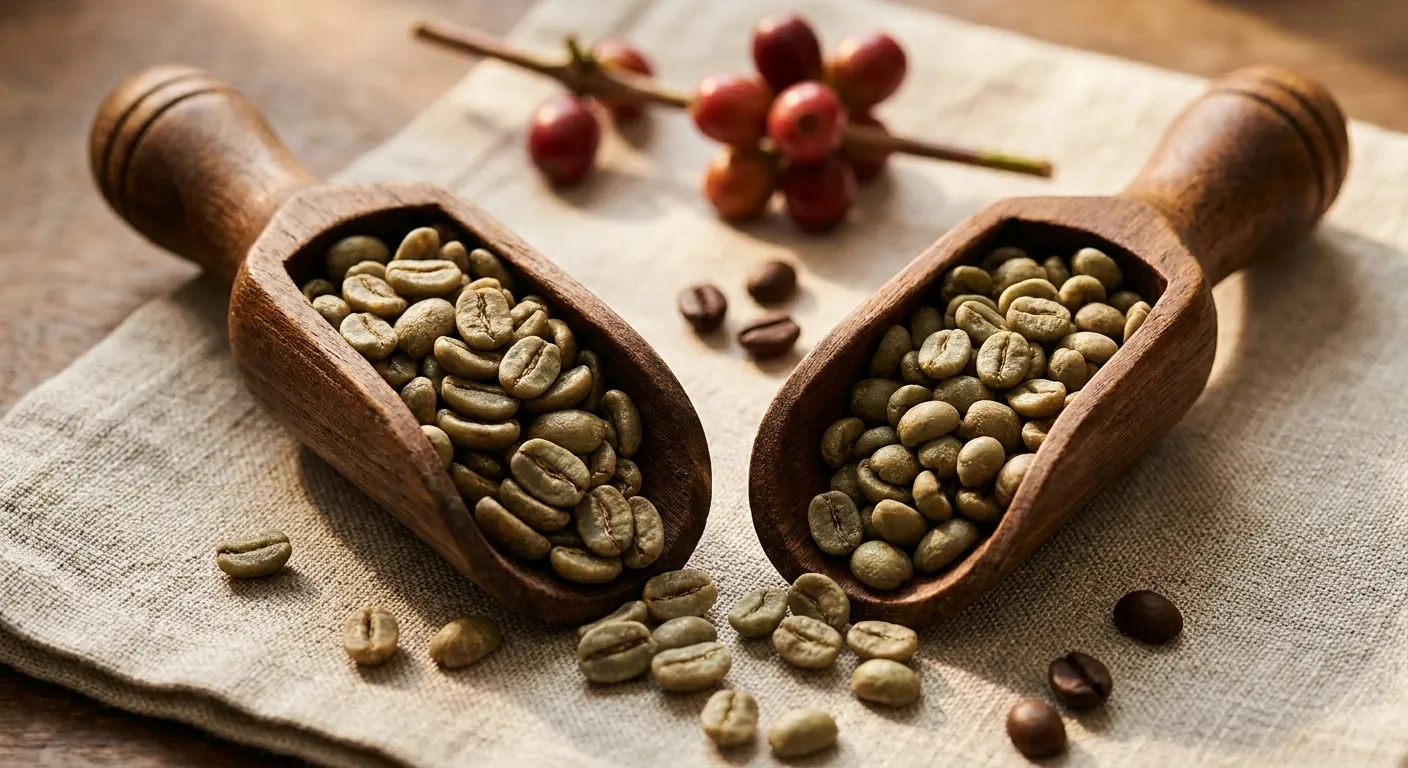
A coffee "bean" is not actually a bean. It is the seed of a coffee cherry — a small red or yellow fruit about the size of a grape. Before that seed reaches your roaster, it has to be separated from the fruit surrounding it. How that separation is done has a massive impact on how the coffee eventually tastes.
The three primary processing methods — washed, natural, and honey — are the second-biggest flavor variable in specialty coffee, right behind origin itself. A washed Ethiopian and a natural Ethiopian from neighboring farms can taste radically different: the washed version clean and jasmine-floral, the natural bursting with blueberry and red wine.
Below: what happens in each method, how it transforms the cup, and when to seek each one out. For the bigger picture of what makes a coffee taste the way it does, see our pillar guide: The Ultimate Guide to Coffee Beans and Roasts.
The Coffee Cherry Structure
To understand processing, you need to understand what is coming off the bean. A ripe coffee cherry has five layers, from outside in:
- Skin (exocarp) — the outer red or yellow layer
- Pulp (mesocarp) — sweet, sticky fruit flesh
- Mucilage — a slippery, high-sugar layer clinging directly to the bean
- Parchment (endocarp) — a papery husk around the seed
- Silverskin (testa) and the two seed halves (endosperm) — what eventually becomes your coffee bean
Processing is the work of removing layers 1–4 to get down to the parchment-covered seed, then drying and hulling it. The three methods differ in which layers are removed wet, which are removed dry, and how long the bean is in contact with the sugary mucilage during drying.
Washed (Wet) Process
The washed process removes all fruit from the bean before drying. It is the most widely used specialty method globally.
How It Works
- Ripe cherries are sorted (often floated in water — unripe and overripe cherries float)
- Cherries go through a depulper, which mechanically removes the skin and most of the pulp
- The depulped beans (still coated in mucilage) are placed in fermentation tanks with water for 12–72 hours
- Naturally occurring enzymes and microbes break down the mucilage during fermentation
- The beans are washed clean in water channels or tanks
- The parchment-covered beans are dried on patios or raised beds for 1–3 weeks until moisture content reaches ~11%
- The parchment is removed (hulled) before export
What It Tastes Like
Washed coffees are all about clarity and clean acidity. With all the fruit removed before drying, the bean reflects its intrinsic character — origin, altitude, variety — without the flavor of fermenting fruit layered on top.
- Bright, clean acidity — citrus, stone fruit, black tea, wine
- Transparent origin character — you taste "Ethiopia" or "Kenya," not "the process"
- Crisp, clear finish
- Less fruit-forward than the other methods
- Generally higher perceived acidity
Where You Will See It
Washed is the dominant method in Kenya, Colombia, Costa Rica, Guatemala, Rwanda, Burundi, and parts of Ethiopia (especially Yirgacheffe and Sidamo). It tends to appear on bags under a variety of names: "washed," "wet," "fully washed," or simply a lack of any processing note (since washed has historically been the default).
Tradeoffs
- Pros: Clean flavor clarity, reliable consistency, highlights origin
- Cons: Heavy water use (a concern in dry regions), fermentation can go wrong and produce off-flavors, less dramatic flavor profiles than natural
Natural (Dry) Process
The natural process is the oldest method — it predates modern infrastructure and is how coffee was processed for centuries. The entire cherry is dried with the bean inside.
How It Works
- Ripe cherries are sorted (hand-picked quality is critical — any defective cherry ferments into the surrounding beans)
- Whole cherries are spread on patios, raised beds, or concrete slabs
- They are turned frequently (often multiple times a day) to prevent mold and ensure even drying
- Drying takes 3–6 weeks in the sun
- Once the cherries are dry and leathery, the entire outer layer (skin, pulp, parchment) is removed mechanically in a single step called "hulling"
Throughout drying, the bean absorbs flavors from the fermenting fruit around it. This is the essence of the process.
What It Tastes Like
Natural coffees are fruit-forward, wild, and intense. The bean marinates in its own fermenting pulp for weeks, and the results are unmistakable.
- Pronounced fruit — blueberry, strawberry, tropical fruit, red wine
- Fermented, "boozy" notes — rum, brandy, sherry
- Heavier body than washed
- Sweetness is often syrupy
- Lower perceived acidity — softer, rounder
- "Wild" or "funky" character when pushed hard
A natural-process Ethiopian is one of the most distinctive coffees anyone can buy — it smells like strawberry jam in the bag and tastes like it brewed through blueberries. A natural-process Brazilian leans more toward chocolate and ripe red fruit.
Where You Will See It
Natural is traditional in Ethiopia and the ancient method in most of Africa. Brazil is the world's largest natural-process producer. It is increasingly popular in Panama, Costa Rica, Honduras, and Guatemala as specialty markets demand more expressive, fruit-driven coffees.
Tradeoffs
- Pros: Uses little water, amplifies sweetness and fruit, exciting cup profiles, lower infrastructure cost
- Cons: High risk — one bad cherry or too much humidity can produce off-flavors across a whole lot, labor-intensive cherry sorting and turning, inconsistent results unless done very carefully
The trade-off is real: a great natural is extraordinary; a mediocre natural tastes like compost. Quality control matters more than in any other process.
Honey (Pulped Natural) Process
The honey process sits between washed and natural. The skin and most of the pulp are removed — but some or all of the sticky mucilage stays on the bean during drying.
How It Works
- Ripe cherries are sorted and depulped (as in washed)
- The depulped beans, still coated in mucilage, are skipped straight to the drying bed without fermentation tanks or rinsing
- Beans are dried on raised beds or patios for 1–3 weeks
- During drying, the mucilage caramelizes and the bean takes on a sticky, honey-like appearance — hence the name (it is not actual honey)
- After drying, parchment is hulled off
Honey Color Grades
Some roasters specify the "color" of the honey process, which indicates how much mucilage was left on:
- White honey — ~10–20% mucilage retained, closest to washed
- Yellow honey — ~25–50% mucilage retained
- Red honey — ~50–75% mucilage retained
- Black honey — ~90–100% mucilage retained, closest to natural
More mucilage and longer drying time push the cup toward natural character; less mucilage leans more washed.
What It Tastes Like
Honey coffees offer the best of both worlds in the eyes of many drinkers.
- Sweet, syrupy body — often compared to brown sugar, molasses, maple
- Moderate fruit — less wild than natural, more complex than washed
- Balanced acidity — present but soft
- Full, round mouthfeel
- Complex, layered flavors
Where You Will See It
Costa Rica pioneered the modern honey process in the 2000s and remains its most famous producer. It is now widely used across Central America (Costa Rica, El Salvador, Honduras, Panama, Nicaragua, Guatemala) and is appearing in South America.
Tradeoffs
- Pros: Sweeter and more complex than washed, cleaner than natural, lower water use than washed
- Cons: Requires careful drying management, more labor than washed, narrower margin for error than natural (though still easier than pure natural)
Other Processing Methods You May Encounter
While washed, natural, and honey cover the vast majority of specialty coffee, a few other methods appear on bags.
Anaerobic Fermentation
The cherries or depulped beans are sealed in oxygen-free tanks during fermentation, often with added yeast or controlled CO2 pressure. Results are dramatic and polarizing — intensely fruity, sometimes cinnamon-candy or cola-like, occasionally over-the-top. This is cutting-edge specialty processing and commands high prices.
Carbonic Maceration
Borrowed from the wine industry. Whole cherries ferment in CO2-pressurized sealed tanks. Similar dramatic, fruit-driven results to anaerobic.
Wet-Hulled (Giling Basah)
Traditional Indonesian method, mainly in Sumatra. Beans are partially dried in parchment, then the parchment is removed while the bean is still wet, then drying finishes on the bare bean. Produces the distinctive earthy, herbaceous, low-acid, full-bodied cup Sumatrans are known for.
Swiss Water Process (Decaf — a trademarked method from Swiss Water Decaffeinated Coffee Inc.)
Not a traditional processing method but worth mentioning: a decaffeination process that uses pure water rather than chemical solvents to remove caffeine. The result retains more of the bean's flavor than solvent-based decaf.
Comparing the Three Main Methods
| Dimension | Washed | Honey | Natural |
|---|---|---|---|
| Fruit flavor | Low | Moderate | High |
| Acidity | Bright, clean | Soft, balanced | Rounded, lower |
| Body | Lighter | Medium-full | Fuller, syrupy |
| Sweetness | Moderate | High | Very high |
| Fermented notes | None to minimal | Light | Present to pronounced |
| Origin transparency | Highest | Medium | Lower (process dominates) |
| Risk of defects | Lowest | Medium | Highest |
| Typical regions | Kenya, Colombia, Central America | Costa Rica, Central America | Ethiopia, Brazil |
| Water use | High | Low | Minimal |
Which Processing Method Should You Choose?
Choose washed if you want:
- Clean, clear flavor that highlights origin
- Bright, refreshing acidity
- Predictable consistency
- To compare coffees from different regions side by side (washed is the most "transparent" baseline)
Choose honey if you want:
- Sweet, syrupy body with moderate complexity
- Something friendlier than natural but more interesting than washed
- A good introduction to non-washed processing
Choose natural if you want:
- Dramatic fruit character and sweetness
- Bold, wine-like, wild profiles
- A completely different experience from standard coffee
- The classic Ethiopian-style flavor bomb
For what it is worth, a well-curated home rotation often includes one of each: a washed Colombian or Guatemalan for daily drinking, a natural Ethiopian for weekend mornings, and a honey Costa Rican for something in between.
Processing and Brewing
Processing affects which brewing methods showcase a coffee best:
- Washed coffees shine in pour over, AeroPress, and drip — methods that emphasize clarity
- Natural coffees are stunning in pour over but also work well in French press, where the heavier body matches the fruit intensity
- Honey coffees are broadly flexible and forgiving across methods
For brewing technique on each method, see our Complete Guide to Coffee Brewing Methods.
Frequently Asked Questions
Is natural process coffee unfiltered or "dirty"?
No. Natural process refers to how the bean is separated from the cherry, not how the coffee is brewed. A natural-process coffee can be brewed through a paper filter and will still have its characteristic fruit-forward profile. The "clean" or "dirty" distinction is about brew method, not processing.
Does processing method matter more than origin?
Not quite — origin still dominates — but processing runs a very close second and can transform the same bean dramatically. A washed Ethiopian Yirgacheffe and a natural Ethiopian Yirgacheffe from neighboring farms can taste as different as two coffees from opposite sides of the world.
Why do natural coffees cost more sometimes?
Higher risk, higher labor in cherry sorting, and longer drying time all add cost. Anaerobic and carbonic maceration coffees add even more — specialized tanks, controlled environments, and careful fermentation management. For exceptional natural microlots, you are paying for the quality control that keeps them from tasting moldy.
Can I tell processing method from the bag?
Specialty roasters will list it on the bag — usually as "washed," "natural," "honey," "anaerobic," etc. Commodity coffee almost never specifies because it is typically washed or a commercial blend. See How to Read a Coffee Bag Label for a full walkthrough.
The Short Version
Washed coffees give you clarity. Natural coffees give you fruit and intensity. Honey coffees split the difference. Buy one of each from the same roaster — same origin if possible — and taste them side by side. The differences are louder than anyone expects.
Related reading
- The Ultimate Guide to Coffee Beans and Roasts — the full beans landscape
- Coffee Growing Regions and Flavor Profiles — where each processing method is traditional
- Arabica vs Robusta Explained — the other major flavor variable
- How to Read a Coffee Bag Label — spotting processing information on bags
- Single Origin vs Blends: Which Is Better? — how processing plays into each
- Complete Guide to Coffee Brewing Methods — brewing each processed coffee