Best Cold Brew Coffee Makers in 2026
 Tommie Chaney·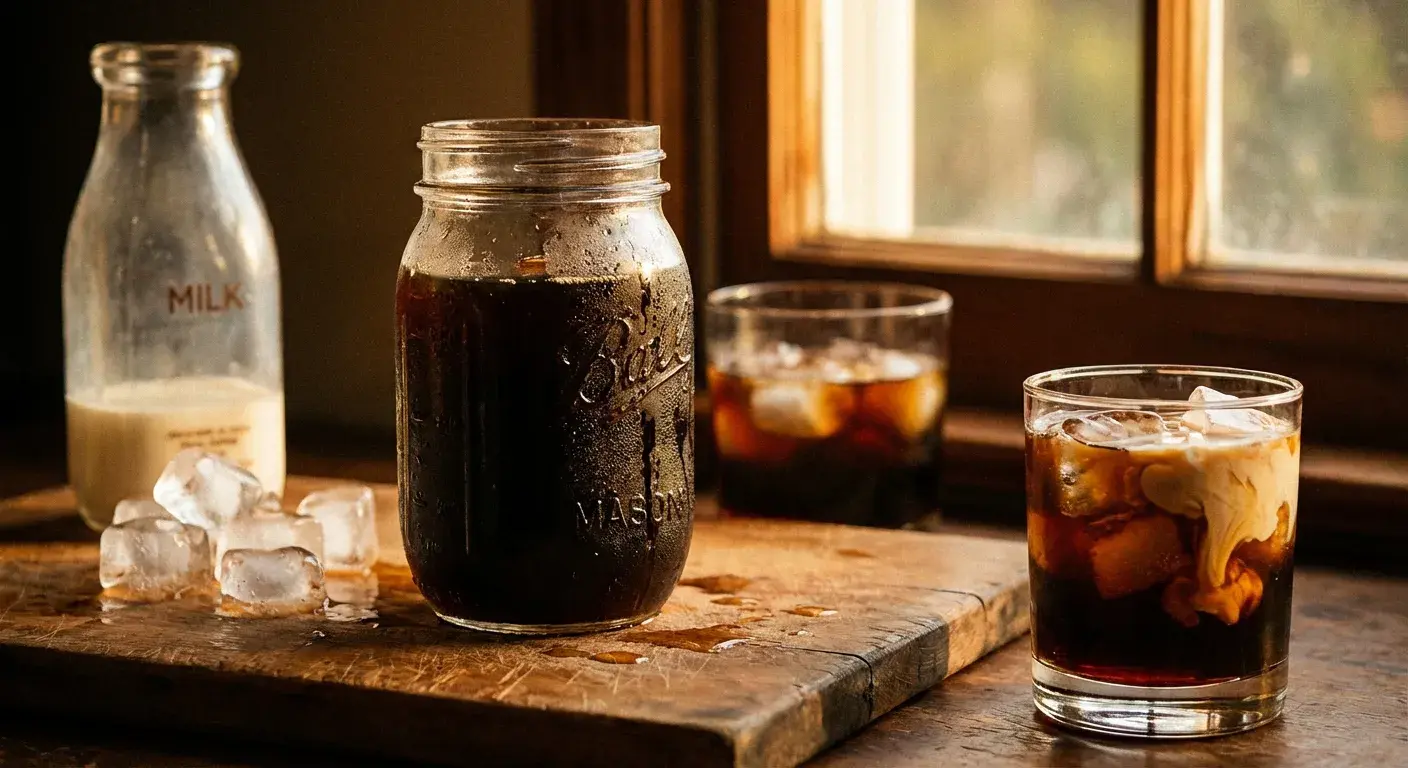
Cold brew has quietly become the most approachable coffee upgrade most people have never tried at home. There are no special skills involved, no precise temperatures to manage, no timing that matters by the second. You add coffee and cold water, wait 12 to 24 hours, and drain it — the result is a smooth, low-acid concentrate that keeps in the fridge for two weeks and makes the best iced coffee you have ever had.
The reason more people do not make it at home comes down to one thing: they are not sure what equipment to use. A dedicated cold brew maker makes the process cleaner and more consistent than improvising with a mason jar and cheesecloth, and the best ones cost less than a week of café cold brews.
This article contains affiliate links. We may earn a commission if you make a purchase through our links, at no extra cost to you.
These are the four cold brew makers worth buying in 2026, ranked by how consistently they produce a clean extraction at each price point.
Our Top Picks at a Glance
| Pick | Product | Best For | Price |
|---|---|---|---|
| Best Overall | OXO Good Grips Cold Brew Maker | Ease of use and clean extraction | ~$50 |
| Best Budget | Hario Mizudashi (1000ml) | Simplicity and compact footprint | ~$25–$35 |
| Best for Large Batches | Toddy Cold Brew System | High-volume weekly brewing | ~$45 |
| Best Compact Mason Jar Style | County Line Kitchen Cold Brew Maker | Fridge-friendly, no-fuss design | ~$28–$33 |
In-Depth Reviews
OXO Good Grips Cold Brew Maker — Best Overall
The OXO Good Grips Cold Brew Coffee Maker is the most consistently praised cold brew maker in independent testing, and the reason is its Rainmaker lid. That trademarked perforated design — a dome of evenly spaced holes positioned above the coffee grounds — distributes water uniformly across the entire surface of the grounds when you fill the carafe. Uneven saturation is the most common reason home cold brew tastes flat or unevenly extracted, and OXO's Rainmaker solves it with hardware rather than technique.
Why we picked it: In head-to-head taste tests conducted by major review outlets including Reviewed and The Homegrounds, the OXO consistently ranked at or near the top for flavor. The grounds are fully and evenly saturated from the start, which produces a balanced, rich concentrate without requiring you to stir or agitate. The integrated stop valve at the bottom of the brewing vessel is a satisfying design detail — lift and set the vessel on the glass carafe, and the valve opens automatically, draining the concentrate cleanly. No squeezing, no mess, no wet grounds to deal with.
The 32-ounce brew capacity produces roughly 28 ounces of concentrate — enough for a week of daily iced coffees or lattes if you dilute 1:1 with water or milk.
Key specs:
- Brew capacity: 32 oz (produces ~28 oz concentrate)
- Material: BPA-free plastic brewing vessel, borosilicate glass carafe
- Filter type: Fine mesh filter (no paper filters needed)
- Steep time: 12–24 hours
- Carafe: Glass, dishwasher safe
- Rainmaker lid: Yes (proprietary even-saturation design)
- Stop valve: Automatic drain — no pouring or squeezing required
- Dimensions: 6.5" W × 9.7" H
Pros:
- Rainmaker lid ensures full, even saturation every brew
- Automatic stop valve drains cleanly — no wet grounds mess
- Glass carafe doubles as a storage vessel in the fridge
- Fine mesh filter — no paper filters to buy
- Produces consistently excellent concentrate in independent tests
- Compact enough to fit on most fridge door shelves
Cons:
- ~$50 is the highest price on this list
- Plastic brewing vessel feels less premium than glass alternatives
- 32 oz is enough for solo drinkers; families may want multiple brews per week
- Mesh filter allows some micro-fines through — less clarity than paper filter methods
Who it's best for: Home brewers who want the most foolproof, consistently excellent cold brew process available without any technique or improvisation. If you want the best result with the least effort, this is it.
Hario Mizudashi Cold Brew Pot — Best Budget
The Hario Mizudashi Cold Brew Coffee Pot (1000ml) is the elegant, minimal Japanese approach to cold brew. Hario — the same company behind the beloved V60 pour over dripper — designed the Mizudashi ("cold draw" in Japanese) as a single purpose tool: a slender, carafe-shaped vessel with a removable filter basket that fits perfectly in a standard fridge door.
Why we picked it: The Mizudashi's simplicity is its greatest strength. There are three components: the glass carafe, the fine mesh filter basket, and a lid. No valves, no special lids, no moving parts. You fill the filter basket with ground coffee, slide it into the carafe, add cold water, cap it, and slide it into your fridge door. After 12–18 hours, pull out the filter basket and the carafe of cold brew is ready to serve.
At roughly $25–$35, the Mizudashi is the most affordable quality cold brew maker on this list. It also has one of the most elegant form factors — the tall, narrow carafe looks good on a fridge shelf and pours cleanly.
Key specs:
- Brew capacity: 1000ml (~34 oz)
- Material: Glass carafe, BPA-free plastic filter basket and lid
- Filter type: Fine mesh (reusable)
- Steep time: 12–18 hours
- Dimensions: 3.15" W × 11.2" H
- Fridge door compatible: Yes (designed for standard door shelves)
Pros:
- Most affordable quality cold brew maker available
- Elegantly simple — three components, nothing to malfunction
- Slim profile fits standard fridge door shelves perfectly
- Glass carafe looks attractive; doubles as serving vessel
- Easy to clean — all parts dishwasher safe
- Hario's build quality is reliable and consistent
Cons:
- 1000ml is on the smaller side — single drinkers and couples only
- No automatic drain — you pull out the filter basket by hand
- Grounds can leave residue on the basket; rinse promptly after use
- Some reviewers note slightly weaker extraction than immersion methods
- No handle on carafe; grip carefully when pouring
Who it's best for: Solo drinkers and couples who want a fuss-free cold brew routine, anyone looking for the most affordable entry point into cold brew, and minimalists who appreciate beautiful, simple tools.
Toddy Cold Brew System — Best for Large Batches
The Toddy Cold Brew System is the original. Invented in 1964 by chemical engineer Todd Simpson, the Toddy is the design that defined home cold brew, and it remains one of the best for sheer volume and flavor. Where the OXO and Hario produce 28–34 oz of concentrate per batch, the Toddy brews up to 48 oz — enough to supply a household or heavy daily drinker for a week or more.
Why we picked it: The Toddy uses a thick felt filter at the bottom of a large plastic brewing container. You add a rubber stopper, stack grounds and water in alternating layers, and let it steep for 12–24 hours. When ready, you pull the stopper over a glass carafe and the concentrate drains slowly through the felt, producing an exceptionally clean, sediment-free result. Toddy's filtration system — the combination of thick felt and gravity drainage — is what produces the famously smooth, low-acid cold brew the system has been known for since the 1960s.
The trade-off is the filter. Toddy recommends replacing the felt filters after about 10–12 uses, and replacement filters cost approximately $5–$7 each. Over a year of weekly brewing, that adds up. Toddy now sells reusable silicone filters as an alternative.
Key specs:
- Brew capacity: 1 lb of coffee + 9 cups water → ~48 oz concentrate
- Material: BPA-free plastic brewing container, glass carafe
- Filter type: Thick felt filter (reusable ~10–12 times) or reusable silicone filter
- Steep time: 12–24 hours
- Carafe: Glass with lid for fridge storage
- Dimensions: Brewing container 6" W × 9.5" H; carafe 5" W × 8" H
Pros:
- Largest batch capacity on this list — ideal for households and heavy drinkers
- Felt filter produces an exceptionally clean, sediment-free concentrate
- One of the most affordable systems despite high volume output
- Glass carafe stores concentrate in the fridge for up to 2 weeks
- Simple, time-tested design with decades of proven results
- Flavor-forward concentrate — produces bright, nuanced cold brew
Cons:
- Felt filters need replacing every 10–12 uses (ongoing cost)
- No "set and drain" mechanism — stopper removal requires some attention
- Plastic brewing container is less aesthetic than glass alternatives
- Bulkier to store than slim carafe-style makers
- Layering grounds and water requires a bit of attention to technique
Who it's best for: Families, offices, heavy cold brew drinkers, and anyone who wants to batch-brew once and have cold brew available all week. Also excellent for making large-format cold brew for entertaining.
County Line Kitchen Cold Brew Maker — Best Compact Mason Jar Style
The County Line Kitchen Cold Brew Coffee Maker takes the mason jar approach and makes it genuinely practical. The 32-oz version is a wide-mouth glass jar with a built-in stainless steel mesh filter basket, a flip-cap lid, and a handle — everything you need for a clean, contained cold brew process that fits neatly in any fridge.
Why we picked it: The County Line Kitchen design solves the main problems with DIY mason jar cold brew: cleanup and containment. The stainless steel filter basket drops in and lifts out without spilling grounds, the flip-cap lid seals securely for fridge storage, and the wide mouth makes filling and cleaning straightforward. The glass is heavy-duty soda lime construction — thick-walled and noticeably more robust than the Hario Mizudashi. The 2-quart (64 oz) version is ideal for batch brewing.
At $28–$33 for the 32 oz version and slightly more for the 64 oz, it sits between the Hario and OXO in price and offers the most practical fridge-storage form factor on this list.
Key specs:
- Sizes: 32 oz (1 qt), 64 oz (2 qt)
- Material: Heavy-duty soda lime glass jar, stainless steel mesh filter
- Filter type: Stainless steel mesh (reusable, no paper filters needed)
- Lid: Flip-cap, airtight seal
- Handle: Yes (wide grip)
- Steep time: 12–24 hours
- Dishwasher safe: Yes
Pros:
- Heavy-duty glass is more robust than most cold brew carafes
- Stainless steel mesh filter — no replacement filters, no ongoing cost
- Wide mouth makes filling and cleaning easy
- Flip-cap lid seals tightly for fridge storage
- Handle makes pouring clean and safe
- Available in two sizes — 32 oz for solo drinkers, 64 oz for households
- Very affordable for the build quality
Cons:
- Mason jar form factor is wider than carafe-style makers — may not fit slim fridge doors
- Stainless steel mesh allows some micro-fines through vs. paper or felt filters
- Less elegant aesthetically than the Hario Mizudashi
- No automatic drain; filter basket pulls out by hand
- 32 oz version small for multi-person households
Who it's best for: Anyone who wants a practical, no-fuss cold brew setup that stores cleanly in the fridge, budget-conscious buyers who want durable glass over plastic, and people who want to avoid ongoing filter replacement costs.
How to Make Cold Brew at Home
Cold brew is the most forgiving coffee brewing method. The only real requirement is time. Here is the process that works across all four makers on this list:
Step 1: Choose Your Coffee
Almost any coffee works for cold brew, but coarser grinds and medium-to-dark roasts tend to shine. Light roasts can be excellent in cold brew — they produce a brighter, more complex flavor — but they require a finer grind and slightly longer steep to extract fully. A good starting ratio is 1:8 coffee to water by weight (e.g., 60g of coffee to 480g of cold water) for a concentrate, or 1:15 for a ready-to-drink brew.
Use our Brew Ratio Calculator to calculate exact amounts for any batch size or desired strength. The calculator includes a cold brew mode that adjusts ratios for concentrate vs. ready-to-drink brewing.
Step 2: Grind Coarse
Cold brew uses a coarse grind — similar to coarse sea salt or slightly coarser than French press. Why? The long steep time compensates for slower extraction. A coarse grind also produces less bitterness and fewer sediment fines in the finished concentrate. For grind settings by brewer model, see our Grind Size Guide.
Step 3: Steep
Add your coffee to the filter basket, add cold filtered water, seal the container, and place it in the fridge. Steep for 12 to 24 hours:
- 12 hours: Lighter body, brighter acidity, cleaner flavor
- 18 hours: Balanced concentration — the sweet spot for most drinkers
- 24 hours: Richer, bolder concentrate; some bitterness emerges with darker roasts
Room-temperature cold brew (steeping on the counter) works faster — 6–12 hours — but carries a slight risk of bacterial growth. Stick with fridge steeping for safety and cleaner flavor.
Step 4: Drain and Store
Drain or filter your concentrate into a clean container. Most makers on this list handle this automatically or via a simple basket-removal process. Store the concentrate in the fridge in a sealed container. It keeps for up to 2 weeks, though flavor is best in the first week.
Step 5: Serve
Dilute your concentrate 1:1 with cold water, milk, or a milk alternative. Pour over ice. The result is smooth, low-acid iced coffee that makes whatever you have been ordering at the café completely redundant.
Cold Brew Tips for Better Results
Grind Size is the Biggest Variable
Too fine a grind and your cold brew turns bitter and murky from over-extraction. Too coarse and it comes out thin and underdeveloped. Aim for coarser than French press — think coarse sea salt, or about 800–1000 microns on a burr grinder dial. See our Grind Size Guide for specific settings across popular grinder brands.
Use Cold or Room Temperature Water
Do not use hot water. Cold brew's defining characteristic — its smooth, low-acid flavor — comes from the absence of heat during extraction. Hot water accelerates extraction and extracts different compounds, including more acids and bitter compounds. Start with cold filtered water and let time do the work.
Steep in the Fridge, Not on the Counter
Refrigerator steeping takes longer (12–24 hours vs. 6–12 hours at room temperature) but produces cleaner, safer results. Coffee grounds at room temperature for more than 12 hours can harbor bacterial growth. The fridge keeps your brew safe and produces a cleaner, less muddy flavor.
Adjust Steep Time by Roast Level
Light roasts are denser and extract more slowly. If your light roast cold brew tastes weak or underdeveloped, steep longer (up to 24 hours) or grind slightly finer. Dark roasts extract quickly — 12–16 hours at a coarse grind is usually plenty before bitterness starts to emerge.
Do Not Skip the Coarse Grind
Pre-ground coffee labeled for drip or espresso is ground much too fine for cold brew. If you use it, your cold brew will be over-extracted, murky, and bitter. If you do not yet have a burr grinder, see our coffee grinders guide for budget options that work well for cold brew's coarse grind requirements.
Frequently Asked Questions
How long does cold brew last in the fridge?
Cold brew concentrate stores well for up to 2 weeks in a sealed container in the fridge. Ready-to-drink cold brew (already diluted) is best within 1 week. For the freshest flavor, drink your batch within 7 days of brewing.
Is cold brew stronger than regular iced coffee?
Cold brew concentrate is significantly stronger than regular coffee — it is designed to be diluted 1:1 with water or milk before serving. Ready-to-drink cold brew (brewed at a 1:15 ratio rather than 1:8) is comparable in strength to regular drip coffee. The key difference is not caffeine but taste: cold brew is smoother, less acidic, and naturally sweeter than hot-brewed coffee poured over ice.
What is the best coffee for cold brew?
Medium and medium-dark roasts are the most forgiving and produce the flavor most people associate with good cold brew — chocolatey, smooth, with mild sweetness. Light roasts can be outstanding in cold brew (bright, fruity, complex) but require more attention to grind size and steep time. Avoid very dark or over-roasted beans, which can produce an excessively bitter or ashy concentrate.
Can I make cold brew without special equipment?
Yes. A large mason jar, a fine mesh strainer, and cheesecloth (or a coffee filter) will work in a pinch. Add coarsely ground coffee to the jar, fill with cold water, seal, and steep in the fridge for 18–24 hours. Strain through the cheesecloth-lined strainer into a second container. The result is comparable to a dedicated maker, though the straining process is messier. The dedicated makers on this list exist to make the process cleaner, more consistent, and less wasteful.
Does cold brew have more caffeine than hot coffee?
It depends on how you brew it. Cold brew concentrate (made at a 1:8 ratio) has significantly more caffeine per ounce than drip coffee. But when you dilute it 1:1 to serve, the caffeine content per cup is roughly comparable to regular drip coffee — sometimes slightly higher. Ready-to-drink cold brew brewed at a 1:15 ratio is comparable to standard drip. The smooth taste of cold brew can make it easy to drink more than you intended, so keep your caffeine intake in mind.
Which to Buy
For the cleanest extraction and most foolproof process, the OXO Good Grips Cold Brew Maker is the pick. The Rainmaker lid and automatic stop valve eliminate the two main failure points in home cold brew.
If simplicity and low cost matter more, the Hario Mizudashi does one thing exceptionally well for under $35. For weekly high-volume brewing, the Toddy Cold Brew System and its felt filtration remain the gold standard since 1964. And the County Line Kitchen Cold Brew Maker gets you a mason-jar form factor with build quality well above its price.
For how cold brew stacks up against hot methods, see the Complete Guide to Coffee Brewing Methods.