Best Coffee Syrups 2026: Torani vs Monin vs Ghirardelli vs DaVinci
 Tommie Chaney·
Affiliate disclosure: Sweeter Grind is a participant in the Amazon Services LLC Associates Program. We may earn commissions on qualifying purchases at no extra cost to you.
Four brands, five bottles, and one uncomfortable finding: they are far more alike than the labels want you to believe.
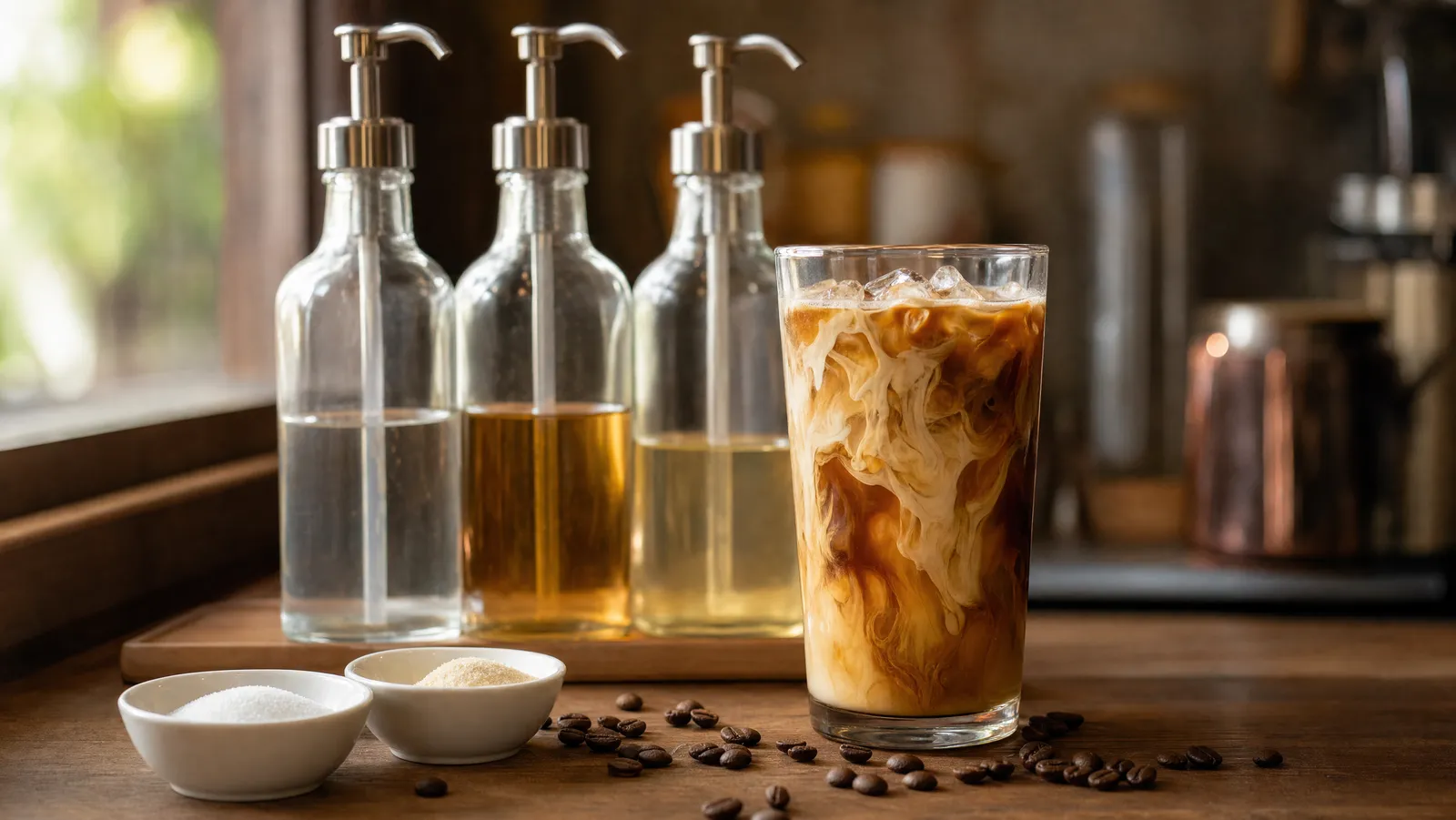
The best coffee syrups for home use come down to four brands, and the gaps between them are small. Torani is the all-rounder with a pump in the box. Monin is the flavor pick. DaVinci undercuts both at roughly half the price per ounce. Ghirardelli is a sauce, not a syrup, and that matters more than the flavor on the front.
Here is why the differences stay small: Torani's own FAQ says its Original and Puremade syrups are sweetened with pure cane sugar, and Monin's FAQ says the same about its standard syrup line. Both companies also state that their syrup pumps dispense a quarter of a fluid ounce per pump. So you are mostly choosing between two bottles of cane sugar, water and flavor that dose identically. If you are working through the whole drinks menu these bottles exist to serve, our guide to café-style coffee drinks at home is the map, and this is just the syrup shelf.
Quick picks
All prices as of October 2026.
| Pick | Bottle | Size | Price | Price per oz | Best for |
|---|---|---|---|---|---|
| Best All-Rounder | Torani Vanilla | 25.4 oz | $14.99 | $0.59 | The default cafe flavor, widest flavor range |
| Best Flavor | Monin Vanilla | 33.8 oz | $20.71 | $0.61 | Vanilla lattes you want to taste as vanilla |
| Best Value | DaVinci Gourmet Classic Vanilla | 25.4 oz | $7.99 | $0.31 | Daily drinkers and high-volume households |
| Best Sauce | Ghirardelli Caramel Sauce | 16 oz | $6.27 | $0.39 | Drizzle, mochas, dessert drinks |
| Best Sugar-Free | Torani Sugar-Free Vanilla | 25.4 oz | $14.99 | $0.59 | Cutting sugar without cutting the flavor |
Torani: the cafe default, and the widest flavor range
Torani is the bottle you have already tasted whether you bought one or not. The company was founded in 1925 by Rinaldo and Ezilda Torre, immigrants from Lucca, Italy who started mixing syrups in San Francisco's North Beach and introduced Italian sodas to local cafes, per Wikipedia and the San Francisco Standard. Torani is also credited with the first flavored latte in 1982 - the San Francisco Standard traces it to Caffe Trieste in North Beach - though that credit carries no independent documentation we could find, and no source we checked says which flavor was in that first cup. Torani's own November 2025 press release puts the lineup at over 400 syrups and sauces, produced from the company's San Leandro, California headquarters.
That flavor count is the real argument for Torani. If you want brown sugar cinnamon, orgeat, lavender or pistachio, this is the line that has it in stock year-round.
The 25.4 oz bottle is 750 ml of BPA-free plastic and ships with a portion-control pump, per Torani. At $14.99 as of October 2026, that works out to $0.59 per ounce. Torani says the syrup is made with pure cane sugar and natural flavors, and that most of its syrups are allergen-free, though the company tells you to check the label on your specific bottle.
What Torani is not: the most interesting vanilla on this list. It is clean, sweet and slightly generic, which is exactly what makes it reliable behind a counter. Worth knowing on shelf life too: Torani's FAQ gives its glass syrups 36 months but its PET plastic bottles only 24 months - both stated as months from the date of manufacture rather than from opening - so the plastic bottle you buy on Amazon is on the shorter clock.
Monin: better vanilla, two cents more per ounce
Monin was founded in 1912 by Georges Monin and is still headquartered in Bourges, France, per Wikipedia, and it is still family-run: the founder's grandson Olivier Monin has led it since the early 1990s and was named president of Groupe Monin SAS in January 2025. Trade coverage puts its reach at more than 140 countries from a handful of production sites worldwide, though the published counts vary by source and date. The French-house framing is not just marketing: the vanilla reads more like actual vanilla and less like vanilla-flavored sugar.
Monin says this one is made with Madagascar vanilla, and the brand's spec sheet is the cleanest of the four: per Monin, it is allergen free, dairy free, gluten free, Halal, Kosher, non-GMO, with no artificial colors, flavors, preservatives or sweeteners. The 1-liter boxed bottle includes a BPA-free pump.
At $20.71 as of October 2026 (down from a $24.89 list price) across 33.8 oz, that is $0.61 per ounce. Read that against Torani's $0.59 and the premium is two cents an ounce, or about one and a half cents per drink. For the better-tasting bottle, that is not a real decision.
The catch is the format. Monin's FAQ gives 750 ml glass syrups 36 months unopened but rates 1-liter plastic syrups at 18 months, so the big bottle you are buying has the shortest unopened window of anything here. A liter is also a lot of one flavor if you are a two-lattes-a-week household.
DaVinci Gourmet: half the price per ounce, and it is not a downgrade
DaVinci Gourmet Classic Vanilla is $7.99 for the same 25.4 oz Torani sells for $14.99, which is $0.31 per ounce as of October 2026 against Torani's $0.59. It is the one genuine price outlier in this comparison, and the formula does not read like a budget compromise: per DaVinci, it is made with pure cane sugar and natural vanilla extract.
Two DaVinci claims are worth repeating because they are useful rather than decorative. First, DaVinci states the syrup resists curdling in dairy. That matters most with fruit and citrus flavors, where acidity usually gets the blame when a latte breaks, and it tells you the company formulated for milk drinks specifically. Second, DaVinci states that one pump equals a quarter of an ounce, matching both Torani and Monin, so recipes transfer across all three bottles without rescaling. DaVinci also lists a two-year shelf life, US manufacture and kosher certification.
We would not call this the most expressive vanilla of the three. It is clean and straightforward. At half the price per ounce, that is the trade we would make for a syrup that disappears into a 12 oz latte anyway.
Ghirardelli is a sauce, not a syrup, and that changes everything
The Ghirardelli Caramel Sauce squeeze bottle is the odd entry here on purpose. It is thick and creamy rather than thin and pourable, and Ghirardelli says it is formulated to taste like the caramel filling in its milk chocolate caramel squares. At $6.27 for 16 oz as of October 2026, it is $0.39 per ounce.
Thickness is a feature in some drinks and a defect in others. Where sauce wins:
- Drizzle and decoration. A sauce holds its line on whipped cream or cold foam. A syrup slides off and vanishes.
- Mochas and dessert drinks. Body is the point. Sauce adds weight that cane-sugar syrup cannot.
- Lining the cup. Squeeze it around the inside of the glass before you pour and you get stripes that survive the drink.
Where sauce loses: anything thin and hot where you want flavor without texture, and anything cold that you are not going to stir hard. Sauce does not disperse into iced coffee the way syrup does, which is one of the reasons we default to thin syrups when sweetening iced coffee. We also keep sauce out of the pitcher and off the pour: if you have spent time learning to steam milk like a barista, adding a viscous sauce to the cup before you pour makes clean latte art meaningfully harder in our experience. Drizzle it on top afterward instead.
Torani vs Monin: which one should you actually buy?
Buy Monin if you drink vanilla lattes and want the drink to taste like vanilla. Buy Torani if you want the widest flavor range on the market and the bottle most American cafes pour. At $0.59 versus $0.61 per ounce as of October 2026, price is not the deciding factor between them.
The real differences, as published by the two companies:
| Torani | Monin | |
|---|---|---|
| Sweetener (standard line) | Pure cane sugar, per Torani | Pure cane sugar, per Monin |
| Pump dose | About 1/4 fl oz, per Torani | 1/4 fl oz, per Monin |
| Sugar-free sweeteners | Sucralose and acesulfame potassium, per Torani | Sucralose and allulose blend, per Monin |
| Opened shelf life published? | For the Puremade line only: within 30 days | Yes: 90 to 180 days capped, 30 to 60 days with a pump fitted |
| Flavor count | Over 400 syrups and sauces, per Torani (Nov 2025) | Not published on the FAQ we checked |
The sugar-free sweetener difference is the one that might actually change your order, and we get into why in the sugar-free section below. Everything else is a tie or close to it. Anyone telling you they can reliably pick Torani vanilla out of Monin vanilla in a 12 oz oat latte is overselling their palate.
Sugar-free coffee syrups: the honest tradeoff
Torani Sugar-Free Vanilla is the sugar-free bottle we would buy, at $14.99 for 25.4 oz as of October 2026, the same price as the cane-sugar version. But be clear about what changes.
Start with what is in the bottle. Torani's FAQ states that its Sugar Free syrups are sweetened with sucralose and acesulfame potassium, and that its separate Puremade Zero Sugar line uses stevia leaf extract, monk fruit and erythritol. Monin's FAQ states that its sugar-free syrups use an exclusive blend of sucralose and allulose. Those are three different sensory problems, not one.
The research is more encouraging than the internet's reputation for sugar-free syrup suggests, with a caveat. A 2023 paper in the Journal of Sensory Studies using temporal check-all-that-apply found that aspartame, erythritol and sucralose showed no difference from sucrose at 50 and 75 percent sugar replacement, while replacing more than 25 percent of the sucrose with acesulfame-K or rebaudioside M produced bitter off-taste and licorice off-flavor in the aftertaste period. A 2018 ADSA abstract on protein bars similarly found sucralose's profile closest to sucrose or fructose, but distinguished by a metallic taste and lingering sweetness.
Coffee is a friendly place for these sweeteners. A 2018 study in Beverages found no significant difference in temporal profiles among three sweetened coffee beverages even though the same sweeteners did differ significantly in plain water solutions, and the authors suggested that factors other than sweetness may mask those differences in coffee. That study used a coffee-and-milk beverage, so the supported read is that sugar-free syrup hides well in a milky latte; in our experience it is much easier to spot in a light, black iced coffee, though we have not seen that case tested.
The part nobody markets: sugar does structural work. Tate and Lyle sells an erythritol ingredient to manufacturers that, per FoodNavigator's report on its launch, "can also provide bulking and mouthfeel when sucrose is reduced or removed" - an industry acknowledgment that cane sugar contributes body and not only sweetness. Sugar-free syrups tend to taste thinner because sugar is doing bulk work the sweetener is not. If you want to cut sugar without losing weight in the cup, half a pump of the cane-sugar version plus a sugar-free pump usually beats going fully sugar-free.
Price per ounce is the real buying lens
At a quarter ounce per pump, three pumps is 0.75 fl oz of syrup. Here is what that costs in each bottle, using October 2026 prices and the sizes on each listing.
| Bottle | Price per oz | Cost per 3-pump drink | Drinks per bottle |
|---|---|---|---|
| DaVinci Gourmet Classic Vanilla, 25.4 oz | $0.31 | about $0.23 | about 33 |
| Ghirardelli Caramel Sauce, 16 oz | $0.39 | about $0.29 | about 21 |
| Torani Vanilla, 25.4 oz | $0.59 | about $0.44 | about 33 |
| Monin Vanilla, 33.8 oz | $0.61 | about $0.46 | about 45 |
Two things fall out of that table. The spread across every bottle here is about 23 cents a drink, which is noise next to the cost of the espresso and milk. And the DaVinci bottle saves roughly $7 per bottle against Torani for the same volume, so if you make a flavored drink daily, that is the only choice on the list with a measurable payback.
Ghirardelli's number is not directly comparable, because a squeeze bottle gets dosed by eye rather than by pump, and both Torani and Monin rate their sauce pumps at half an ounce per pump rather than a quarter.
Pumps, dosing and storage
Dosing is the single biggest lever you have, and most people overshoot it. According to Tasting Table, a standard Starbucks flavored drink gets three pumps of syrup in a tall, four in a grande and five in a hot venti, with six in the iced venti - that is the 12, 16, 20 and 24 oz sizes respectively. At a quarter ounce per pump, that grande is carrying a full fluid ounce of syrup.
We would start lower. Two pumps in a 12 oz drink, tasted, then adjusted up gets most people to a flavored latte that still tastes like coffee. Three pumps is a dessert. The right dose also depends on your milk: oat and sweetened plant milks already bring sweetness, so the same two pumps land sweeter than they do in whole dairy.
Storage, per the manufacturers:
- Room temperature is correct. Monin's FAQ says almost all of its products do not require refrigeration, and recommends storing opened bottles at 65 to 80°F away from humidity, direct heat and sunlight.
- An opened bottle has a clock. Monin rates an opened syrup at 90 to 180 days with the cap on, dropping to 30 to 60 days once a pump or pour spout is fitted. Torani publishes a 30-day opened window for its Puremade line.
- Cover the pump. Monin specifically advises capping or covering pumps overnight to prevent mold, and warns against exposing the pump and product to moisture.
- Check the label for cream-based flavors. Sweet cream and Irish cream style syrups are a different product category from clear cane-sugar syrups, and the bottle's own instructions govern.
You have far longer before opening. Torani's FAQ lists 36 months for glass syrups and 24 months for PET bottles, both measured from the date of manufacture; Monin's unopened figures are 36 months for 750 ml glass and 18 months for 1-liter plastic, with some flavors rated shorter.
When to skip the bottle entirely
If the only two flavors you ever use are vanilla and caramel, buying syrup is the expensive option. Sugar, water and a few minutes on the stove get you something that tastes fresher and costs a fraction per ounce, and you control the sweetness instead of inheriting it. Our walkthrough on how to make your own simple syrup covers the ratios and why batches crystallize, and our DIY coffee syrup recipes go further into vanilla, brown sugar, caramel and spiced versions.
Buy the bottle when one of these is true:
- You want flavors you cannot make. Torani's lineup runs past 400 syrups and sauces, per the company. You are not making pistachio or orgeat at home on a Tuesday.
- You want it shelf-stable. A commercial syrup sits at room temperature for months by the manufacturers' own numbers. A homemade syrup does not.
- You want consistency. A pump delivers a quarter ounce every time, which matters more than it sounds once two people are making drinks.
- You are chasing seasonal drinks. Pumpkin, peppermint and gingerbread arrive and leave on the brands' schedules, and they are the backbone of most holiday coffee drinks at home.
What we would buy
If you are buying one bottle, buy Monin for the vanilla and Torani for everything else. If you make a flavored drink every day, buy DaVinci and bank the difference. If what you actually want is caramel drizzle on top of a drink rather than caramel dissolved into it, the Ghirardelli sauce is a different tool and a better one for that job. And if your list stops at vanilla, make it yourself.
None of these bottles will fix a bad shot or thin milk. Syrup is the smallest variable in a flavored drink, which is why it is worth spending two minutes on the choice and no more. For the drinks these bottles are actually for, start from our guide to café-style coffee drinks at home and work outward.
Frequently Asked Questions
Is Monin better than Torani?
For vanilla specifically, we think so. Monin says its vanilla syrup is made with Madagascar vanilla, and it reads as more recognizably vanilla in a latte than Torani's version does. But both companies state that their standard syrups are sweetened with pure cane sugar, and at $0.61 versus $0.59 per ounce as of October 2026 the price gap is about one and a half cents per drink. Torani wins on breadth instead: Torani puts its own lineup past 400 syrups and sauces.
How many pumps of syrup should I put in a latte?
A standard syrup pump dispenses a quarter of a fluid ounce, per both Torani and Monin. Tasting Table reports that Starbucks uses three pumps of syrup in a tall (12 oz), four in a grande (16 oz) and five in a hot venti (20 oz). We would start at two pumps in a 12 oz drink and adjust up, especially with oat or already-sweetened plant milk.
Do coffee syrups need to be refrigerated after opening?
Generally no. Monin's FAQ states that almost all of its products do not require refrigeration, and recommends storage at 65 to 80°F away from humidity, heat and sunlight. Monin does put a clock on an opened bottle: 90 to 180 days with the cap on, and 30 to 60 days once a pump is fitted, with the pump covered overnight to prevent mold. Cream-based and fruit-puree products are exceptions, so follow the label on your bottle.
Can I use coffee syrup in iced coffee?
Yes, and thin cane-sugar syrups are the right choice for it because the sugar is already in solution; granulated sugar dissolves far more slowly in a cold drink and tends to settle at the bottom instead. Thick sauces like the Ghirardelli caramel do not disperse as well in a cold drink, so use those as a drizzle on top. Our guide to sweetening iced coffee covers dosing cold drinks in more detail.
Does sugar-free coffee syrup taste bad?
Less than its reputation suggests, and coffee helps. A 2023 Journal of Sensory Studies paper found that sucralose, erythritol and aspartame were indistinguishable from sucrose at 50 and 75 percent sugar replacement, while acesulfame-K and rebaudioside M produced bitter and licorice off-notes in the aftertaste above 25 percent replacement. A 2018 study in Beverages found that temporal differences between sweeteners that showed up in water did not show up in coffee. Expect a thinner body regardless: sugar contributes bulk and mouthfeel, which is why ingredient suppliers sell bulking agents to replace it.
Is Ghirardelli caramel sauce the same thing as caramel syrup?
No. The Ghirardelli product is a thick sauce in a squeeze bottle, and Ghirardelli says it is formulated to taste like the caramel filling in its milk chocolate caramel squares. Syrup is thin and dissolves into a drink; sauce has body and holds its shape on top of one. Sauce pumps are also rated at half an ounce per pump by both Torani and Monin, against a quarter ounce for syrup pumps, so the dosing is not interchangeable either.
Related reading
- DIY coffee syrup recipes - vanilla, caramel, brown sugar and spiced syrups from scratch
- How to make simple syrup for coffee - ratios, shelf life, and why your syrup crystallizes
- How to sweeten iced coffee - why granulated sugar fails in cold drinks and what to use instead

Torani Vanilla Syrup (25.4 oz, pump included)
The syrup most American cafes actually pour. Pure cane sugar, natural flavors, and a pump in the box.

Monin Vanilla Syrup (1 liter, BPA-free pump included)
The premium pick: Madagascar vanilla and a clean-label spec sheet, in a 1-liter bottle.

DaVinci Gourmet Classic Vanilla Syrup (25.4 oz)
Roughly half the price per ounce of the name brands, and it is explicitly formulated to resist curdling in dairy.

Ghirardelli Caramel Sauce Squeeze Bottle (16 oz)
A sauce, not a syrup - the right tool for caramel drizzle, mochas and dessert drinks where you want body.
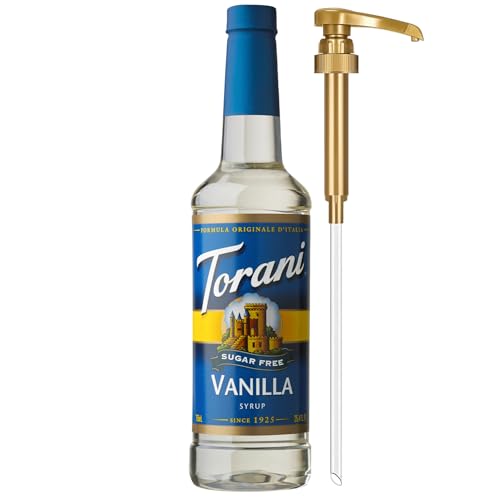
Torani Sugar-Free Vanilla Syrup (25.4 oz, pump included)
The sugar-free bottle to buy if you want vanilla without the sugar. Expect a different mouthfeel than cane sugar.